
Quick Read
- Dia De Los Muertos is celebrated November 1-2, merging Indigenous and Catholic traditions.
- Altars (altares) with marigolds, food, and photos honor departed loved ones.
- Tijuana expects up to 300,000 cemetery visitors, with extra security and alcohol bans.
- Skulls (calaveras) symbolize joyful remembrance, not fear.
- The holiday emphasizes celebrating life and community, not mourning.
What Is Dia De Los Muertos? The Meaning Behind the Masks and Marigolds
As autumn drapes its colors across Mexico and the Southwestern United States, communities come alive in anticipation of Dia De Los Muertos—the Day of the Dead. Far from a somber affair, this holiday is a tapestry woven with joy, memory, and reverence, inviting people to celebrate the lives of those who have passed on. Rooted in a unique blend of Indigenous traditions and Catholic faith, Dia De Los Muertos is observed on November 1st and 2nd, coinciding with All Saints’ Day and All Souls’ Day in the Catholic calendar (Catholic Register).
But what does it mean to honor the dead with such vibrancy? For many, it’s a way of affirming that death does not have the last word. Ernesto Vega, coordinator of adult faith formation for the Archdiocese of Los Angeles, puts it simply: “Dia De Los Muertos is indeed a celebration of life. It reminds us that death is not the end, but a passage—one filled with hope and promise, especially for Catholics who believe in resurrection and eternal life.”
Traditions That Transcend: Altars, Skulls, and the Fragility of Life
At the heart of Dia De Los Muertos are the altares—elaborate altars built in homes or at gravesites. These are not mere displays; they are intimate acts of love and remembrance. A traditional altar typically has three tiers, symbolizing the journey from earth to heaven. On the highest level, families place a crucifix and an image of the Virgin Mary, signifying spiritual ascent. Photographs of the departed, marigold flowers (cempasúchil), food, bread, water, and papel picado (intricately cut paper banners) adorn the altar, each item layered with meaning.
Marigolds, with their vibrant orange hue, are believed to guide spirits home with their scent and color. Bread, often shaped into whimsical figures, represents the body of Christ in the Eucharist. Papel picado, delicate and easily torn, serves as a metaphor for the fragility of life—reminding everyone of the fleeting nature of existence.
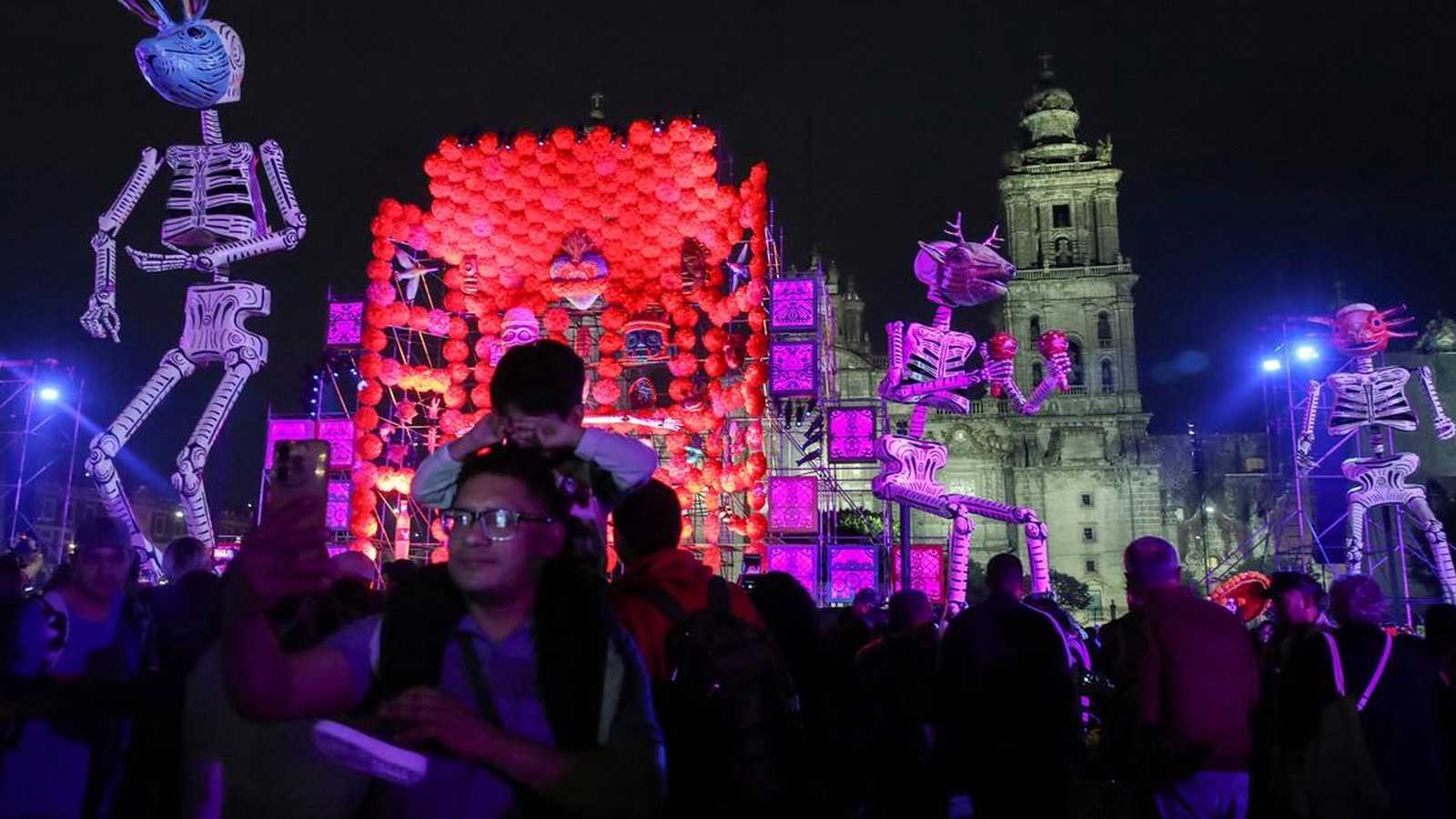
No Dia De Los Muertos altar is complete without the iconic skulls or “calaveras.” But unlike the grim associations often found in other cultures, these skulls are playful, colorful, and smiling. “Las calacas are laughing and joyful,” says Florencia Teran, a retired teacher from Los Angeles. “They wear flowers, play guitars—they’re not ghoulish or spooky. The essence is to show children and adults alike that death should not be feared. Instead, we celebrate life after death.”
From Home to Community: How Cities Like Tijuana Prepare for the Festivities
While families meticulously craft their domestic altars, cities across Mexico gear up for large-scale celebrations. In Tijuana, security becomes a priority as tens of thousands gather for parades, food festivals, and cemetery visits. This year, officials expect over 300,000 people to visit the city’s graveyards between November 1 and 2 (Border Report). To ensure safety, the Tijuana Police Department is deploying extra officers throughout downtown, shopping centers, and cemeteries. Alcohol consumption is strictly prohibited in these sacred spaces, and adults are warned against wearing masks in public—violations could result in fines.
“We want everyone—locals and visitors—to celebrate safely,” says Evelyn Peñafiel Guerra from the city’s Public Safety office. With added patrols and clear rules, Tijuana aims to protect the spirit of Dia De Los Muertos while welcoming crowds from both sides of the border.
The festivities in Tijuana include a vibrant parade along Avenida Revolución, drawing thousands to the city center. Following the parade, food festivals and arts-and-crafts exhibitions showcase the creative energy that defines the holiday. For many, these events are not just about entertainment—they’re a way to connect with heritage and community.
Faith, Misunderstandings, and the Bridge Between Worlds
Despite its joyful spirit, Dia De Los Muertos occasionally faces misconceptions. Some associate the holiday with dark or occult practices, misunderstanding its true intent. Fr. Ramon Reyes, associate pastor at St. Joseph Parish in California, explains: “When people hear ‘dead,’ they think of evil spirits. But for us, it’s about invocation—praying and gathering to help loved ones on their journey to heaven.” The Catholic Church, he adds, encourages the faithful to express their beliefs through culture. In fact, Dia De Los Muertos is a prime example of evangelization through tradition.
For Catholic communities, the holiday dovetails with liturgical observances. On All Souls’ Day, special Masses are offered for the departed. The Book of the Dead, containing names of loved ones, rests near the altar as a focus for prayer throughout November. Candles, too, play a central role—each flame representing the soul’s path toward light.
In essence, Dia De Los Muertos is a bridge: between the living and the dead, between ancient roots and modern faith, between private homes and bustling city streets. It is a reminder that memory and celebration are intertwined, and that community—whether in a small village or a sprawling city—holds the power to honor those who came before.
The Global Resonance and Local Realities
While Dia De Los Muertos is most visible in Mexico, its influence has spread across the globe. In the United States, especially in states like California, Arizona, and Texas, families of Mexican heritage keep the tradition alive, adapting it to new settings while holding fast to its core values. Churches and schools organize altar-making workshops, cultural performances, and remembrance services, fostering a sense of belonging.
The holiday’s imagery—skulls, marigolds, vibrant colors—has even entered mainstream pop culture, sometimes at risk of losing its deeper meaning. Yet, for those who observe it with intention, Dia De Los Muertos remains a sacred time to pause, reflect, and celebrate.
As cities like Tijuana balance security concerns with festive spirit, the essence of the holiday endures: to gather, to remember, to honor, and to hope. Whether at a candlelit altar at home, in a crowded cemetery, or along a parade route, the message is clear—death does not have the last word.
Dia De Los Muertos stands as a testament to the resilience of tradition and the power of community. By merging ancient beliefs and modern faith, the holiday offers a space for healing, remembrance, and unity—reminding us all that, even in loss, life continues to be celebrated in every color, every prayer, and every shared story.