
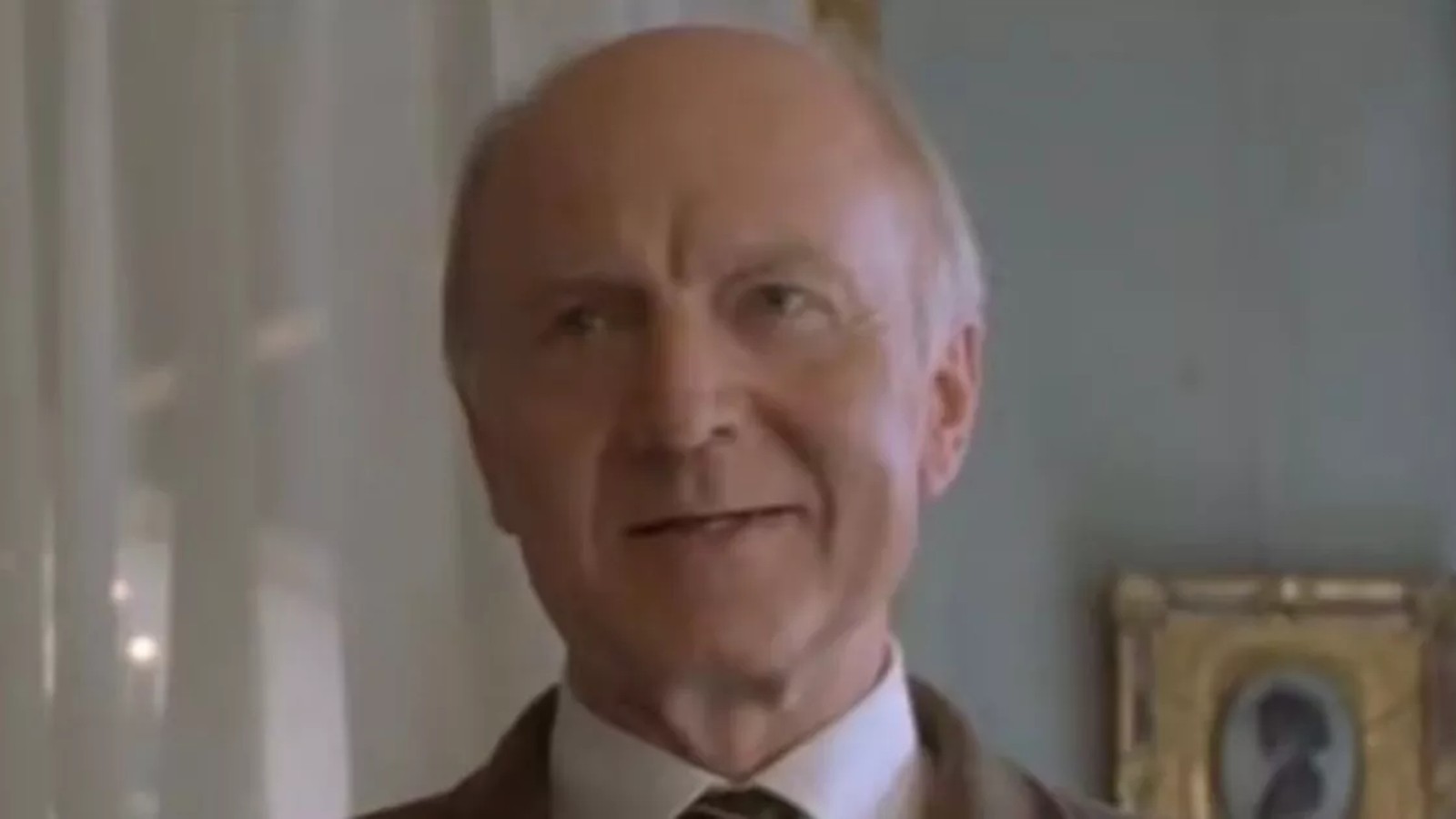
Quick Read
- Donald Douglas, known for his role as Admiral Darcy in the ‘Bridget Jones’ films, died at 92.
- He passed away on January 14, 2026, in Albi, France, after a short illness.
- Douglas had a prolific career, appearing in ‘Doctor Who’, ‘Poldark’, and ‘EastEnders’.
- Born in Falkirk, Scotland, he trained at Edinburgh College of Art and RADA.
- Tributes highlighted his versatility as an artist, chef, equestrian, and his contributions to local theatre in France.
Donald Douglas, the distinguished Scottish actor celebrated for his enduring career across film, television, and theatre, and particularly remembered for his role as Admiral Darcy in the beloved ‘Bridget Jones’ film franchise, has passed away at the age of 92. The veteran performer died on Wednesday, January 14, 2026, in Albi, southern France, following a short illness. The news was confirmed by a funeral home notice on Friday, January 23, prompting an outpouring of tributes from across the entertainment industry and his local community, reflecting on his profound impact and versatile talents.
A Career Spanning Decades: From Stage to Screen
Born in Falkirk, Scotland, in 1933, Donald Douglas embarked on his artistic journey with a solid foundation in the arts. He first honed his craft at the prestigious Edinburgh College of Art before advancing to the Royal Academy of Dramatic Art (RADA) in London, a renowned institution for training some of Britain’s most celebrated actors. His early career saw him establish a strong presence in television, with one of his initial notable appearances as Major Parsons in a 1969 episode of the classic espionage series ‘The Avengers’. This was soon followed by a role as Tony Pringle in ‘Budgie’, showcasing his versatility in different dramatic contexts. Douglas also made an impression in adaptations of Walter Scott novels, including ‘Redgauntlet’ and ‘Rob Roy’, marking his breakthrough into television and signaling the start of a prolific career that would span over five decades.
The Enduring Legacy of Admiral Darcy
For many, Donald Douglas became a familiar and cherished face through his portrayal of Admiral Darcy, the dignified father of Colin Firth’s character, Mark Darcy, in the hugely popular ‘Bridget Jones’ romantic comedy series. He first brought the character to life in the inaugural film, ‘Bridget Jones’s Diary’, released in 2001. His nuanced performance added a touch of aristocratic charm and paternal gravitas, making Admiral Darcy a memorable supporting figure in Bridget’s chaotic love life. Douglas reprised the role in subsequent installments, including ‘Bridget Jones: The Edge of Reason’ in 2004 and ‘Bridget Jones’s Baby’ in 2016, cementing his place in one of the most beloved British film franchises of the 21st century. His presence in these films underscored his ability to imbue even smaller roles with significant character and warmth, contributing to the overall success and charm of the series.
Beyond Bridget Jones: A Versatile Performer
While his role in ‘Bridget Jones’ garnered widespread recognition, Donald Douglas’s career was far more extensive and diverse, showcasing his remarkable range as an actor. He lent his talents to a multitude of iconic British television series, earning respect for bringing ‘a bit of heft and a touch of class to his roles,’ as noted by fellow actor Toby Hadoke. Fans of historical dramas will recall his compelling performance as Captain Malcolm McNeil in ‘Poldark’. Science fiction enthusiasts recognized him as Vural in ‘Doctor Who’s The Sontaran Experiment’, a role Hadoke praised for being ‘much more rounded and believable than he would have been in lesser hands.’ Douglas also made memorable appearances in classic detective series like ‘Poirot’ and the cult sci-fi drama ‘Blake’s 7’. His brief but impactful stint as Hugh Aitken in the long-running BBC soap opera ‘EastEnders’ in April 1995 further demonstrated his ability to make a lasting impression in various genres. His final acting credit came in the 2021 drama film ‘Nobody Has To Know’, where he played Nigel’s man handler, sharing the screen with Michelle Fairley and Bouli Lanners, proving his dedication to his craft well into his later years.
A Life Rich in Art, Community, and Family
In his later life, Donald Douglas relocated to Tarn, a picturesque region in southern France, where he continued to cultivate his passion for the arts and community engagement. He became a cherished figure in his new home, where he founded and operated an English-speaking theatre. In this venture, he not only performed but also took on roles as a director and producer, significantly enriching the cultural life of the region. His contributions extended beyond the stage; a heartfelt tribute from his dear friend Meredith Wheeler described him as a ‘playful and gifted artist’ whose talents knew no bounds. Wheeler highlighted his diverse skills, from sculpture and painting to his expertise in ceramic restoration. She also painted a vivid picture of his personal life, recalling him as a ‘fabulous cook’ who laid beautiful tables, a ‘great equestrian’ alongside his partner Emma Temple, and a devoted dog lover. His ‘stunning’ gardening, ‘impish sense of humor,’ and ‘generous heart’ were also fondly remembered, illustrating a man who embraced life with creativity and warmth. Douglas is survived by his wife, Emma Temple, their three children, Amy, Liza, and Jodie, and five grandchildren, who will undoubtedly cherish his memory.
Donald Douglas’s career exemplifies the enduring impact of a character actor who consistently elevated every project he touched. His ability to move seamlessly between the grand narratives of historical dramas, the intimate settings of soap operas, and the broad appeal of romantic comedies speaks to a profound dedication to his craft. Whether as Admiral Darcy, a distinguished figure in a beloved film series, or as a key contributor to local theatre in France, Douglas leaves behind a legacy of artistic integrity and a life richly lived, demonstrating that true talent resonates across all forms of expression and leaves an indelible mark on both colleagues and audiences.