
Quick Read
- Thwaites Glacier, known as the ‘Doomsday Glacier,’ is experiencing rapid structural collapse.
- Crack formation in the glacier’s ice shelf has more than doubled in length since 2002.
- Accelerated collapse creates a feedback loop, increasing global sea level rise risks.
Thwaites Glacier: A Critical Climate Warning Signal
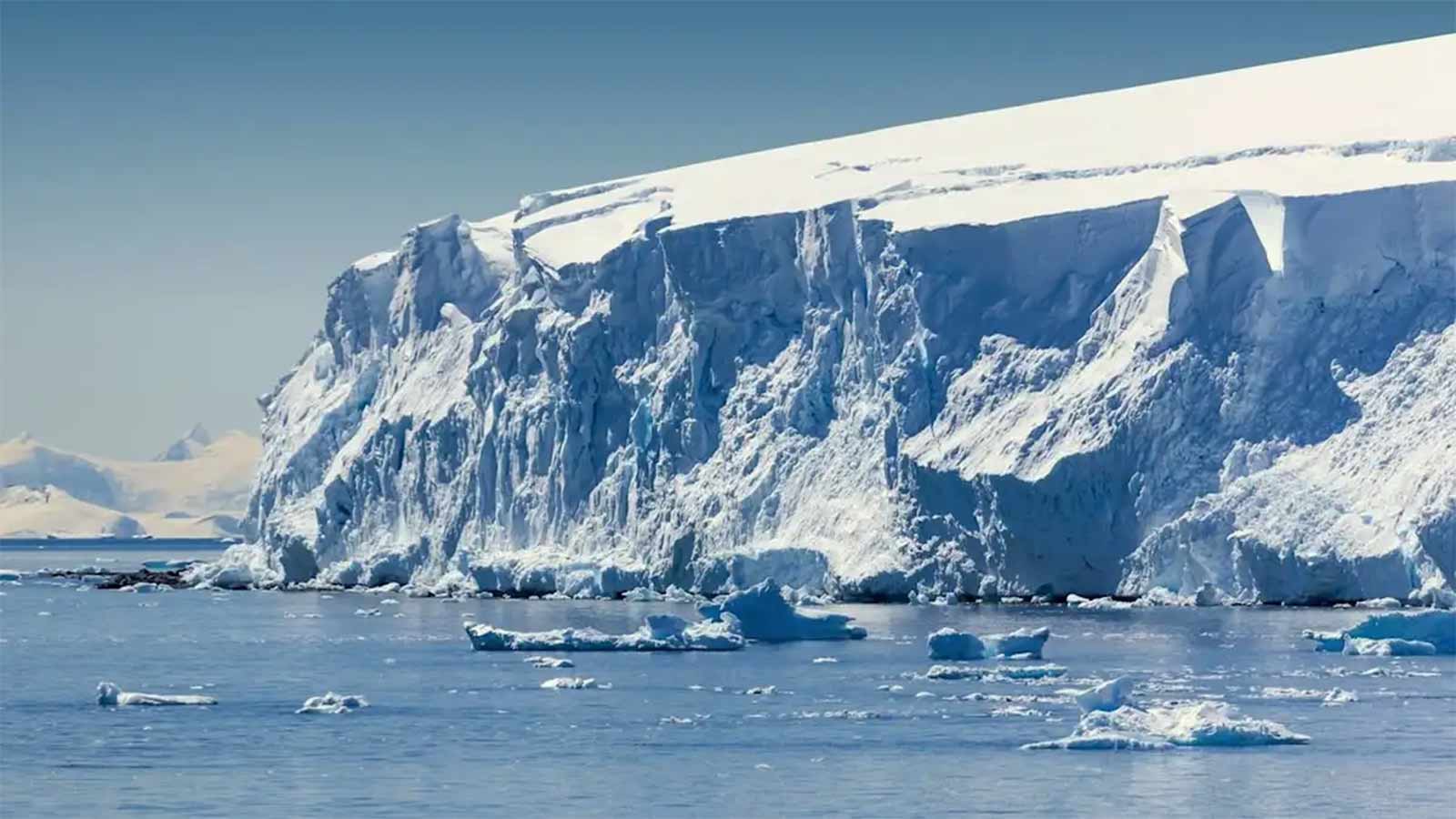
Deep in the heart of Antarctica lies Thwaites Glacier, a sprawling mass of ice that scientists have come to call the “Doomsday Glacier.” It’s a name that isn’t chosen lightly. For the past two decades, this glacier has been under intense scrutiny by climate researchers, and the findings are painting a picture that’s hard to ignore: Thwaites is changing faster than almost any other part of the continent, and its fate could ripple out to every coastline on Earth.
Recent studies, most notably from the International Thwaites Glacier Collaboration (ITGC), have documented the glacier’s gradual but accelerating collapse. By meticulously tracking satellite images and on-site data from 2002 to 2022, scientists have mapped the evolution of cracks—some stretching for kilometers—that fracture the glacier’s ice shelf. What they’ve found isn’t just a slow decline, but a complex transformation with cascading consequences.
Cracks, Collapse, and a Dangerous Feedback Loop
The eastern section of Thwaites is of particular concern. Supported by a ridge on the ocean floor, this area has seen the most dramatic weakening. Initially, long cracks (some over 8 kilometers) began slicing through the shelf, running parallel to the glacier’s flow. These were soon joined by numerous shorter, cross-flow fissures, effectively doubling the total crack length in less than two decades. According to ITGC findings, the total crack length soared from about 165 kilometers in 2002 to nearly 336 kilometers by 2021. However, the average length of each crack dropped from 3.2 to 1.5 kilometers, suggesting a shift in how the glacier’s internal stresses are distributed.
This isn’t just a story of numbers. The physical changes mark distinct phases of collapse. From 2002 to 2006, ocean currents provided some stabilization, but by 2007, the crucial shear zone linking the ice shelf to the Western ice tongue gave way. The stress became concentrated at the anchorage—once a stabilizing feature, now a point of weakness. By 2017, cracks had fully penetrated the shelf, severing these connections and leaving the glacier more vulnerable than ever.
Perhaps the most worrying discovery is the feedback loop at play. As cracks open, the ice begins to flow faster. That increased movement, in turn, causes more cracks to form. It’s a cycle that’s hard to break. GPS devices placed on the ice between 2020 and 2022 showed that these structural changes aren’t just local—they’re advancing upstream at a rate of about 55 kilometers per year. It’s a phenomenon that could speed up the glacier’s collapse, pushing it closer to a tipping point where intervention is impossible.
Global Consequences: Why Thwaites Matters
The implications of Thwaites’ rapid changes go far beyond Antarctica. The glacier holds enough ice to raise global sea levels by over half a meter if it collapses entirely. But even partial retreat could destabilize neighboring ice and trigger a domino effect, making the prospect of widespread coastal flooding more likely in the coming decades.
Communities from Miami to Bangladesh could see their futures altered by events unfolding thousands of miles away. The interconnectedness of the global climate system means that what happens in the polar south doesn’t stay there. The evidence, gathered and analyzed by researchers at the University of Manitoba and elsewhere, is clear: the cracks in Thwaites are a warning, not just a local anomaly.
Science, Uncertainty, and Urgent Questions
Despite the wealth of data, major uncertainties remain. Predicting exactly when and how Thwaites might collapse is a challenge that stretches the limits of current climate models. The glacier’s internal dynamics are complex, and the feedback loops identified are difficult to simulate with precision.
Researchers are calling for more robust investigations and improved predictive tools. The hope is that by understanding these processes in detail, scientists can refine estimates of future sea level rise and help policymakers prepare for what may come. The urgency is palpable. As new cracks form and old ones grow, the clock is ticking not just for Thwaites, but for every community living near the world’s oceans.
- Crack formation in Thwaites Glacier’s ice shelf has accelerated sharply since 2002, with both long and short fissures contributing to a doubling of total crack length (ITGC).
- A feedback loop between crack propagation and ice flow speed is hastening structural collapse, as confirmed by GPS and satellite data.
- The glacier’s instability could lead to a significant rise in global sea levels, affecting millions worldwide if collapse continues unchecked (Reuters reporting via SSBCrack and Ubirata Online).
The story of Thwaites Glacier is both a scientific challenge and a wake-up call. Its rapid, unpredictable collapse underscores the need for urgent climate action and deeper research—not just to protect distant ice, but to safeguard our shared future on a warming planet.