
Quick Read
- U.S. major stock indexes, including Dow Jones, S&P 500, and Nasdaq, closed lower on Jan 13, 2026.
- December’s Consumer Price Index (CPI) rose 2.7% year-over-year, matching expectations, while core CPI was 2.6%.
- JPMorgan Chase reported mixed Q4 2025 results, with shares declining over 4%.
- President Trump’s proposal to cap credit card interest rates at 10% caused Visa and Mastercard shares to drop.
- Moderna shares surged nearly 16% on a raised 2025 sales forecast, while Intel and AMD gained on strong AI product demand.
- Delta Air Lines stock fell due to disappointing profit forecasts, with its president predicting higher main cabin airfares.
- A DOJ probe into Fed Chair Jerome Powell did not immediately alter market expectations for January interest rates.
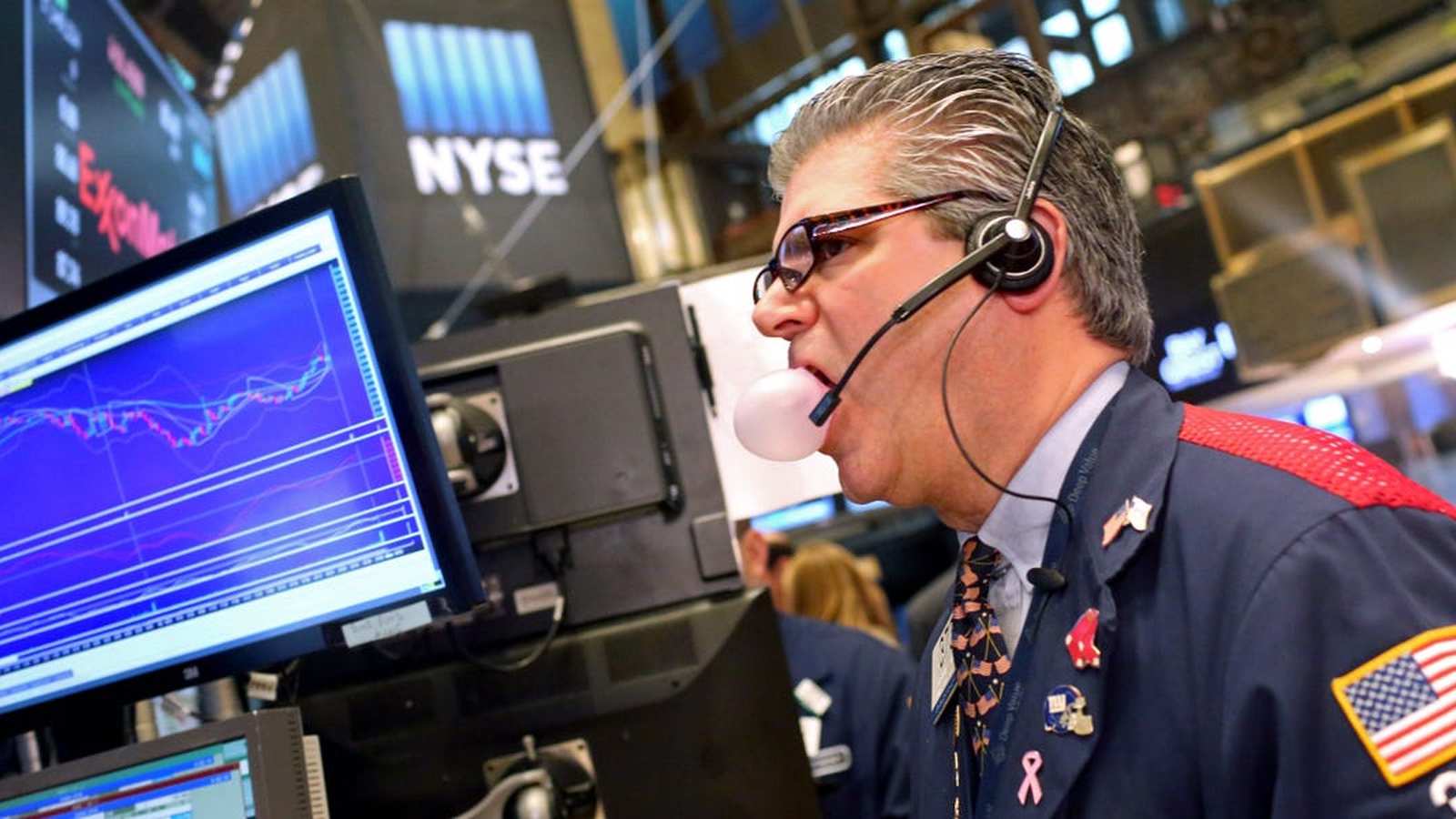
U.S. stock markets experienced a retreat on Tuesday, January 13, 2026, a day after the S&P 500 and Dow Jones Industrial Average notched new record highs. Investors grappled with a confluence of factors, including a fresh consumer inflation report, the kickoff of bank earnings season, and several policy pronouncements from President Donald Trump that sent ripples through key sectors.
The blue-chip Dow Jones Industrial Average shed approximately 400 points, ending down 0.8%. The broader S&P 500 followed suit with a 0.2% decline, while the tech-heavy Nasdaq Composite also closed lower by 0.1%. This pullback reflected a market digesting both economic fundamentals and the increasing influence of political decisions on corporate valuations.
Inflation Holds Steady, Economic Resilience Noted
The December Consumer Price Index (CPI) report, a critical gauge of inflation, largely met economists’ expectations, showing a 2.7% year-over-year rise, mirroring November’s figure. More encouragingly, ‘core’ prices, which strip out volatile food and energy costs, registered a 2.6% annual increase, falling below consensus projections of 2.8%. This stability offers a glimmer of relief for household budgets, which have contended with years of elevated living costs, though inflation still hovers above the Federal Reserve’s 2% target.
Despite the slight market dip, JPMorgan Chase CEO Jamie Dimon offered a measured assessment of the U.S. economy. ‘The U.S. economy has remained resilient. While labor markets have softened, conditions do not appear to be worsening,’ Dimon stated, as reported by Investopedia. He noted that consumers continue to spend, and businesses generally remain healthy. However, Dimon also cautioned investors against underappreciating potential hazards, including complex geopolitical conditions, the risk of sticky inflation, and elevated asset prices. His remarks underscore a prevailing sentiment of cautious optimism, where underlying economic strength is acknowledged but risks are not dismissed.
The 10-year Treasury yield, a benchmark for various commercial and consumer loan interest rates, remained largely unchanged at 4.18% by day’s end, slightly down from its pre-data release level of 4.20%.
Corporate Earnings Drive Sectoral Shifts
The day also marked the unofficial start of the fiscal 2025 fourth-quarter earnings season, with major financial institutions leading the way. JPMorgan Chase, the largest U.S. bank, reported an adjusted profit that beat expectations but slightly missed on revenue. Consequently, its shares declined by more than 4%, reflecting investor scrutiny even on strong profit figures if revenue growth lags.
Delta Air Lines (DAL) faced headwinds as its fiscal 2026 first-quarter and full-year profit forecasts disappointed investors, leading to a nearly 2.5% drop in stock value. Delta’s President, Glen Hauenstein, indicated that basic airfares in the main cabin would likely need to climb to ensure carrier viability, a move that could impact budget-conscious travelers. While the airline reported strong premium ticket and business travel bookings, it continued to lose money on passenger transport itself, relying on ancillary services like co-branded credit cards for profitability.
In contrast, the biotechnology firm Moderna (MRNA) soared by nearly 16% to lead S&P 500 gainers. This surge followed CEO Stéphane Bancel’s announcement of a raised 2025 sales forecast at the J.P. Morgan Healthcare Conference, signaling renewed investor confidence in the company’s outlook. Similarly, chipmakers Intel (INTC) and Advanced Micro Devices (AMD) were among the top performers on the Nasdaq, with shares rising 7.3% and 6.4% respectively. KeyBanc analysts upgraded both stocks to ‘overweight,’ citing stronger-than-expected demand for their AI products and potential price hikes of 10% to 15% due to sold-out 2026 capacity for server CPUs.
On the downside, Salesforce (CRM) emerged as the worst-performing stock in the Dow, dropping roughly 7%. This decline followed an update to its virtual assistant Slackbot feature in Slack, a product release that failed to reverse a year-long trend of share depreciation. Travere Therapeutics (TVTX) also saw a significant plunge, losing about a third of its value after the U.S. Food and Drug Administration requested additional information regarding its rare kidney disorder treatment, FILSPARI.
However, defense contractor L3Harris (LHX) bucked the trend, with shares rising about 3% to new record highs. The company announced plans to spin off one of its divisions with significant backing from the U.S. government, which will invest $1 billion in L3Harris’ missile solutions business, converting to equity upon its public market debut later this year.
Washington’s Shadow: Credit Cards, Tariffs, and the Fed
Political developments from Washington added another layer of complexity to market sentiment. President Trump’s weekend suggestion of capping credit card interest rates at 10% sent financial stocks reeling. Visa (V) and Mastercard (MA) were among the biggest S&P 500 decliners, with shares falling 4.5% and 3.8% respectively. Experts like Tiffany Funk, co-founder of point.me, warned that such a cap could lead to a ‘chaotic contraction of the rewards ecosystem,’ potentially resulting in fewer cards, higher fees, and diminished rewards for consumers, as banks adjust to maintain profitability.
Meanwhile, Trump reiterated his intention to distribute $2,000 tariff rebate checks to low- and middle-income Americans, though he indicated these payments might arrive ‘toward the end of the year,’ later than previously suggested. He also expressed confidence in potentially issuing these checks without congressional approval, raising questions about the program’s implementation and impact.
Adding to the political intrigue, news broke of a Justice Department (DOJ) probe involving Federal Reserve Chair Jerome Powell. Despite the unusual nature of a criminal investigation into the Fed chair, market expectations for the central bank’s next interest rate decision remained largely unchanged. Futures pricing continued to show only a 5% probability of a rate cut at the upcoming January 28 meeting, suggesting that investors are currently separating the DOJ probe from the Fed’s monetary policy trajectory. However, expectations for rate cuts increase for later Fed meetings, with June being a potential turning point for a quarter-point reduction.
In other market moves, gold futures pulled back slightly to $4,590 an ounce after setting a record high earlier in the day, while silver futures rose to $86.40 an ounce, also after hitting an all-time high. West Texas Intermediate crude oil futures climbed 2.5% to $61 a barrel following President Trump’s declaration of a 25% U.S. tariff on any country doing business with Iran. Bitcoin traded around $94,300, and the U.S. dollar index was up 0.3% at 99.14.
Tuesday’s market performance underscored a delicate balance, where strong corporate fundamentals and economic resilience are constantly tested by the unpredictable currents of political policy and persistent inflationary pressures. The day served as a stark reminder that in 2026, market stability is less about a clear trajectory and more about navigating a complex interplay of domestic and global forces, with Washington’s influence becoming an increasingly significant, and at times disruptive, factor.