
Quick Read
- The Dow Jones Industrial Average fell 0.15% on Monday, March 2, 2026, after recovering from an initial 1.1% decline.
- U.S. and Israeli actions against Iran, subsequent counterattacks, and the reported closure of the Strait of Hormuz fueled market volatility.
- Oil prices surged, with Brent crude reaching nearly $78 a barrel, and European natural gas prices soared over 45%.
- Gold and the U.S. dollar gained as investors sought safe-haven assets.
- Energy, defense, and cybersecurity stocks rose, while travel-linked companies saw significant declines due to increased fuel costs and demand risks.
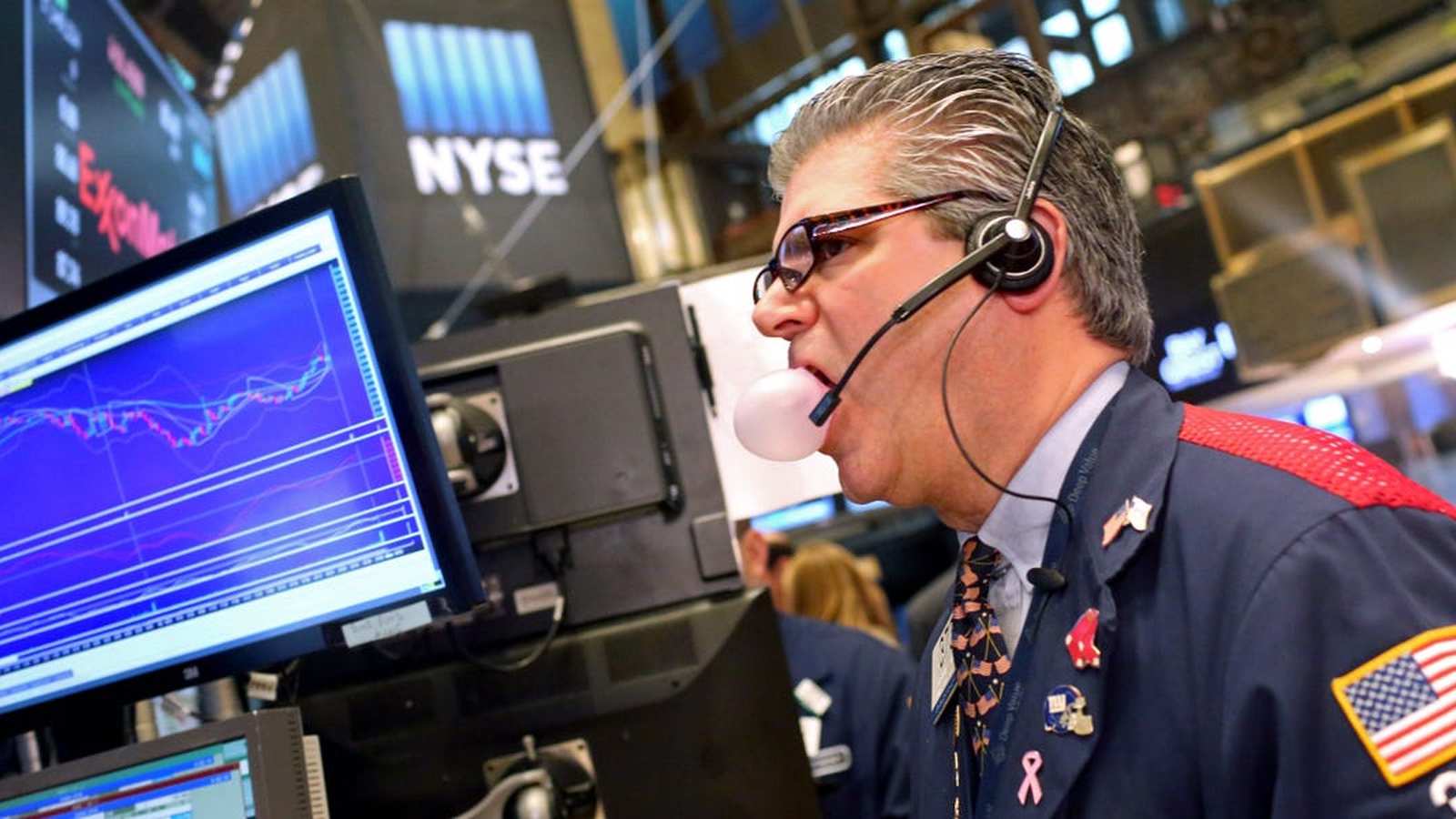
NEW YORK (Azat TV) – The Dow Jones Industrial Average, a key benchmark for U.S. stock market performance, demonstrated resilience on Monday, March 2, 2026, by paring significant early losses to close down only slightly. This market volatility unfolded as Wall Street grappled with the escalating fallout from U.S. and Israeli military actions against Iran, coupled with subsequent counterattacks and disruptions to global energy supplies.
Initially, the Dow Jones Industrial Average (^DJI) tumbled by 1.1%, shedding over 500 points at the opening bell. However, it managed a notable recovery throughout the trading day, ultimately closing down just 0.15%. This performance, alongside the S&P 500 (^GSPC) closing up a marginal 0.04% and the tech-heavy Nasdaq Composite (^IXIC) gaining 0.36%, signaled a cautious assessment by investors of the geopolitical risks.
Dow Jones Navigates Geopolitical Tensions
The primary catalyst for Monday’s market jitters was the deepening conflict in the Middle East. Reports indicated that Iran had reportedly closed the Strait of Hormuz, a critical maritime chokepoint through which approximately 20% of the world’s oil and a significant portion of liquefied natural gas (LNG) flows. This disruption immediately sent shockwaves through global commodity markets, directly influencing investor sentiment across all major indices, including the Dow.
Oil prices surged dramatically, with Brent crude futures (BZ=F) jumping by as much as 13% to briefly top $82 a barrel before settling around $78. West Texas Intermediate futures (CL=F) also saw an increase, trading just below $72, up about 8%. The prospect of sustained disruption in the Strait of Hormuz, combined with QatarEnergy halting LNG production after its facilities were reportedly struck by drones, caused European natural gas prices (TTF=F) to explode higher by over 45%.
Broader Market Reactions to Middle East Conflict
The geopolitical turbulence led to a flight to safe-haven assets. Gold futures (GC=F) surged, touching $5,400 an ounce before paring some gains, while the U.S. dollar (DX-Y.NYB) also strengthened. Conversely, Treasury yields (^TNX) moved higher, with the 10-year yield climbing 8 basis points to 4.04%. This increase reflected investors demanding extra yield for longer-term risk and cutting back bets on interest-rate cuts due to heightened inflation concerns.
Sectoral performance was sharply divided. Energy majors like Exxon (XOM), Marathon Petroleum (MPC), and ConocoPhillips (COP) saw their shares pop. Defense stocks, including Lockheed Martin (LMT), Palantir Technologies (PLTR), Axon (AXON), and Northrop Grumman (NOC), also found strong buyers, with Palantir jumping about 7% on increased government business. Cybersecurity firms like Palo Alto Networks (PANW), CrowdStrike (CRWD), and Cloudflare (NET) also rose, as experts warned of an elevated risk of retaliatory cyberattacks from nation-state actors.
Conversely, travel-linked stocks bore the brunt of the market’s unease. Airlines such as Delta Air Lines (DAL) and United Airlines (UAL), alongside cruise lines like Carnival (CCL) and Royal Caribbean (RCL), saw significant declines. The surge in jet fuel and marine fuel costs, coupled with the risk of reduced demand due to regional instability, directly impacted their profit margins.
Investor Sentiment and Economic Outlook
Despite the initial sell-off, some analysts viewed the market’s reaction as a potential buying opportunity for long-term investors. JPMorgan strategists noted that while ‘dramatic weekend events will naturally lead to risk-off behavior in the markets in the short term,’ investors with a longer time horizon should consider using the weakness to add to their portfolios. Even Bitcoin (BTC-USD) rebounded from earlier lows, rising over 5% to $69,000, signaling a cautious return to risk-on assets among some traders.
Looking ahead, market participants are closely watching for the release of the monthly U.S. jobs report on Friday. Economists expect U.S. payrolls to have added 60,000 jobs in February, a moderation from January’s stronger-than-expected 130,000 gain. This report will be a key input into future interest rate calculations and broader economic forecasts, influencing the Dow’s trajectory in the coming weeks.
The Dow Jones Industrial Average’s ability to recover from a steep initial decline on Monday underscores the market’s complex interplay between immediate geopolitical shocks and underlying investor confidence, particularly when key economic indicators are on the horizon.