
Quick Read
- The US Embassy in Riyadh was hit by two drone attacks early Tuesday morning.
- President Donald Trump vowed a swift response to the attack and other Iranian strikes.
- The incident is part of a wider wave of Iranian missile and drone strikes across Gulf states.
- The US State Department ordered evacuation of non-emergency personnel from multiple Middle Eastern embassies.
- Saudi Arabia’s defense ministry intercepted eight projectiles near Riyadh and Al-Kharj.
RIYADH (Azat TV) – The United States Embassy in Riyadh, the capital and largest city of Saudi Arabia, was struck by drone attacks early Tuesday morning, prompting an immediate vow of retaliation from US President Donald Trump and further escalating an already volatile regional conflict. The incident, which caused limited fire and material damage, led the US State Department to order the evacuation of non-emergency personnel from several Middle Eastern diplomatic missions, underscoring the widening impact of the ongoing hostilities.
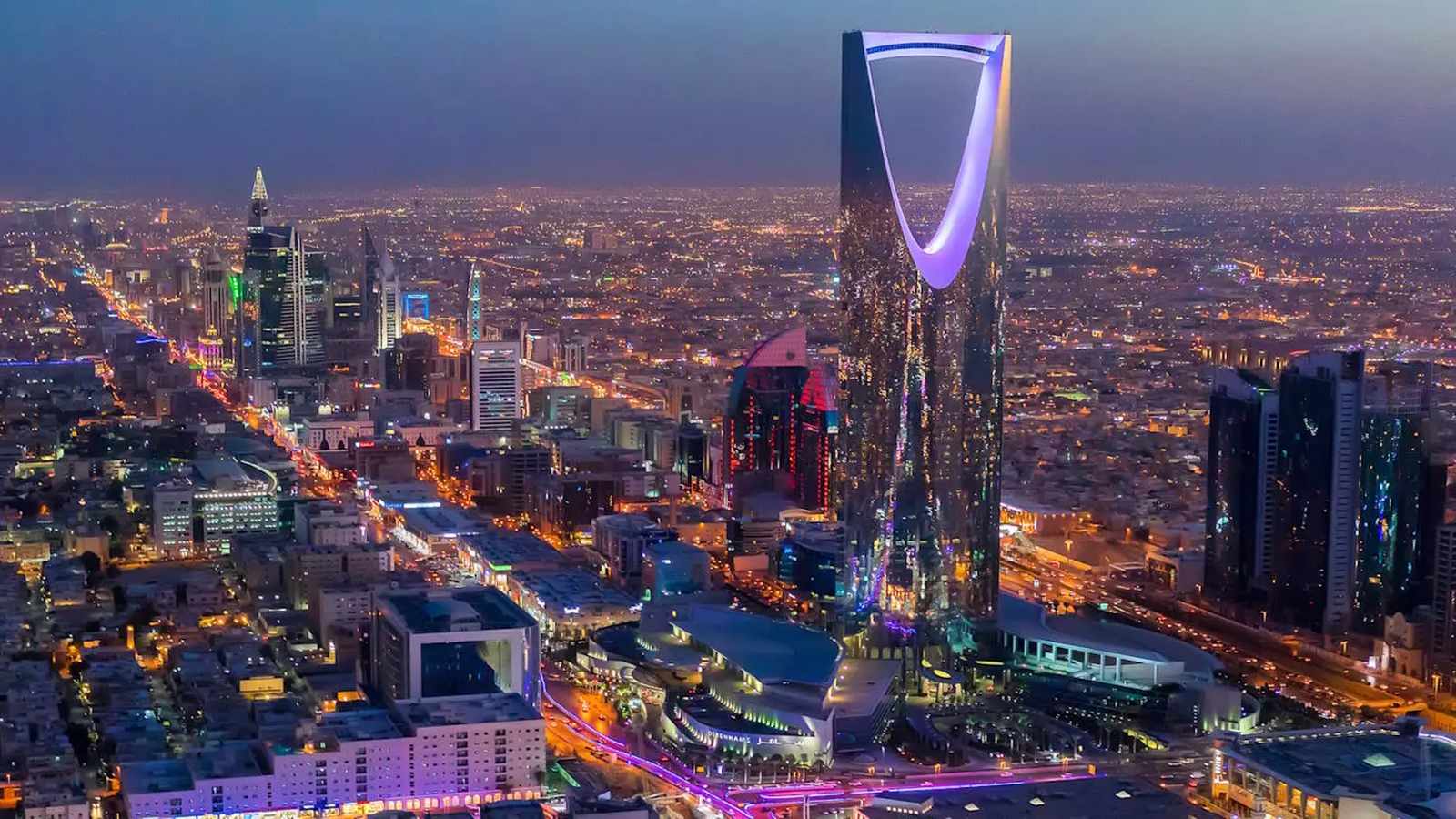
Riyadh, serving as Saudi Arabia’s political and administrative center and a major economic hub, found itself at the heart of renewed regional instability as the US embassy compound in its Diplomatic Quarter was targeted. Saudi Arabia’s Defense Ministry confirmed that two drones hit the embassy, causing some material damage and a limited fire, with witnesses reporting a loud blast and visible smoke. This attack was part of a broader wave of missile and drone strikes launched by Iran against multiple Gulf states, including the United Arab Emirates, Qatar, Jordan, Kuwait, and Bahrain, in addition to Saudi Arabia.
Drone Strikes Target Riyadh’s Diplomatic Quarter
The assault on the US Embassy in Riyadh occurred just after midnight local time, as Iran unleashed a barrage of projectiles across the region. Saudi Arabia’s defense ministry stated that it successfully intercepted and destroyed eight projectiles near Riyadh and the city of Al-Kharj, located approximately 100 kilometers southeast of the capital. Despite these interceptions, the embassy sustained damage, leading to a ‘shelter in place’ notice for US citizens in Riyadh, Jeddah, and Dhahran, with a recommendation to avoid the embassy until further notice.
The US State Department’s decision to evacuate non-critical personnel and their families from its embassies and consulates in Iraq, Bahrain, Jordan, Qatar, and the United Arab Emirates highlights the perceived threat level across the region. The US Embassy in Kuwait was also reportedly struck on Monday and has since been closed indefinitely due to ‘regional tensions.’ These measures reflect the serious concerns about the safety of diplomatic staff amidst the escalating conflict.
Regional Escalation and US Response
US President Donald Trump swiftly responded to the attack, suggesting that the United States would retaliate ‘soon’ for the embassy strike and the killing of six US military personnel in prior Iranian attacks. Speaking to NewsNation, President Trump indicated that ‘boots on the ground [in Iran] will not be necessary’ for the forthcoming response. Top US officials, including Defense Secretary Pete Hegseth, Secretary of State Marco Rubio, and Vice President JD Vance, have emphasized that the primary objective of the ongoing conflict is to dismantle Iran’s nuclear program, not to achieve regime change, despite earlier calls from President Trump for Iranians to ‘take over your government.’
Iran’s Foreign Minister Seyed Abbas Araghchi, however, accused the United States of engaging in a ‘war of choice on behalf of Israel.’ In a statement on X, Araghchi claimed that US Secretary of State Marco Rubio’s comments confirmed that the US had entered the conflict to protect Israeli interests, denying any ‘imminent threat’ from Iran as a pretext for US actions. Rubio had previously stated that US attacks on Iran were for the United States’ own protection against an ‘imminent threat,’ claiming knowledge of an impending Israeli action that would precipitate attacks against American forces.
Wider Impact Across the Middle East
The conflict’s reach extends far beyond Riyadh. Israeli forces have continued extensive strikes on Beirut, Lebanon, targeting Iran-backed Hezbollah militant group command centers and weapons storage facilities. These operations followed Hezbollah’s retaliatory strikes on northern Israel after the killing of Iran’s Supreme Leader Ayatollah Ali Khamenei. Lebanon’s government reported 52 fatalities and 154 injuries from Israeli attacks on Monday alone, leading to the closure of schools and universities in Lebanon on Tuesday.
The wider conflict has also severely disrupted shipping through the Strait of Hormuz, a critical global transport route for oil, gas, and fertilizer, raising concerns about potential negative impacts on economies worldwide. Amidst these developments, the clerical body tasked with electing Iran’s supreme leader indicated that a successor to Ayatollah Ali Khamenei, who was killed on Saturday, would be chosen ‘very soon.’ Additionally, the spouse of US President Donald Trump, Melania Trump, chaired a UN Security Council meeting focused on education in conflict situations, urging international leaders to prioritize education for peace, as dozens of children were reportedly killed in southern Iran and schools across the Middle East closed.
The attack on the US Embassy in Riyadh highlights Saudi Arabia’s geopolitical significance as a regional power and a key US ally, making its capital a critical flashpoint in the escalating US-Iran-Israel conflict. This incident underscores the inherent risks to diplomatic and economic stability in major Middle Eastern hubs amidst widening hostilities, challenging the region’s broader development goals.