
Quick Read
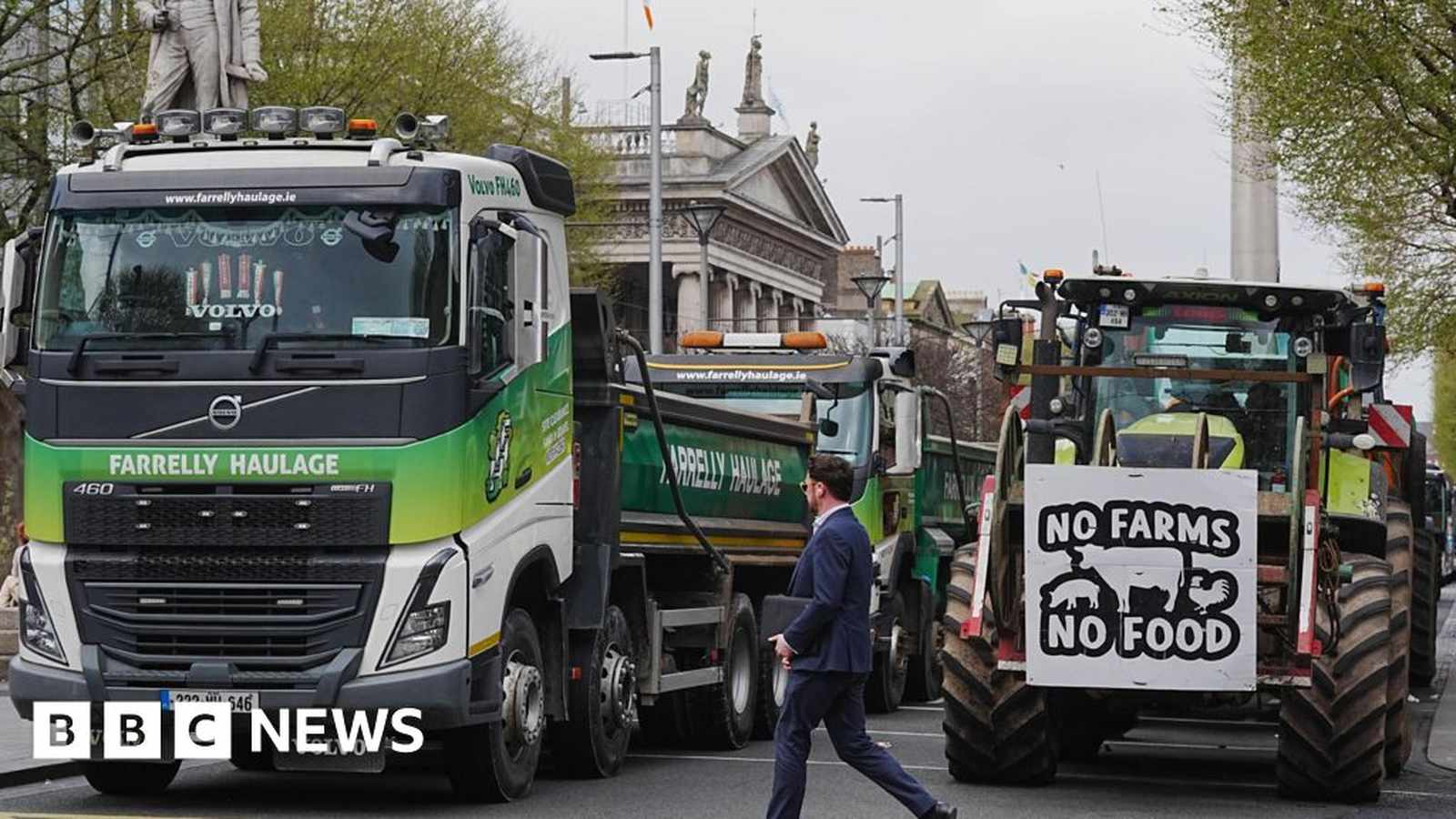
- Protests in Dublin have entered their second day, with slow-moving convoys causing major traffic gridlock across the city.
- Government officials have criticized the blockades for disrupting emergency services and preventing citizens from accessing essential medical and work-related sites.
- Despite the economic pressure on haulage and agricultural sectors, the government has signaled that no new cost-of-living measures are planned before the October budget.
DUBLIN (Azat TV) – Protests over surging fuel prices entered their second day on Wednesday, with slow-moving convoys of tractors, trucks, and coaches bringing major traffic arteries in Dublin and surrounding regions to a near-standstill. The demonstrations, triggered by global oil market volatility following the closure of the Strait of Hormuz, have intensified pressure on the Irish government as supply chains and public services face mounting disruptions.
Disruption to Essential Infrastructure and Emergency Services
The protests have caused significant gridlock across the capital, with O’Connell Street and O’Connell Bridge remaining at a standstill for much of the day. Public transport providers, including Dublin Express, have been forced to terminate services at Dublin Airport, while cross-border routes between Dublin and Belfast have faced sustained delays. The impact has extended beyond commuters; the Dublin Fire Brigade reported significant challenges in navigating the city, prompting urgent appeals for protesters to ensure clear access for emergency vehicles.
Economic Strain on Haulage and Agriculture
For many participants, the demonstrations represent a last-ditch effort to secure financial relief as operational costs threaten the viability of their businesses. Agricultural contractors and hauliers report that recent price hikes have rendered previous government subsidies insufficient. Christopher Duffy, an agricultural contractor from County Meath, warned that without immediate intervention, many in the sector face insolvency within months. Protesters are demanding a direct meeting with government officials to discuss a price cap or further financial support, arguing that current communication channels have failed to produce results.
Government Stance and Operational Tensions
Taoiseach Micheál Martin and Justice Minister Jim O’Callaghan have signaled a hardening of the government’s position. While acknowledging the right to protest, officials have described the current level of disruption as unacceptable, citing the impact on the public’s ability to reach medical appointments and workplaces. Fuel industry leaders have also expressed frustration, with Kevin McPartlan of Fuels for Ireland confirming that blockades at key terminals—including a site in Galway—are preventing the normal distribution of fuel. Gardaí have been urged to take more decisive action to clear critical infrastructure, even as the government maintains that further immediate cost-of-living measures are unlikely to be announced before the October budget.
The standoff underscores a deepening divide between the government’s fiscal restraint and the immediate survival needs of the transport and agricultural sectors, suggesting that unless a direct dialogue is established, the tactical use of heavy machinery to paralyze urban centers may become a recurring feature of the national protest landscape.