
Quick Read
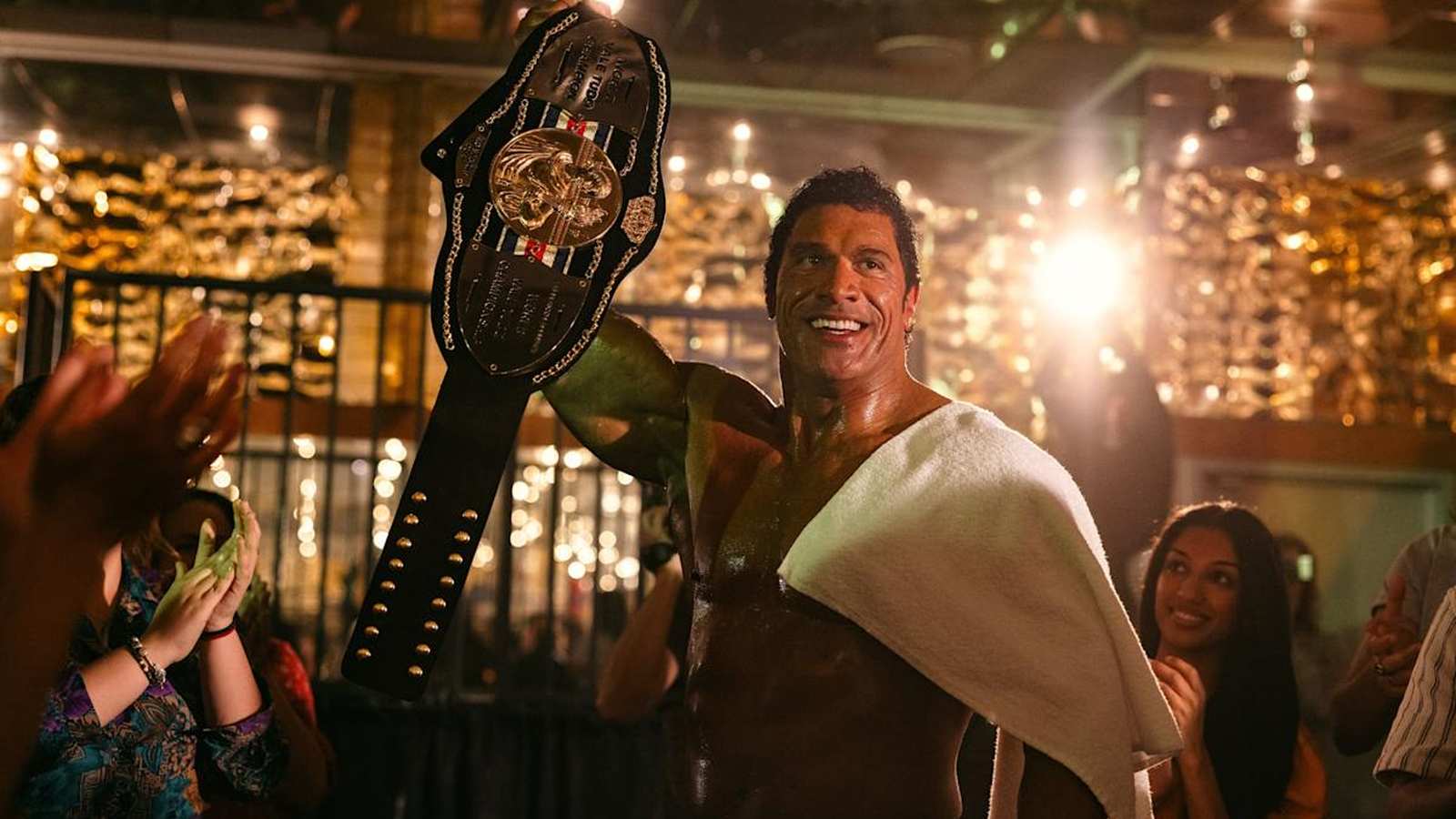
- Dwayne Johnson plays MMA legend Mark Kerr in ‘The Smashing Machine’, undergoing intense physical and emotional transformation.
- Johnson’s performance has earned praise from UFC CEO Dana White and sparked Oscar buzz.
- Director Benny Safdie insisted on Johnson gaining more weight and using extensive facial prosthetics for authenticity.
- Real MMA fighters and non-actors feature in the cast, adding to the film’s realism.
- The movie explores Kerr’s rise, personal struggles, and relationships between 1997-2000.
Dwayne Johnson Embodies Mark Kerr’s Rise and Struggle in ‘The Smashing Machine’
It’s not every day that an actor known for his superhero physique is asked to get bigger. But for Dwayne Johnson, the path to portraying mixed martial arts legend Mark Kerr in Benny Safdie’s ‘The Smashing Machine’ was anything but ordinary. Johnson, who’s spent decades sculpting a body synonymous with action stardom, was given a singular directive for this role: transform, inside and out, until he became almost unrecognizable—even to Kerr himself.
When the film premiered at the Toronto International Film Festival, the real Mark Kerr found himself face-to-face with Johnson, who stood before him in full facial prosthetics, complete with trauma-induced “cauliflower ears.” The resemblance was uncanny. Kerr could only mutter in disbelief, “He’s standing right behind me and it’s me!” The moment was surreal—an athlete confronting his own story, played by a global icon whose journey had, in many ways, run parallel to his own.
Transformation Beyond Muscle: The Artistry Behind Johnson’s Performance
To play Kerr, Johnson didn’t just bulk up—he immersed himself in the emotional complexities of a fighter at war with both opponents and personal demons. The film follows Kerr through the late 1990s to 2000, a period marked by triumphs in the ring and struggles with addiction. At his side is Dawn, played by Emily Blunt, whose relationship with Kerr anchors the film’s emotional stakes. Their dynamic is turbulent, reflecting the highs and lows of a life lived on the edge of fame and vulnerability.
Johnson’s commitment to authenticity extended far beyond the gym. He worked with a coach to master Kerr’s voice, described as “soft and beautiful, a kind and gentle, tender soul.” Four hours a day, Johnson submitted to the painstaking application of up to 14 facial prosthetics, a process he called “anchoring”—the physical transformation grounding him in Kerr’s lived experience. “I had waited for this opportunity for such a long time, to do something that challenged myself,” Johnson shared, crediting Kerr’s story with changing his own life.
Oscar Buzz and Praise From the Fight World
But Johnson’s performance isn’t just a feat of physical transformation—it’s earning serious Oscar buzz and, perhaps more remarkably, the admiration of the fight community’s toughest critics. UFC CEO Dana White, notorious for his skepticism toward Hollywood’s portrayal of combat sports, was won over after an early screening. “The Rock flew out to Vegas and showed it to me first, and it’s unbelievable,” White told Mario Lopez on ‘Access Hollywood.’
For White, most fight films fall flat, missing the visceral reality that defines MMA. But ‘The Smashing Machine’ was different. “There’s a scene with Johnson and Emily Blunt, and I think they should both win an Oscar based off this one scene,” White declared. The film dives deep into Kerr’s journey through PRIDE FC, capturing the chaos and camaraderie of the sport. Johnson’s goal, he told MMA Junkie, was to create a film that resonated with true MMA fans—a mission that, by White’s account, he accomplished.
“I’m happy for him,” White added. “He’s finally gonna get the recognition for his acting skills… Everybody in this movie does a great job. And believe me when I tell you, I’m not here to sell ‘The Smashing Machine.’ You know, I tell you straight up I don’t like a lot of the fight movies. This is a great movie.”
The Real Cost of Authenticity: Blood, Sweat, and Respect
On set, Johnson’s pursuit of realism sometimes meant taking real punches. In one pivotal scene, Yoko Hamamura, playing one of Kerr’s challengers, was urged by Bas Rutten (himself a former MMA fighter and Johnson’s on-screen trainer) to hit Johnson hard—“It’s The Rock. Hit him in the freaking head, OK?” Rutten joked. Johnson agreed, but with one caveat: “You can hit me hard, but don’t knock me out.” The resulting punch, captured in the film’s trailer, left Johnson visibly dazed. “So you’ll see in the movie where I look dazed, it’s real,” Johnson confirmed, laughing at the memory.
It’s these details—the willingness to endure pain, the meticulous research into Kerr’s mannerisms, the emotional vulnerability—that set Johnson’s performance apart. Safdie’s direction channels the raw, unfiltered energy of Kerr’s life, refusing to shy away from the contradictions that made the fighter both legendary and tragically human. Kerr was, as Johnson describes, “a walking contradiction of being this incredible fighter but also a really beautiful human being who was loving and kind and sweet. And in ways, broken and trying.”
Johnson and Kerr’s paths first crossed in the late 1990s, both men at the start of careers that would take them in vastly different directions. Kerr remembers Johnson as “The Rock,” a persona so globally recognized that “there’s very few places on the planet you can go that don’t know who he is.” For Kerr, the film represents a chance for Johnson to break out of typecasting and show a new side to his artistry. “It allowed him to be completely something that nobody else expects,” Kerr said, recalling his advice: “You don’t have to do this.” Johnson’s reply was unwavering: “Yes I do. I got to.”
A New Chapter in Dwayne Johnson’s Career
‘The Smashing Machine’ marks a turning point for Johnson, whose career has been defined by larger-than-life roles and relentless ambition. But here, ambition takes on a different shade: the drive to honor a story that is messy, complicated, and painfully real. The film’s authenticity is echoed in the ensemble cast, with director Safdie inviting non-actors from the MMA world to join the production—a risky move, but one that paid off. “They killed it,” Dana White remarked. “Everybody in this movie does a great job.”
As Johnson charts new territory, the industry is watching. The film’s buzz at Toronto, coupled with White’s endorsement and critical acclaim from outlets like USA TODAY, suggests that ‘The Smashing Machine’ could be the project that finally earns Johnson the recognition he’s sought beyond action blockbusters. For fans of MMA, it’s a rare glimpse into the heart of the sport. For moviegoers, it’s a testament to what happens when an actor refuses to be boxed in by expectations.
Johnson’s transformation in ‘The Smashing Machine’ isn’t just about physical metamorphosis—it’s a study in what happens when an artist dares to step into another man’s shoes, embracing the bruises, the beauty, and the brokenness. By diving into Mark Kerr’s complicated legacy, Johnson has not only redefined himself but also raised the bar for sports dramas, proving that real heroism comes from vulnerability as much as strength.