
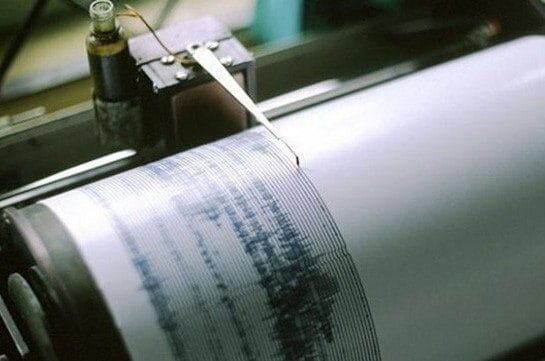
The earthquake that struck Armenia on March 8 served as a stark reminder of the constant risk of natural disasters in our region. The earthquake was recorded at 09:26 local time (05:26 GMT), with its epicenter located 6 km northeast of Spitak, at a depth of 10 km. According to the Seismic Protection Territorial Service of the Ministry of Emergency Situations of Armenia, the earthquake had a magnitude of 4.6, and the intensity in the epicentral zone reached 6-7 on the MSK-64 scale. Tremors were felt across several regions of Armenia, indicating the earthquake’s propagation and potential impact.
Earthquake Details: Time, epicenter, and magnitude of the seismic event.
The earthquake occurred on March 8, 2025, at 09:26 AM local time. The source of seismic activity was located in northern Armenia, near the city of Spitak. The geographical coordinates are 40.88⁰ North latitude and 44.29⁰ East longitude. The earthquake’s focus was 10 km deep, which is considered a shallow earthquake and is more perceptible to humans. The magnitude, a measure of the earthquake’s energy, was recorded at 4.6. While a magnitude of 4.6 is classified as a moderate earthquake, it can still cause noticeable tremors and concern among the population, especially in areas close to the epicenter.
Intensity Across Regions: Which regions felt the tremors and at what strength?
Earthquake tremors were felt with varying intensities across several regions of Armenia. In the epicentral zone, near Spitak, the intensity reached 6-7 on the MSK-64 seismic intensity scale. In the more distant Lori, Shirak, and Tavush regions, the tremors were felt at an intensity of 4-6, which is also considered significant and may cause minor damage to buildings, especially older structures. In the Kotayk, Gegharkunik, and Aragatsotn regions, the intensity was 2-4, characterized as weak tremors, felt by people indoors but causing no damage. The difference in intensity across regions is due to the distance from the epicenter and the geological characteristics of the terrain.
Seismic Activity in Armenia: Historical overview of earthquakes in the region.
Armenia is located in a seismically active zone formed by the collision of the Eurasian and Arabian tectonic plates. Historically, Armenia has been the scene of numerous devastating earthquakes. Notable examples include the Shirak earthquake (1679), the Yerevan earthquake (1797), and, of course, the catastrophic Spitak earthquake (1988), which claimed thousands of lives and caused widespread destruction. The 1988 Spitak earthquake, with a magnitude of 6.8-7.2, is a particularly tragic chapter in Armenia’s history. This earthquake demonstrated the likelihood of strong seismic events in the region and the constant need for preparedness for such disasters. The recent earthquake serves as a reminder that seismic risk persists, and it is crucial to continue monitoring seismic activity and be prepared for potential tremors.
How to Prepare for an Earthquake: Safety rules and recommendations.
Preparing for earthquakes and following safety rules can save lives and minimize damage. Key recommendations during and after an earthquake:
- During an Earthquake:
- If you are indoors: Follow the “drop, cover, and hold on” rule. Drop to the floor, take cover under sturdy furniture (e.g., a table), and hold on to it. Stay away from windows and exterior walls.
- If you are outdoors: Move away from buildings, power lines, and other hazardous objects. Find an open space and drop to the ground.
- After an Earthquake:
- Check for injuries. Do not rush out of the building until the tremors have stopped.
- If the building is damaged, evacuate and move to a safe area.
- Follow official news and instructions. Do not spread unverified information.
- Be prepared for aftershocks.
Prepare an emergency kit in advance, containing essential items such as water, food, medication, a flashlight, a radio, and first-aid supplies. Regularly discuss earthquake action plans with your family. Awareness and preparedness can significantly reduce the consequences of earthquakes.
Government Response: Potential further actions and support measures.
Immediately following the earthquake, the Seismic Protection Territorial Service of the Ministry of Emergency Situations of Armenia began monitoring the situation and collecting data. The government will likely monitor the situation and take appropriate measures as needed to assist those affected and mitigate the consequences. It is important for the public to follow official information and avoid panic.