
Quick Read
- Charlie Hunnam spent months researching Ed Gein for his role in Netflix’s ‘Monster’.
- No known recordings of Ed Gein’s real voice exist; accounts describe him as quiet and soft-spoken.
- The series gives Gein a unique, unsettling voice for dramatic and psychological effect.
- The show’s portrayal blends fact with fiction to deepen the narrative.
The Netflix Portrayal: A Voice That Chills
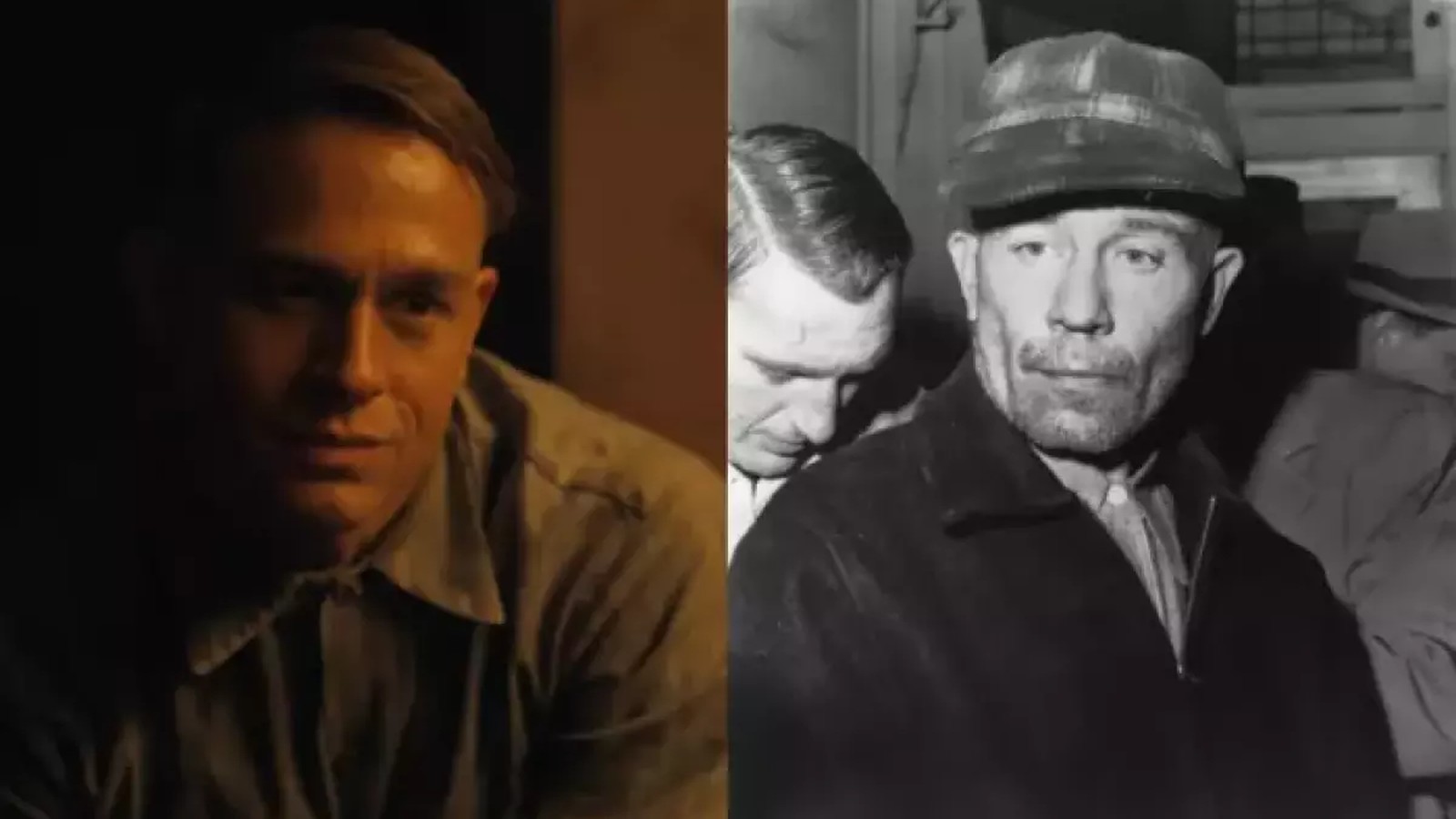
When Netflix released Monster: The Ed Gein Story, viewers were gripped not just by the horror of Ed Gein’s crimes, but by the unsettling presence Charlie Hunnam brought to the screen. In the role of Gein, Hunnam’s voice—soft, high-pitched, sometimes childlike, sometimes eerily flat—became a central part of the character’s disturbing aura. But as audiences binge the series, a question lingers: Did Ed Gein really talk like that?
Research, Performance, and The Search for Authenticity
According to The Hollywood Reporter, Hunnam invested months in research, reading every book on Gein, poring over court transcripts, and analyzing medical records. His aim, as he told the outlet, was to avoid glamorizing Gein’s horrific acts and instead present a story about “mental health and the consequences of abuse and isolation.” Hunnam’s preparation was methodical and intense. On set, he stayed in character 80 percent of the time, according to co-star Suzanna Son, maintaining the voice and demeanor that made his Ed Gein so memorable.
Tyler Jacob Moore, who played Sheriff Schley—the man who arrested Gein—recalled to The Hollywood Reporter that Hunnam’s performance was so immersive, it was genuinely unsettling to interact with him on set. “He was Ed when he was on set—the voice, his demeanor,” Moore said. “I was just genuinely shocked. Him being Ed in those moments was horrifying.”
The Real Ed Gein: What Do the Records Say?
Despite the meticulous approach, there remains a crucial gap: few recordings or reliable firsthand accounts of Ed Gein’s actual voice exist. Gein’s crimes, committed in the 1950s, predate the era when media routinely captured suspects’ speech. Most contemporary newspaper reports and police records focus on the grisly details of his crimes and his mental state, not his manner of speaking.
Some sources, including interviews with people who knew him in Plainfield, Wisconsin, described Gein as “quiet,” “polite,” and “soft-spoken.” He was said to be shy, and, in the words of one local, “a bit odd, but never loud.” His voice, by all surviving accounts, was not especially remarkable—neither dramatically high nor low, not menacing or theatrical. In short, Ed Gein spoke with the unremarkable cadence of a man who blended into the rural Midwest. The legend of a distinctive, haunting voice seems to be more a product of retellings than fact.
Fictionalization, Psychological Depth, and the Power of Performance
So why does the Netflix series depict Gein with such a distinct, unsettling voice? The answer lies in the creative liberties taken to deepen the psychological portrait. As BollywoodShaadis explains, the show is not a documentary but a dramatization, one that seeks to fill historical gaps with narrative tension and emotional resonance. By giving Gein a particular way of speaking—childlike, fractured, haunted—the showrunners highlight his profound isolation, his dependence on his mother, and the mental illness that shaped his crimes.
Showrunner Ian Brennan described the season as “a really rich, very weird, extremely upsetting, very emotional, deeply funny season of television.” The voice, then, becomes a tool: a way to make Gein’s inner world audible, to signal to viewers that beneath his ordinary surface lay something extraordinary—and extraordinarily broken.
Charlie Hunnam did not consult Evan Peters, who played Jeffrey Dahmer in a previous season, but he did seek advice from Sarah Paulson, a veteran of dark roles. Her advice was simple: “Challenge yourself. Don’t be afraid. It’s inside you, just look deep and find it.” Hunnam channeled this into every aspect of his performance, including the voice, crafting a character that is both historically rooted and dramatically heightened.
Fact vs. Fiction: Navigating the Line in True Crime Storytelling
The voice of Ed Gein in Monster is, ultimately, a blend of fact and fiction. While it may not match the real Gein’s unremarkable speech, it serves the narrative purpose of externalizing his psychological trauma. The show’s choice to dramatize his voice—just as it dramatizes aspects of his relationship with his brother Henry and his mother—reflects a broader trend in true crime storytelling: the need to fill in the unknowable with something that feels true, even if it isn’t strictly factual.
The series opens with a dramatized scene of Gein killing his brother Henry, a moment never proven in real life. Similarly, the voice becomes part of the show’s psychological tapestry, drawing viewers deeper into the mind of a man whose crimes defy easy explanation.
After Gein’s arrest in 1957 for the murder of Bernice Worden, and the subsequent discovery of his grave-robbing and body mutilations, his legacy became the stuff of American nightmares. He inspired iconic horror villains like Norman Bates, Leatherface, and Buffalo Bill. But the man himself, by most accounts, was an unassuming presence—quiet, unremarkable, almost invisible in his community until the horrors were revealed.
The Enduring Legacy of a Haunting Story
By giving Ed Gein a distinctive voice, Netflix’s Monster does more than just create atmosphere. It asks viewers to listen—not just to the facts, but to the echoes of trauma, loneliness, and mental illness that shaped one of history’s most infamous criminals. It’s a choice that blurs the line between history and art, fact and feeling.
As viewers, we’re left to wonder: How much of what we see—and hear—on screen is real? And does the emotional truth sometimes outweigh the literal one?
The Netflix portrayal of Ed Gein’s voice is not a direct reflection of historical fact, but a deliberate artistic choice. By focusing on psychological depth over strict accuracy, the series invites us to confront the deeper realities behind infamous crimes—the isolation, the abuse, and the mental illness that can lurk behind the most ordinary voices. In doing so, it reminds us that sometimes, the most haunting truths are the ones we cannot hear at all.