
Quick Read
- EHRC withdrew its interim guidance on trans exclusion after six months of controversy.
- The Supreme Court’s April ruling redefined ‘sex’ in the Equality Act as biological.
- Legal challenges and public outcry pressured EHRC to remove the guidance.
- Organisations are now urged to seek specialist legal advice until new guidance is approved.
- The government is being pressed to quickly sign off the updated Code of Practice.
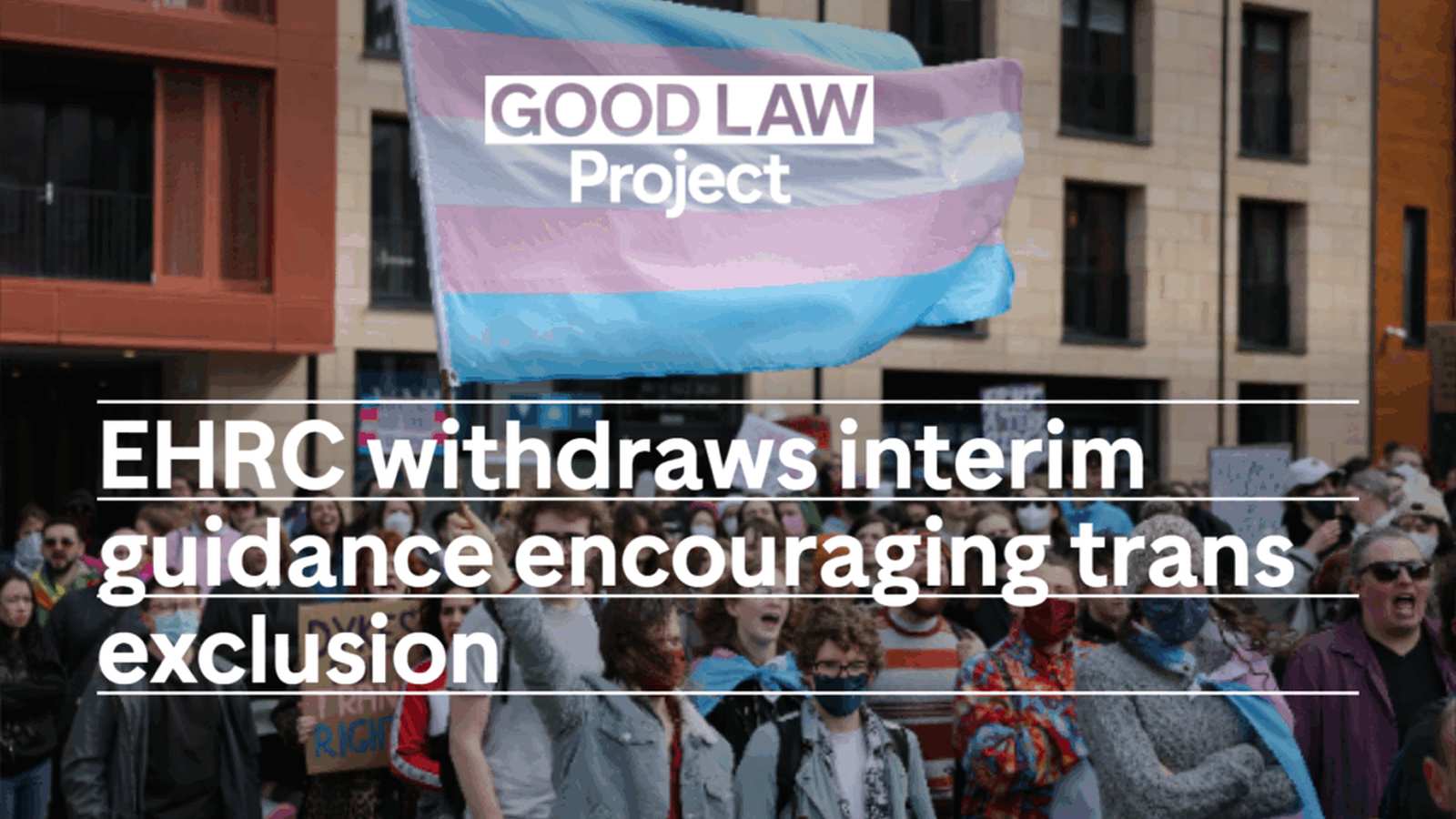
In a move that’s sent ripples through the legal and social landscape, the Equality and Human Rights Commission (EHRC) has withdrawn its interim guidance that encouraged the exclusion of trans people from single-sex spaces—a document which, for half a year, shaped the practices of employers and service providers across the UK. This decision follows intense scrutiny, legal action, and impassioned advocacy from human rights groups, notably the Good Law Project, which has been at the forefront of challenging the guidance’s legality and impact.
Background: Supreme Court Ruling and EHRC’s Response
The controversy erupted in April 2025, when the Supreme Court handed down its verdict in the For Women Scotland vs Scottish Ministers case. The ruling clarified that the Equality Act 2010 defines ‘woman’ on the basis of biological sex, effectively excluding trans women from that legal category. Within days, the EHRC released interim guidance that advised service providers—gyms, hospitals, clubs, and more—to bar trans men and women from gendered services and facilities that align with their gender identity, citing the new legal interpretation.
The guidance was met with immediate resistance. Critics described it as an effective ‘bathroom ban’, arguing that it not only contradicted prior understandings of equality law but also risked causing real harm to trans people. Organisations, uncertain about compliance, often implemented exclusionary policies overnight. The Good Law Project, among others, launched legal challenges against the EHRC, asserting that the guidance could encourage unlawful discrimination and deepen social exclusion for trans individuals (Good Law Project, PinkNews).
Impact on Trans Communities and Legal Backlash
The effects of the interim guidance were felt immediately. Advocates recounted stories of trans people fearing to leave their homes, some experiencing severe mental distress and suicidal thoughts. “I’ve spent six months talking to trans people who are afraid to go out because of the climate of fear the EHRC’s interim guidance created,” said Jo Maugham, executive director of the Good Law Project. The guidance, which called for exclusion in certain circumstances—including where a trans person’s appearance raised ‘reasonable objection’—left organisations and individuals navigating a fraught legal and social terrain.
Legal experts warned that some of these exclusionary practices, hastily adopted in response to the EHRC’s document, may actually run afoul of the Equality Act itself. Jess O’Thomson, trans rights lead at the Good Law Project, noted, “The guidance hasn’t only had a devastating impact on trans people’s lives, but may also have encouraged organisations to act unlawfully.” The withdrawal of the interim guidance, therefore, does not automatically reverse the damage; unless organisations rescind these policies, they may face future legal challenges.
Withdrawal and the Push for New Guidance
On October 15, the EHRC formally removed the interim guidance from its website. In its place, employers and service providers have been advised to seek specialist legal counsel until new, legally robust guidance is approved and published. The watchdog’s chair, Baroness Kishwer Falkner, addressed Women and Equalities Minister Bridget Phillipson in a letter, urging her to expedite the approval process for the updated Code of Practice. Falkner emphasized that the previous 2011 code, still used by some organisations, has become unlawful due to the Supreme Court’s ruling and subsequent developments (BBC News).
The government, however, has yet to sign off on the revised code, citing the need to thoroughly review the 300-page document. Critics, including opposition politicians, have accused the government of stalling, possibly for political reasons as Phillipson campaigns for Labour’s deputy leadership. Meanwhile, misinformation and confusion persist, with some organisations continuing to rely on outdated—and now unlawful—guidance.
What’s in the New Draft Code?
The draft EHRC code, not yet public, reportedly outlines scenarios in which trans people could be excluded from competitive sports for safety or fair competition reasons, and allows for birth certificate checks if there is “genuine concern” about a person’s biological sex. It also encourages facilities to consider alternatives, such as individual lockable toilets accessible to all. Despite these clarifications, concerns remain that the new guidance may not differ substantially from the interim version, raising questions about whether it truly advances trans rights or merely codifies exclusion under the guise of clarity.
Public consultations on the draft lasted six weeks, after initial criticism that the original period was too short to gather meaningful feedback. Trans groups and the Women and Equalities Committee pressed for broader input, seeking to ensure the final code reflects lived realities and legal obligations.
Current Uncertainty and Next Steps
With the interim guidance withdrawn and the new code awaiting ministerial approval, organisations across the UK find themselves in a state of limbo. The EHRC’s official advice is for duty-bearers to comply with the law and seek expert legal advice tailored to their circumstances. Yet, as Baroness Falkner observed, “How quickly this happens is now in the government’s hands. We urge them to act at speed.”
Meanwhile, the High Court is set to hear Good Law Project’s challenge to the withdrawn guidance in November. The outcome may set further precedents for how equality law is interpreted and enforced, especially regarding the rights of trans people in accessing services and spaces aligned with their gender identity.
In the absence of clear, authoritative guidance, the stakes remain high for both organisations and individuals. For trans communities, the episode has underscored the precariousness of their legal protections and the profound real-world impact of policy shifts at the highest levels.
Assessment: The EHRC’s withdrawal of its interim guidance is a critical but belated step toward restoring legal clarity and trust. However, the damage to trans communities—manifested in fear, exclusion, and distress—cannot be undone simply by removing a document. The need for transparent, inclusive, and legally sound guidance is urgent, and the government’s response in the coming weeks will shape the future of equality law in the UK.