
Quick Read
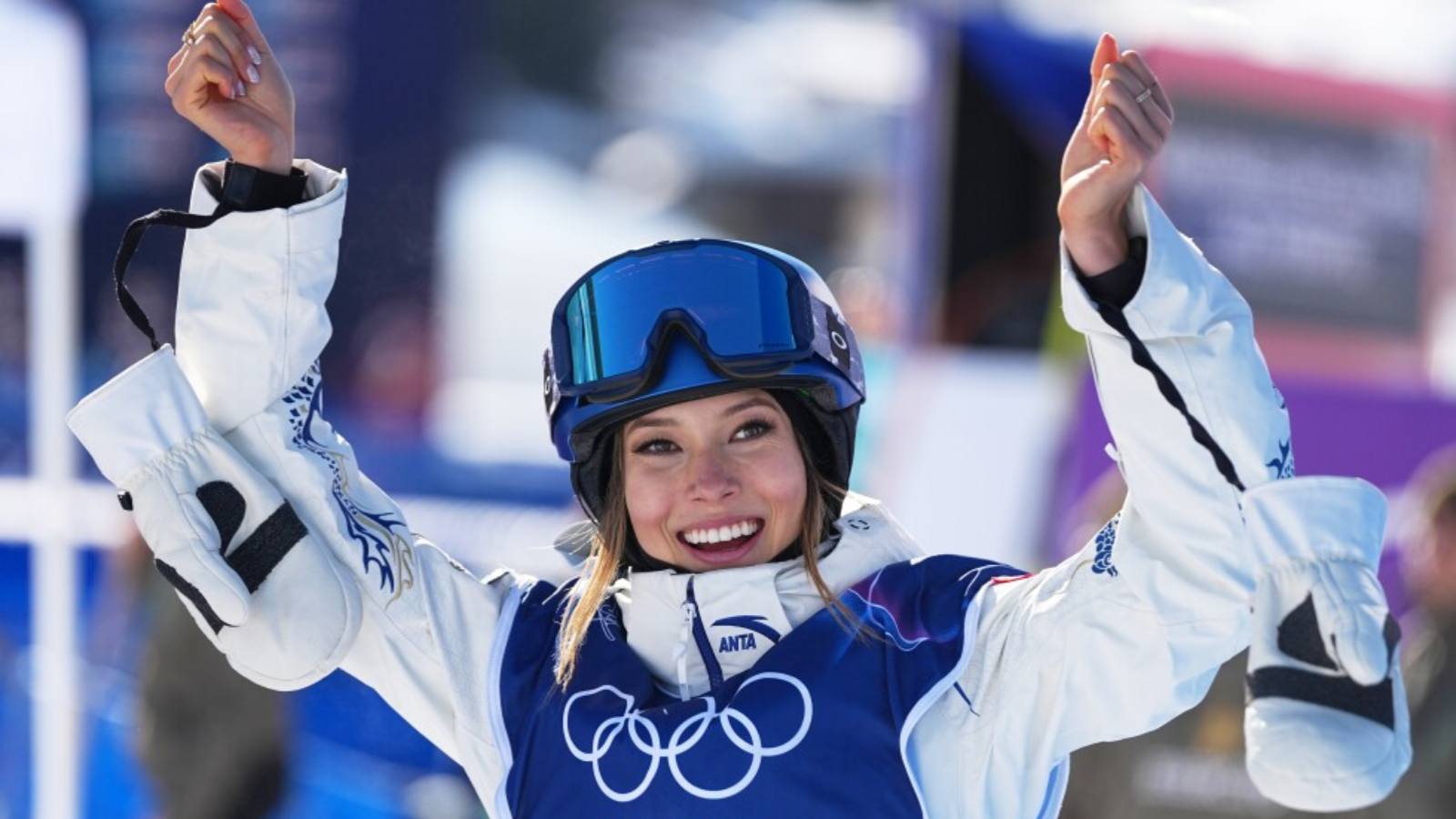
- Eileen Gu won a silver medal in women’s freeski slopestyle at the Milano Cortina 2026 Winter Olympics.
- Mathilde Gremaud (Switzerland) successfully defended her Olympic title, defeating Gu by 0.38 points.
- Gu’s fall on the first rail during her final run was a critical factor in her silver medal finish.
- Despite not winning gold, Gu engaged with reporters for nearly two hours post-event, highlighting her enduring star power.
- Gu is expected to compete in other events at the Games to defend her remaining titles.
LIVIGNO (Azat TV) – Eileen Gu, the prominent freestyle skier representing China, secured a silver medal in the women’s freeski slopestyle event at the Milano Cortina 2026 Winter Olympics. Despite not clinching the gold, her star power remained undeniably evident, as she engaged with reporters for nearly two hours after the competition concluded, underscoring her significant influence and widespread appeal on the global stage.
The highly anticipated final, held at Livigno Snow Park, saw Mathilde Gremaud of Switzerland successfully defend her Olympic title, marking her second consecutive gold medal victory over Gu. Canada’s Megan Oldham earned the bronze, completing the podium.
Gu’s Performance and Narrow Margin
The competition was intense, culminating in a narrow victory for Gremaud. Gu finished with a score of 86.58 points, just 0.38 points shy of Gremaud’s winning score of 86.96. This tight margin echoed their previous Olympic encounter at Beijing 2022, where Gremaud also edged out Gu by a mere 0.33 points for the slopestyle gold.
A critical moment for Gu in the final occurred when she reportedly skittered off the first rail, falling to her side. This misstep proved costly, dashing her hopes for the gold medal. Notably, this was the same rail where she had experienced a fall during Saturday’s qualification rounds, which Gremaud had topped.
In freeski slopestyle, athletes perform acrobatic tricks over a course featuring various rails and jumps, with judges evaluating both difficulty and execution. The best score out of three runs determines the final standings, adding a layer of strategic risk and precision to each attempt.
Mathilde Gremaud’s Dominant Reign
Mathilde Gremaud, who celebrated her 26th birthday the day before the final, showcased a commanding performance to retain her Olympic title. Her victory solidifies her position as a dominant force in women’s freeski slopestyle, having now beaten Gu twice in Olympic finals. After securing her gold, Gremaud celebrated by tying a Swiss flag around her neck and embracing her ecstatic teammates and supporters.
Beyond her Olympic success, Gremaud boasts an impressive career, including a silver medal in slopestyle from the 2018 Winter Games and a bronze in big air from 2022. She is also a two-time world champion in slopestyle, having claimed titles in 2023 and 2025.
Enduring Star Power Beyond Gold
Despite the silver medal, Eileen Gu’s status as a global icon remains undiminished. Her prolonged engagement with the press, extending nearly two hours after the event, highlighted her unique ability to captivate attention regardless of the final medal tally. This sustained demand for her insights and presence far beyond the competitive runs signals a broader influence that transcends athletic performance alone.
Gu’s focus, as she articulated during qualifications, was on ‘the process’ with a specific emphasis on ‘rails.’ Her commitment to the sport, coupled with her bilingual and bicultural appeal, has cemented her as a prominent figure in both sports and popular culture, making her a focal point of these Games.
Looking Ahead at Milano Cortina
With the freeski slopestyle event concluded, Eileen Gu is now expected to shift her focus to defending her other Olympic titles at the Milano Cortina 2026 Games. Her versatility across multiple freestyle skiing disciplines, including Big Air and halfpipe, means she remains a strong contender for further medals and a continued source of high-profile interest throughout the remainder of the Olympics.
Eileen Gu’s consistent ability to command significant media attention and public interest, even when not standing atop the podium, underscores a unique blend of athletic prowess and cultural resonance. Her ongoing popularity at the 2026 Winter Olympics suggests that her impact extends beyond individual event outcomes, solidifying her role as one of the most compelling figures in contemporary winter sports.