
Quick Read
- Cristiano Ronaldo scored 18 goals in 30 El Clásico matches for Real Madrid, including several iconic moments.
- Barcelona faces a mounting injury crisis, with Raphinha sidelined after a premature return, and Lewandowski, Olmo, Gavi, and both goalkeepers also out.
- Jules Koundé and Frenkie de Jong have recovered and are expected to play, boosting Barcelona’s options.
- Koundé’s previous Clásico goal was decisive in the Copa del Rey final, underlining his importance.
- Manager Hansi Flick will miss the match due to suspension.
Cristiano Ronaldo: The Clásico Legend Who Redefined Rivalry
When football fans talk about El Clásico, Cristiano Ronaldo’s name is impossible to ignore. His arrival at Real Madrid in 2009 wasn’t just a transfer—it was a seismic shift in the world’s most-watched football rivalry. Over nine seasons, Ronaldo faced Barcelona 30 times, netting 18 goals and carving out moments that have since become Clásico folklore. ESPN recounts these highlights with vivid clarity, reminding us why Ronaldo remains a talismanic figure in the sport.
His early Clásico outings were anything but smooth. Madrid lost all three initial encounters, failing to score a single goal. But football, much like life, is about comebacks. The infamous 5-0 defeat at Camp Nou during the 2010/11 season stung deeply, and revenge seemed a distant dream. Yet, under Jose Mourinho, the tide began to turn. In a tense league clash, Ronaldo’s late penalty salvaged pride and prevented Barça from completing a double over Madrid. That goal marked the start of a new era: Ronaldo had announced himself as Barcelona’s perennial headache.
Four days later, the narrative shifted again. The Copa del Rey final, deadlocked after 90 minutes, seemed destined for penalties. But Ronaldo, rising above the crowd, met Ángel Di María’s cross with a powerful header in extra time. That goal not only handed Madrid the trophy but also cemented Ronaldo’s reputation as a clutch performer in football’s fiercest battle.
‘Calma Calma’: The Celebration That Echoed Beyond Camp Nou
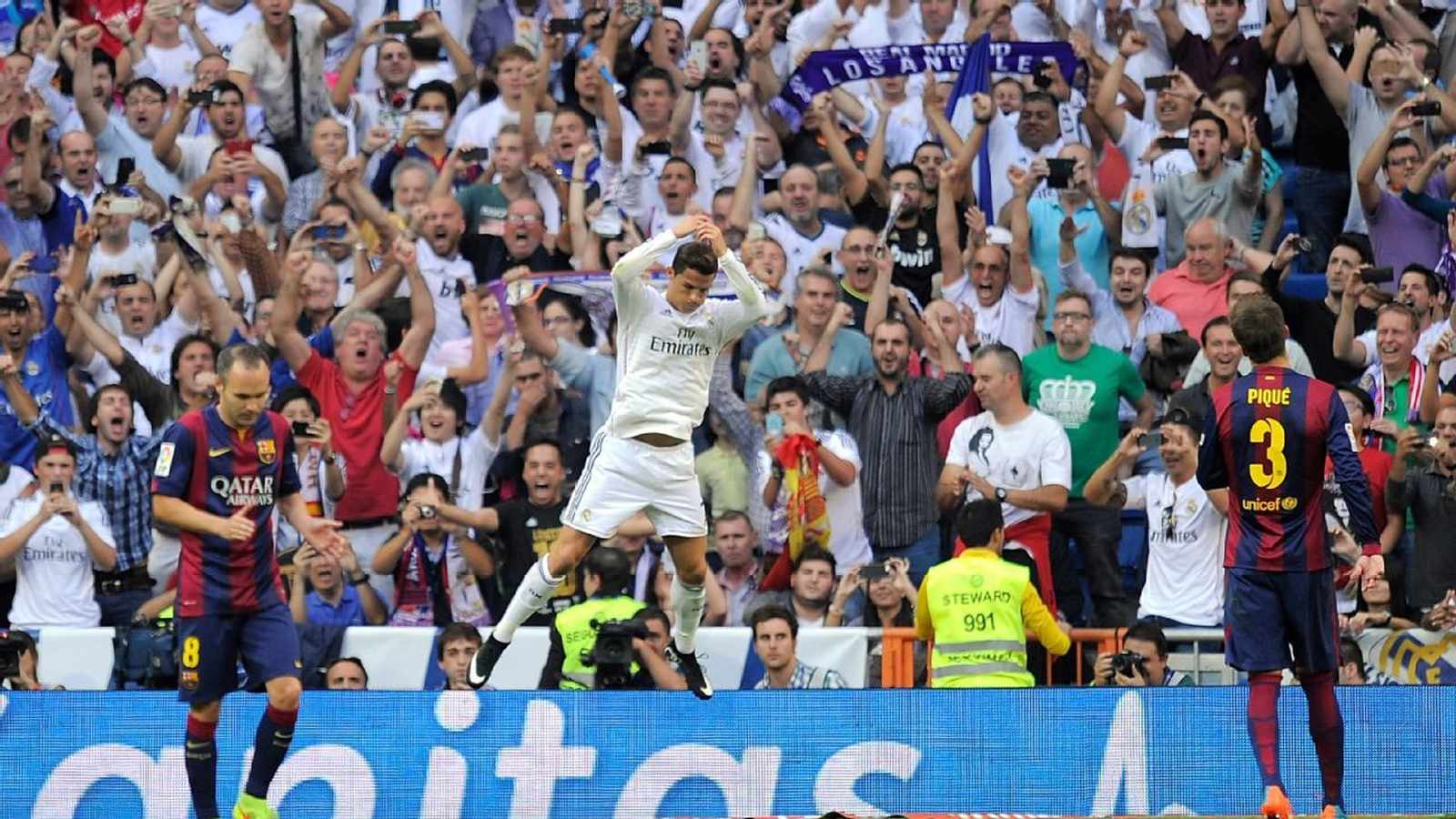
Fast forward to April 2012. Madrid, unstoppable under Mourinho, were chasing a historic 100-point season. The decisive fixture at Camp Nou was more than a match—it was a statement. Sami Khedira’s opener set the stage, but Barcelona fought back, equalizing late. Enter Ronaldo. Played through by Mesut Ozil, he coolly rounded Victor Valdes and slotted home his 42nd league goal of the season. His “calma, calma” gesture to the raucous Barça fans wasn’t just a celebration—it was a message: Real Madrid were here to stay, and Ronaldo was their standard-bearer.
The following season, the rivalry reached a fever pitch. The 2-2 draw at Camp Nou wasn’t just about team tactics; it was a personal duel. Messi struck twice, but Ronaldo matched him goal-for-goal, intensifying a rivalry that defined an era of football. Their interplay didn’t just entertain; it set new standards for excellence and resilience.
Barcelona’s Injury Crisis: Flick’s Tactical Headaches and the FIFA Virus
As the 2025 Clásico approaches, Barcelona’s dressing room resembles a triage center. The team has been battered by injuries, with Raphinha’s absence compounding the woes. According to SI.com, the Brazilian winger’s premature return to training after a hamstring injury backfired, sidelining him for another month and leaving Barcelona’s attacking options threadbare.
The infamous ‘FIFA virus’—injuries sustained during international duty—claimed Robert Lewandowski and Dani Olmo, both of whom joined long-term absentee Gavi and goalkeepers Joan García and Marc-André ter Stegen on the injury list. Even manager Hansi Flick will be absent from the touchline, having picked up two yellow cards against Girona. In such circumstances, tactical flexibility becomes not just a preference, but a necessity.
Yet, amid the gloom, there’s a glimmer of hope. Jules Koundé and Frenkie de Jong have returned to training, easing some of Flick’s headaches. De Jong’s comeback means he can partner Pedri in midfield, with Fermín López—fresh off a European hat-trick—expected to complete the central trio. But with Raphinha ruled out, Barcelona’s attacking depth remains worryingly thin.
Jules Koundé: The Defensive Anchor Returns Just in Time
Barcelona fans received welcome news from Yahoo Sports: Jules Koundé, despite recent discomfort, has trained with the squad and is set to feature in Madrid. His return is timely. Koundé’s previous Clásico exploits—most notably his decisive goal in last April’s Copa del Rey final—underscore his value in high-pressure matches. As Barcelona seek to contain Vinicius Junior’s surging form, Koundé’s presence could prove pivotal.
With Eric García likely starting alongside him, the defensive unit faces a stern test against Real Madrid’s attacking trio. The stakes are high, the margins razor-thin. In such moments, individual resilience and tactical discipline become the difference between glory and heartbreak.
Clásico 2025: A Fixture That Transcends Football
El Clásico is more than a game. It’s a cultural event, a stage for football’s greatest talents and stories. This year’s clash at the Santiago Bernabéu is shaped by contrasting narratives: Ronaldo’s enduring legacy, Barcelona’s injury crisis, and the return of key players who could tip the balance. The drama isn’t confined to the pitch—it spills into every corner of football fandom, from Madrid’s bustling streets to Barcelona’s passionate cafes.
As both teams prepare for battle, the questions linger. Can Real Madrid capitalize on Barcelona’s weakened squad? Will Flick’s tactical ingenuity compensate for missing stars? And could Koundé’s return mark another iconic Clásico moment?
One thing is certain: the 2025 El Clásico promises tension, brilliance, and a reminder of why football’s fiercest rivalry continues to captivate millions.
The facts reveal a fixture defined not only by star power and historic moments, but by resilience in the face of adversity. Barcelona’s injury woes threaten to undermine their ambitions, yet the timely return of Koundé and de Jong offers a lifeline. Meanwhile, Ronaldo’s legacy reminds both sides of the impact individuals can have on football’s grandest stage. This Clásico, shaped by the unpredictability of sport and the determination of its protagonists, will be remembered for its battles both on and off the field.