
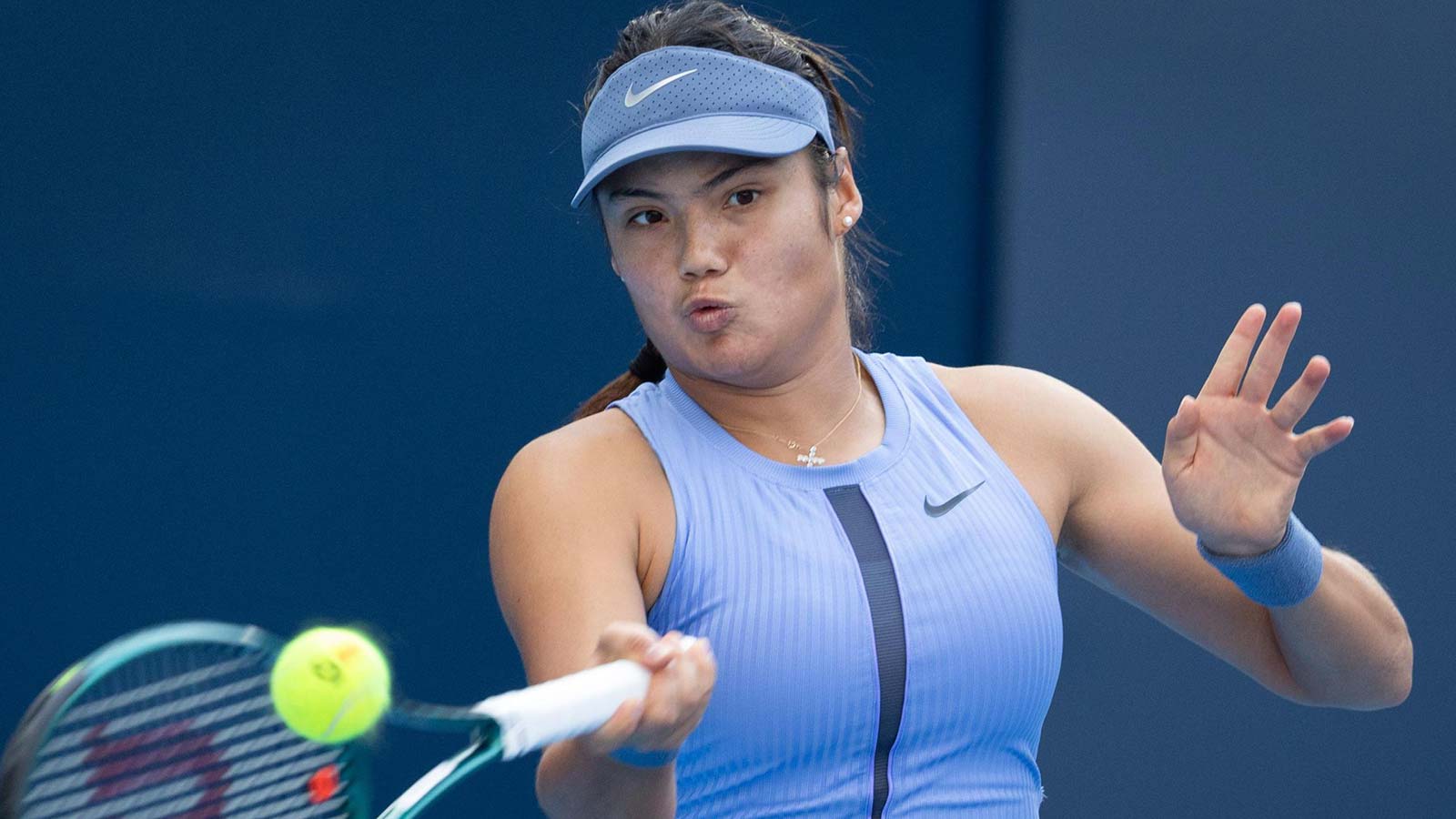
Quick Read
- Emma Raducanu retired ill at the Wuhan Open after trailing Ann Li 6-1, 4-1.
- Extreme heat and humidity affected several players across Chinese tournaments.
- Raducanu received medical attention for dizziness and high blood pressure.
- Her Asian swing has been marked by close losses and missed match points.
- Upcoming tournaments remain crucial for her ranking and recovery.
Emma Raducanu’s Asian Campaign Derails in Wuhan
Emma Raducanu’s latest attempt to turn her season around came to an abrupt halt at the Wuhan Open, where the British No. 1 was forced to retire ill during her first-round match against Ann Li. The match, held in stifling heat and humidity, was emblematic of the broader struggles facing players on the Asian swing this year, with several competitors bowing out due to punishing conditions.
How the Match Unfolded: From Early Promise to Sudden Withdrawal
Raducanu started the encounter with a spark, breaking Ann Li’s serve in the opening game. However, any momentum she hoped to carry dissipated rapidly. Li, currently ranked No. 46 and fresh off a strong run at the US Open, responded with clinical precision, stringing together three consecutive breaks and landing four aces. Raducanu, on the other hand, struggled to find her rhythm, her usually reliable return game stifled by Li’s accurate serving and aggressive forehand.
By the end of the first set, Raducanu had managed just three winners against 15 unforced errors, a stark contrast to her opponent’s steady play. The oppressive weather—temperatures soared above 31°C with humidity hovering near 67%—made matters worse. As the second set progressed, Raducanu’s physical state became increasingly concerning. She took on fluids and a banana between sets, but visible signs of dizziness and fatigue began to emerge. Her movement slowed, and she struggled to chase wide balls, her face flushed and focus distant.
Medical Intervention and Retirement: A Cautionary Tale
At 6-1, 4-1 down, Raducanu called for the trainer and tournament doctor. Medical staff checked her blood pressure, heart rate, and temperature, confirming that she was in no condition to continue. It was her first retirement of the season, but her ninth since turning professional in 2021. Ann Li, ever the professional, wished Raducanu a speedy recovery after progressing to the second round via walkover. “First I want to wish Emma a fast recovery, not sure but it looked like she wasn’t feeling good,” Li commented post-match, as quoted by The Telegraph.
Observers, including Sky Sports broadcaster Jonathan Overend, questioned whether Raducanu should have sought help earlier, given her lack of movement and visible discomfort. The match lasted just under an hour before the handshake that marked another setback for the young Briton.
Asian Swing: A Series of Narrow Misses and Mounting Pressure
Raducanu’s withdrawal in Wuhan continues a frustrating sequence of results in Asia. The 22-year-old had previously lost in three sets at both the Korea Open and China Open, each time holding multiple match points against high-caliber opponents like Barbora Krejcikova and Jessica Pegula. Despite showing flashes of her best tennis, she was unable to convert opportunities into wins—a psychological hurdle that seemed to spill over into her match against Li.
Her schedule remains packed, with upcoming tournaments in Ningbo, Tokyo, and Hong Kong. These events represent crucial chances to climb further in the rankings, as Raducanu is not defending any points from last season. A deep run could shore up her place among the seeds at January’s Australian Open, but the current string of stubborn results is a reminder of the fine margins at the top of professional tennis.
Extreme Conditions Take Toll Across Tours
The Wuhan Open wasn’t the only tournament affected by the weather. Across China, players have struggled to cope with the sweltering heat and humidity. Jannik Sinner, the ATP No. 2, was forced to retire from his match at the Shanghai Masters due to severe cramps, joining a growing list of competitors sidelined by the elements. Zizou Bergs, now through to his first Masters 1000 quarter-final, expressed concern for the ball kids working in these conditions, noting their resilience and the importance of player welfare.
Even seasoned pros have found the going tough. Karolina Muchova admitted she nearly retired herself during her gritty comeback win in Wuhan, underscoring how the weather has become as much a factor as the opponents themselves.
Raducanu’s Perspective: Setting an Example Despite Setbacks
In the lead-up to the Wuhan Open, Raducanu spoke candidly about her desire to be a role model for young tennis fans. “It’s really nice to be reminded that you’re inspiring younger kids to play. You get so absorbed in your own world, but that’s a really big achievement for me,” she told Tennis365. Despite occasional lapses in temper—an inevitable part of high-level sport—Raducanu aims to maintain composure, knowing that “you never know who’s watching.”
Her determination to set a positive example was on display even in adversity, with tiny fist pumps after winning points and a refusal to give in until her body made it impossible to continue.
Looking Ahead: The Road to Recovery and Rebuilding
With just a handful of tournaments left in the season, Raducanu’s immediate focus will be on recovery and regaining her form. The presence of Daniel Pohl, a renowned German physio, alongside her coach Francisco Roig, signals an effort to address both her physical and mental resilience. Having gone through the Asian swing without a dedicated fitness trainer since Yutaka Nakamura’s departure, this change could be pivotal.
The thin margins between victory and defeat have rarely been more apparent. Raducanu has demonstrated the talent and tenacity to compete at the highest level, but the recent run of results—and now, her health—pose new challenges. She remains scheduled to compete in Hong Kong at the end of October, offering one more chance to finish the year on a high note.
Emma Raducanu’s retirement in Wuhan is a stark reminder of how quickly fortunes can shift in professional tennis, especially under extreme conditions. Her struggles—physical and psychological—underscore the delicate balance athletes must maintain, and the importance of support both on and off the court. As Raducanu regroups for the final tournaments of the season, her journey continues to resonate, reflecting not only the demands of elite sport but also the pressures faced by young role models in the public eye.