
Quick Read
- Emma Vardy interviewed the family of Jensen, a young boy diagnosed with severe Aplastic anaemia, on BBC Breakfast.
- Jensen’s life was saved by a stem cell transplant from a 24-year-old anonymous donor in Germany.
- The family remains grateful to strangers and super donors, highlighting the importance of stem cell donation.
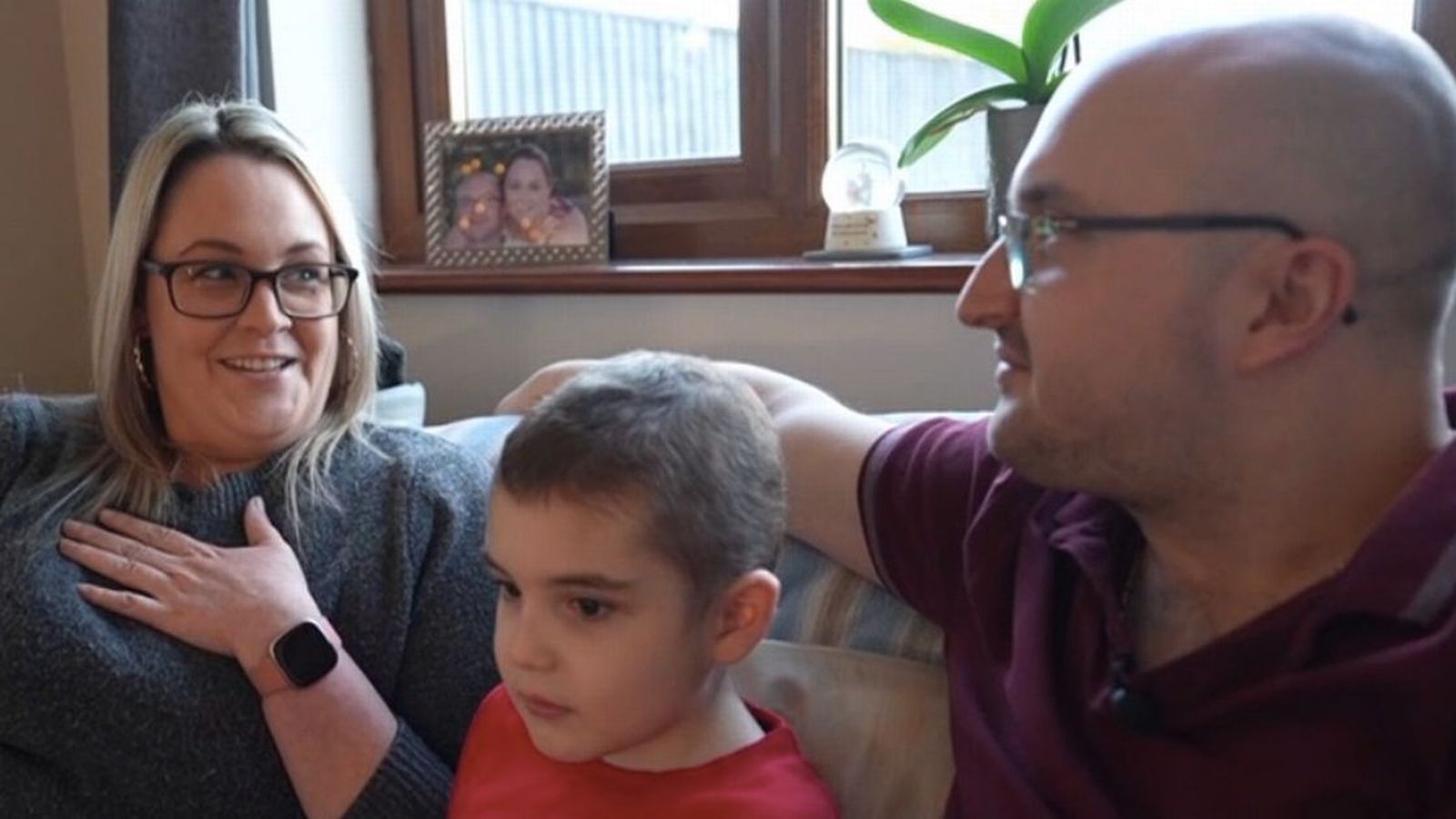
On a crisp December morning in 2025, BBC Breakfast’s Emma Vardy sat beside Ben Thompson in the studio, her focus unwavering as she introduced viewers to a story that would linger in the hearts of many. The guest was Terri, mother of seven-year-old Jensen, whose life had been upended by a diagnosis no parent ever wants to hear: severe Aplastic anaemia.
Jensen’s story began like so many others—a happy child, thriving at school, full of energy. But when flu-like symptoms refused to fade, Terri and her family faced a nightmare of hospital visits and uncertainty. “He absolutely loved school,” Terri recalled, her voice trembling with memory. “Then he became ill with flu-like symptoms, out of nowhere. They persisted and we ended up taking him to the hospital. They suspected leukaemia. After a month, he got diagnosed with severe Aplastic anaemia.” (Bristol Live)
Severe Aplastic anaemia is a rare and dangerous condition where the bone marrow fails to produce enough blood cells. For Jensen, this meant enduring weekly blood and platelet transfusions just to survive. But there was only one real hope: a stem cell transplant. Finding a compatible donor, however, proved to be an arduous task. Only three potential matches appeared on the registry, with the closest—a 24-year-old man—living in Germany. The rules of donation meant that Jensen’s family could know nothing more about this individual until two years after the transplant.
Emma Vardy listened as Terri described the pain and gratitude tangled together in her words. “All we know is he’s a 24-year-old male from Germany. That’s all we’re allowed to know. We can’t make contact until two years post-transplant, which is really difficult because all we want to do is meet the man that saved our little boy’s life. He wouldn’t be here now without this man.” Jensen, small but resilient, shared his own message for the donor who changed everything: “Stem cells saved my life!” and, with simple sincerity, “Thank you!”
Jensen’s transplant, a procedure fraught with risk and hope, was successful. He recently celebrated 100 days since surgery—a milestone in the journey back to health. Yet, the family’s life remains shaped by caution; Jensen must still isolate at home, shielded from everyday germs and risks. The isolation is bittersweet, a reminder of both fragility and resilience.
Emma Vardy’s coverage of this story was more than just an interview—it was an exploration of generosity, the power of strangers, and the hidden networks of compassion that underpin medical miracles. As Terri put it, “We’ve had complete strangers help our little boy and get him to this point!” The story didn’t end with Jensen’s recovery; it became a rallying cry for awareness around stem cell donation, the importance of blood, plasma, and platelet donors, and the profound impact ordinary people can have on lives they’ll never meet.
BBC Breakfast also highlighted that, in the past two decades, NHS Blood and Transplant has recognized just ten men as ‘super donors’: individuals who have given blood, plasma, platelets, and stem cells to support those in desperate need. Their commitment echoes the spirit of Jensen’s donor—a reminder that heroism can wear an everyday face.
Emma Vardy’s role in sharing Jensen’s journey was pivotal. She steered the conversation with empathy, making space for Terri’s vulnerability and Jensen’s optimism. The segment drew attention not only to the specifics of Aplastic anaemia but also to the challenges faced by families waiting for a match—how hope can hinge on the kindness of strangers, and how life itself sometimes depends on a registry search that crosses continents.
For viewers, Jensen’s story was both a call to action and a testament to human resilience. It raised tough questions: How can more donors be encouraged to join the registry? What barriers stand in the way of families desperate for a match? And, on a deeper level, what does it mean to trust your child’s future to a person you may never meet?
Emma Vardy’s coverage was praised for balancing sensitivity with clarity, avoiding sensationalism while shining a light on the realities faced by families like Jensen’s. Her approach reinforced the importance of talking openly about rare diseases and the ongoing need for more donors—reminding us that behind every statistic lies a story of hope, courage, and community.
Emma Vardy’s reporting on BBC Breakfast proved that journalism, at its best, is a bridge between private heartbreak and public action. By sharing Jensen’s journey, she didn’t just inform viewers—she inspired them to consider their own potential to save a life. The facts speak for themselves: every donor counts, and every story matters.