
Quick Read
- Erik ten Hag has been appointed as the technical director of Dutch Eredivisie club FC Twente.
- He signed a contract until mid-2028 and will officially start on February 1, 2026.
- This move marks Ten Hag’s return to his former club, where he played and began his coaching career.
- His appointment follows his sacking from Bayer Leverkusen in September 2025 after just three matches and his previous managerial role at Manchester United.
- Ten Hag will succeed Jan Streuer, who is retiring at the end of the current season.
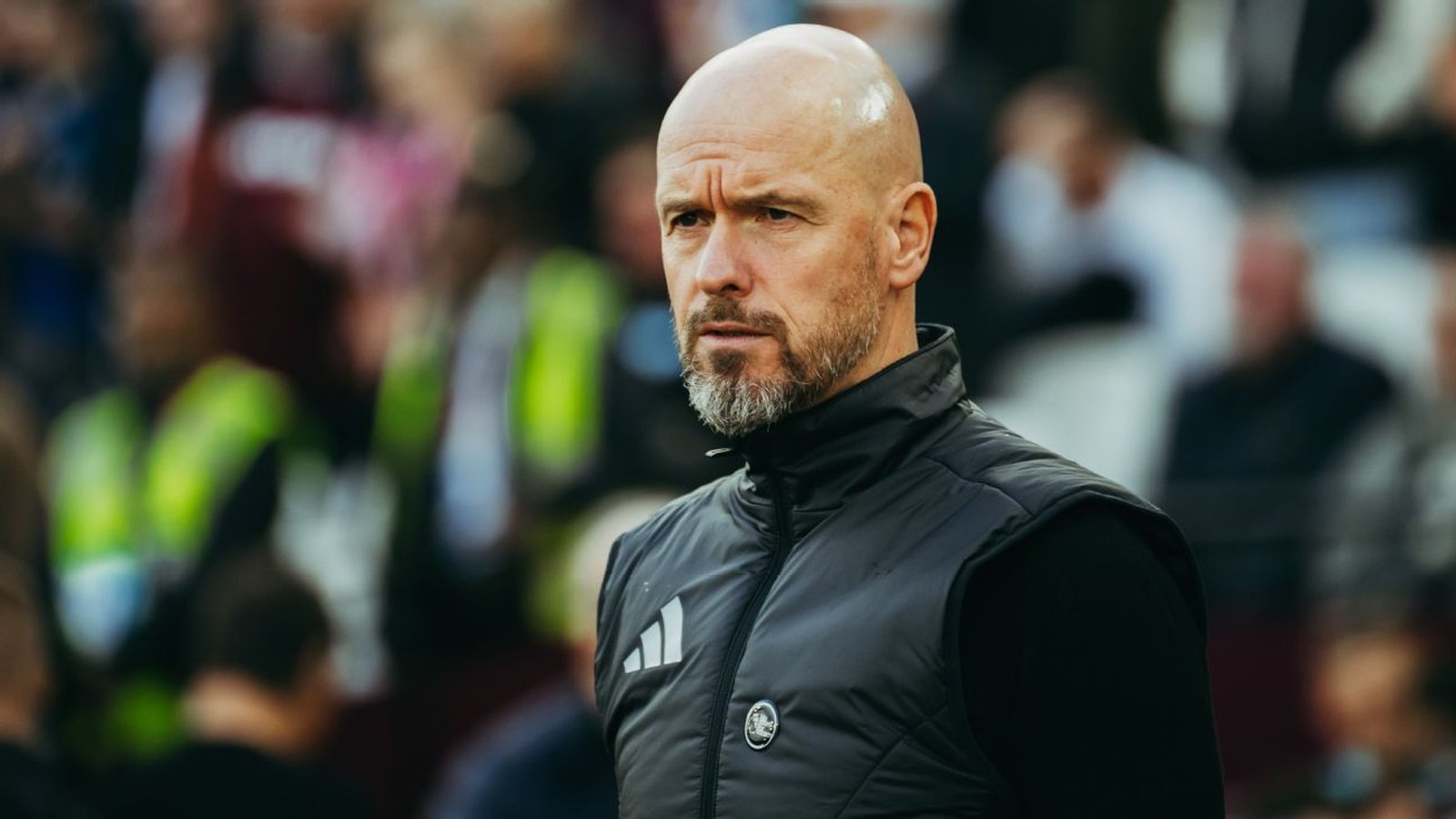
In a move that has captured the attention of the football world, Erik ten Hag, the seasoned Dutch tactician previously at the helm of Manchester United and Ajax, is charting a new course in his illustrious, yet recently turbulent, career. The 55-year-old has been officially named the new technical director of Dutch Eredivisie side FC Twente, signalling a poignant return to the club where his professional journey began both as a player and an aspiring coach. This appointment, effective February 1, 2026, sees Ten Hag sign a contract extending until the summer of 2028, a long-term commitment that speaks volumes about his intentions and Twente’s ambitions.
For many, the news might come as a surprise, considering Ten Hag’s recent stints at some of Europe’s most demanding clubs. His tenure at Manchester United, though marked by moments of promise, ultimately concluded without the sustained success fans craved. Following his departure from Old Trafford, he embarked on what proved to be a remarkably brief and, by his own admission, ‘brutal’ spell with Bundesliga outfit Bayer Leverkusen. Appointed in May 2025 as the successor to the highly-regarded Xabi Alonso, Ten Hag’s time in Germany was cut short after just three matches in charge, dismissed in September 2025 having collected a solitary point from his opening two fixtures. Such a rapid exit underscored the immense pressure at the elite level and undoubtedly cast a shadow over his managerial stock, which had once soared during his transformative period at Ajax, culminating in a memorable run to the Champions League semi-finals in the 2018-2019 season, alongside domestic cup and league titles.
The Weight of Expectation: A Manager’s Rollercoaster
The journey of a football manager is often a relentless cycle of highs and lows, a testament to the unforgiving nature of the sport. Erik ten Hag’s recent trajectory perfectly encapsulates this reality. At Ajax, he was lauded for his tactical acumen, his commitment to youth development, and his ability to forge cohesive, attacking teams. He built a reputation as a meticulous planner, a demanding leader, and a visionary who could compete with Europe’s giants on a comparatively modest budget. This success earned him the coveted move to Manchester United, a club steeped in history but starved of consistent glory. The challenge at United was immense, a sprawling institution undergoing significant structural changes, and while he delivered some stability and a League Cup trophy, the Premier League’s relentless demands proved too great in the long run.
His subsequent move to Bayer Leverkusen was seen by some as an opportunity for redemption, a chance to rebuild his reputation in a competitive but perhaps less scrutinised environment than the Premier League. However, the German adventure proved even shorter than anticipated, a stark reminder of how quickly fortunes can turn in modern football. The ‘brutal sacking,’ as Daily Mail reported, after just three games, left many questioning Ten Hag’s next move. Would he seek another managerial role, or would the recent setbacks prompt a more fundamental rethink of his career path? The answer, it now appears, lies in a strategic pivot back to a familiar haven, one where his deep-rooted connection can be leveraged for long-term growth rather than immediate results.
A Return to Roots: FC Twente’s Vision
FC Twente is not just another club for Erik ten Hag; it’s home. His professional playing career kicked off there in 1989, and he ultimately hung up his boots at the club in 2002. Beyond his playing days, Twente also served as the crucible for his nascent coaching ambitions, where he held positions as a youth coach, head of academy, and assistant coach. This profound personal and professional history makes his return as technical director all the more significant. It’s a homecoming, yes, but also a strategic alignment of experience and ambition.
In a statement released by the club, Ten Hag expressed his profound connection: “I think it’s wonderful and special to return to FC Twente, where I’ve been a supporter at Het Diekman since I was a young boy. My football and coaching careers began here.” This sentiment goes beyond mere nostalgia; it underscores a genuine desire to contribute to the club’s future. His role as technical director will be pivotal in shaping the club’s long-term strategy, focusing on areas he knows intimately. “With my experience in youth development, team building, and elite sports culture, I want to strengthen FC Twente’s technical foundation together with the Supervisory Board, management, and staff, so the club can sustainably realize its potential as a regional flagship,” he added.
The Technical Director’s Mandate: Building for the Future
The role of a technical director in modern football is multifaceted, requiring a blend of strategic vision, operational expertise, and a deep understanding of the sport’s evolving landscape. It’s a position that often operates behind the scenes, yet is crucial for a club’s sustained success, particularly in areas like player recruitment, youth academy development, and establishing a consistent club philosophy. For Ten Hag, this represents a significant shift from the day-to-day pressures of managing a first team, allowing him to apply his considerable knowledge in a more foundational capacity.
FC Twente’s general manager, Dominique Scholten, highlighted Ten Hag’s unique qualifications for the role, telling ESPN, “Erik has an incredible track record in football, and his bond with FC Twente has always remained very strong.” Scholten further elaborated on the alignment between Ten Hag’s vision and the club’s strategic objectives: “We’ve been in regular contact over the past few months, and our conversations quickly revealed a strong ambition to further develop FC Twente. This ambition aligns with the strategy we recently presented. We are raising the bar and further professionalizing the football organization.” This suggests a deliberate, well-considered appointment aimed at elevating the club’s standing and ensuring its long-term viability within the Eredivisie and beyond.
Ten Hag will officially join FC Twente on February 1st, 2026, and will work within the club’s football organization towards the new season. He is set to fully succeed the current technical director, Jan Streuer, who recently announced his retirement after this season, ensuring a smooth transition. Streuer has been instrumental for over five years, and Ten Hag’s arrival is expected to build upon that foundation, bringing fresh perspectives and renewed energy to the club’s strategic direction. This careful handover process underscores the importance Twente places on continuity and strategic planning.
A Broader Perspective: The Evolving Landscape of Football Careers
Erik ten Hag’s move to a technical director role, particularly after his recent high-profile managerial challenges, reflects a broader trend in football where seasoned professionals are seeking different avenues to contribute. It’s a recognition that not every successful manager needs to remain on the touchline, and that their expertise can be invaluable in shaping a club’s identity and future from a more strategic vantage point. For Ten Hag, it offers an opportunity to leverage his strengths in development and organization without the immediate, intense scrutiny that accompanies a managerial hot seat.
The timing of this announcement also subtly intertwines with other significant shifts in the football world. Notably, Manchester United, the club Ten Hag recently managed, has also recently undergone another managerial change, parting ways with Ruben Amorim, who had succeeded Ten Hag. This constant churn at the top levels of management highlights the precarious nature of the profession and perhaps underscores the wisdom in Ten Hag’s decision to embrace a role that offers a different kind of challenge and, potentially, a more stable platform for long-term impact. His journey is a compelling narrative of resilience, adaptation, and the enduring pull of one’s footballing home.
Erik ten Hag’s return to FC Twente as technical director is more than a career move; it’s a strategic retreat to foundational principles, offering him a chance to rebuild his influence in a familiar, supportive environment. This pivot demonstrates a pragmatic understanding of the modern game’s demands, allowing him to leverage his deep experience in youth development and club building, rather than battling the relentless, often unforgiving, pressures of front-line management. It’s a testament to the idea that true footballing impact isn’t solely defined by the dugout, but by the enduring legacy one builds within a club’s very fabric.