
Quick Read
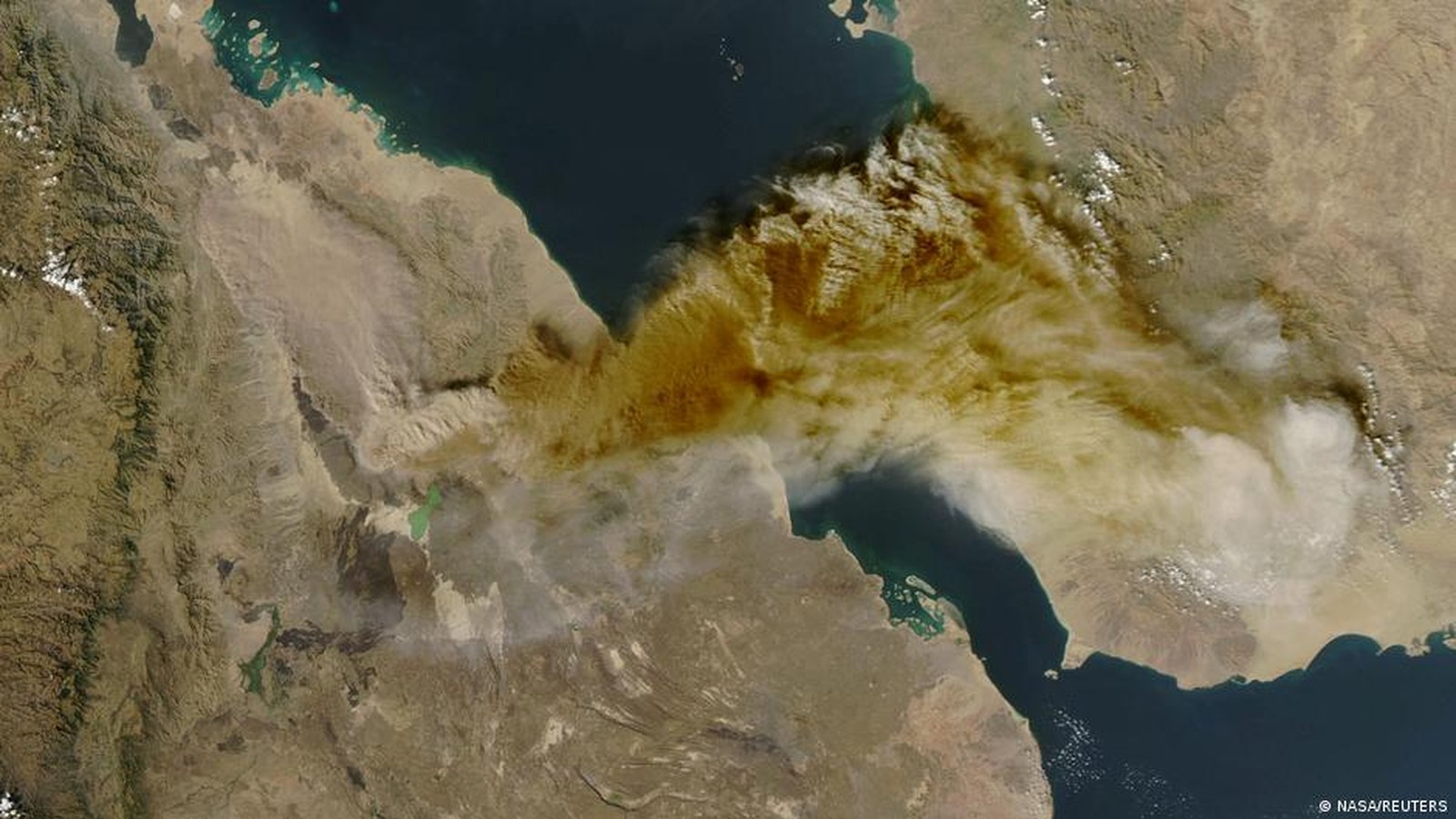
- The Hayli Gubbi volcano in Ethiopia erupted for the first time in 12,000 years on November 23, 2025.
- No casualties reported, but local communities in Afar region face economic and agricultural challenges due to ash fallout.
- Ash clouds traveled across the Red Sea, reaching Yemen, Oman, Pakistan, and northern India, disrupting international flights.
- India’s DGCA issued advisories; airlines like Air India and Akasa Air canceled or rerouted flights to ensure safety.
- Meteorologists say ash is concentrated in the upper atmosphere, posing minimal risk to ground-level air quality.
Hayli Gubbi Erupts: A Geological Awakening After Millennia
On Sunday, November 23, 2025, the Hayli Gubbi volcano in Ethiopia’s northern Afar region erupted after lying dormant for an estimated 12,000 years. This rare geological event sent shockwaves—literally and figuratively—through local communities and far-flung skies. Residents near the volcano described the eruption as sudden and explosive, with one local, Ahmed Abdela, telling The Associated Press that it sounded “like a bomb had been thrown with smoke and ash.” In the immediate aftermath, villages were blanketed in thick ash, plunging the area into a dark haze and stranding tourists and guides heading to the Danakil Desert.
Located about 800 kilometers northeast of Addis Ababa, Hayli Gubbi is the southernmost volcano of the Erta Ale range—a chain of shield volcanoes famed for their flat, broad profiles. This region is part of the Ethiopian Rift Valley, a tectonically active zone that has shaped the landscapes of Africa and Arabia. According to the Smithsonian Institution’s Global Volcanism Program, Hayli Gubbi had no known eruptions in the Holocene era, making this event a unique chapter in the region’s geological history.
Local Impact: Livelihoods and Health Under Threat
While no casualties were reported, the eruption’s impact on daily life has been significant. Local officials expressed concern for the Afar region’s livestock herders, whose animals rely on forage now covered by volcanic dust. Mohammed Seid, a local administrator, told Al Jazeera that “many villages have been covered in ash, and as a result, their animals have little to eat.” The eruption also sparked vibrations and moderate tremors felt as far as Ethiopia’s Wollo area and neighboring Djibouti, according to Afar TV. Residents noted that the sky turned dark and air quality deteriorated, raising health concerns, especially for those with respiratory conditions. The Afar regional government advised people with asthma and bronchitis to take precautions.
Beyond the immediate vicinity, the eruption has economic implications, especially in communities dependent on agriculture and tourism. With hilly villages blanketed in ash and the Danakil Desert temporarily inaccessible, local livelihoods face uncertainty. However, as of the latest reports, no human or livestock losses have been confirmed.
From Ethiopia to Asia: Ash Plume’s Global Journey
What makes this eruption extraordinary is not just its local effect but its global reach. Satellite imagery from ESA Earth Observation and CopernicusEU Sentinel-5P captured massive ash plumes rising up to 14 kilometers into the sky, spreading eastward over the Red Sea, Yemen, Oman, Pakistan, and into northern India. The Toulouse Volcanic Ash Advisory Center (VAAC) reported the ash cloud reached heights of up to 45,000 meters (148,000 feet) and was moving at speeds of 100-120 km/h, mainly in the upper troposphere—where long-distance aircraft fly.
In India, the ash arrived over Rajasthan, Gujarat, Maharashtra, Delhi-NCR, and Punjab by Monday evening, prompting the Directorate General of Civil Aviation (DGCA) to issue urgent advisories. Airlines were told to avoid affected regions and altitudes, adjust flight plans and fuel calculations, and immediately report any suspected ash encounters. Airports were advised to inspect runways for contamination, and SIGMET warnings were issued by meteorological offices in Mumbai, New Delhi, and Kolkata.
As the ash cloud continued eastward, its presence was detected over Pakistan—60 nautical miles south of Gwadar—and the Gulf, prompting Oman’s Environment Authority to activate emergency monitoring. In the United Arab Emirates, Air Arabia canceled several flights from Sharjah as a precaution.
Flight Disruptions: Precaution and Passenger Safety
India saw significant air travel disruption. Air India canceled 11 flights on Monday and Tuesday, conducting precautionary checks on aircraft exposed to volcanic ash. Akasa Air scrapped scheduled flights to Jeddah, Kuwait, and Abu Dhabi. Other airlines, including IndiGo and Dutch carrier KLM, modified or canceled flights as the ash drifted over northern India. Twelve international flights scheduled between 1 am and 6 pm on Tuesday were delayed, while seven were canceled, according to Reuters and ANI.
Passengers affected by cancellations received immediate assistance, including hotel accommodations and rebooking options. “Our ground teams across the network are keeping passengers updated on their flight status and providing immediate assistance,” Air India stated on social media. IndiGo echoed the sentiment, emphasizing safety as their highest priority and pledging to keep travelers informed.
The ash cloud’s unique composition—mostly sulphur dioxide and fine volcanic ash particles—posed risks to aircraft engines and airfields but was not expected to have immediate effects on ground-level air quality. The India Meteorological Department (IMD) and independent weather services like IndiaMetSky Weather reassured the public that the ash was concentrated in the upper atmosphere and would not worsen pollution in cities like Delhi. However, the situation was monitored closely, as sulphur dioxide levels could rise in the Himalayas and adjoining regions.
Lessons from the Past: Volcanic Eruptions and Air Travel Chaos
While volcanic eruptions in Ethiopia are rare, the global disruption caused by Hayli Gubbi’s awakening echoes past events, most notably the 2010 Eyjafjallajokull eruption in Iceland. That event paralyzed European airspace for days, stranding millions and costing the airline industry billions. The Hayli Gubbi eruption, though not as catastrophic for aviation, is a reminder of how nature’s power can ripple across continents, affecting everything from local farming to global travel.
As the ash cloud moves towards China and is expected to clear Indian skies by Tuesday evening, authorities continue to monitor its progress. Meteorological models suggest the finer dust will linger in the upper atmosphere for days, possibly influencing sunset colors but posing no risk to those on the surface.
For Ethiopia’s Afar region, the story is far from over. With the immediate danger passed, attention now turns to recovery and adaptation: restoring pastures for livestock, cleaning up villages, and assessing the longer-term effects on health and the local economy. For the world, the eruption is a vivid reminder of Earth’s restless geology—and the importance of preparedness when the unexpected strikes.
Analysis: The eruption of Hayli Gubbi is a stark testament to the unpredictable power of nature. While aviation systems responded with commendable coordination—limiting disruptions and ensuring passenger safety—the lasting impact will be felt most acutely in Ethiopia’s Afar region, where communities must now contend with the ash’s aftermath. The event also underscores the importance of cross-border monitoring and rapid information-sharing in our interconnected world, where a single geological event can affect millions far beyond its origin.