
Quick Read
- Europe is developing a ‘drone wall’ to protect its eastern border from Russian UAVs.
- The Eirshield system, developed by Estonian and Latvian companies, is already in use in Ukraine.
- Ukraine’s air defense shot down or suppressed 33 out of 54 Russian drones in a single night.
- Funding for the drone wall remains a challenge, with EU support so far limited.
- The system must be adapted for both wartime and peacetime scenarios to avoid accidental interceptions.
Europe Mobilizes: The Birth of a Drone Wall
As the night sky over Ukraine flickers with the ghostly hum of drones, a new kind of battle is being waged—not only over the fields of the Donbas, but across the policy tables of Brussels and the labs of the Baltic states. The European Union, spurred by the relentless drone attacks on Ukraine, is racing to erect what it calls a ‘drone wall’—a digital and physical barrier designed to shield its eastern flank from Russia’s growing arsenal of unmanned aerial vehicles (UAVs).
On September 10, 2025, European Commission President Ursula Von Der Leyen delivered a message that rippled through defense ministries across the continent: Europe, she declared, “must heed the call” of the Baltic states and “build a drone wall.” This was not an abstract ambition, but a sober recognition of a new era in warfare. The old borders, once policed by soldiers and fences, now require sensors, artificial intelligence, and lightning-fast digital reflexes.
Technology at the Frontline: The Eirshield System
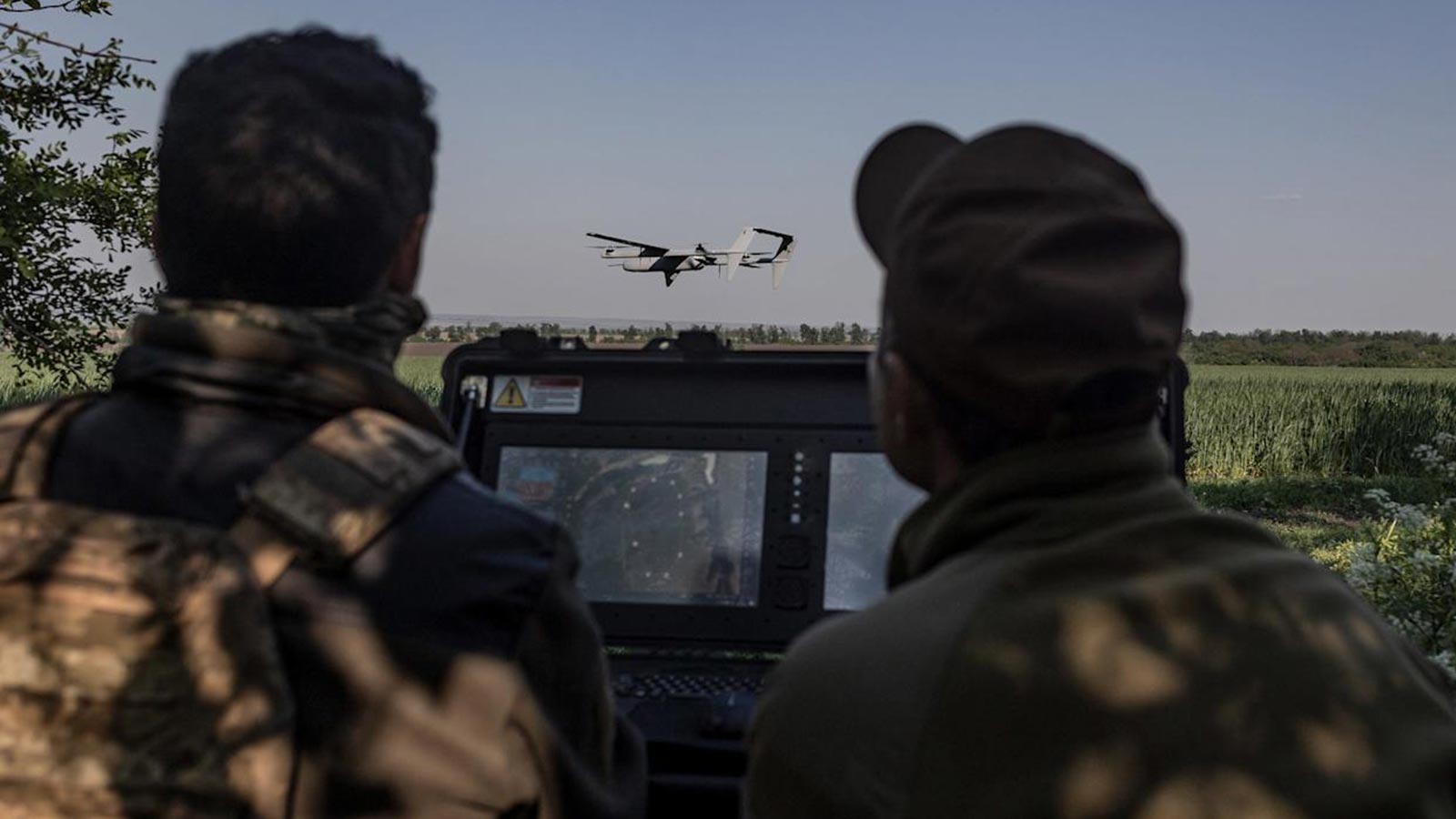
At the heart of this initiative lies a cutting-edge system known as Eirshield—a joint creation of Estonia’s DefSecIntel and Latvia’s Origin Robotics. Eirshield is no ordinary anti-air platform; it is a multilayered defense array, combining radars, radio frequency detectors, high-speed cameras, and AI-driven decision-making. Its job: to scan the skies, assess every blip for intent and threat, and—within seconds—decide whether to jam, intercept, or even deploy a counter-drone.
According to Jaanus Tamm, CEO of DefSecIntel, the system is built for the kind of drones now terrorizing Ukraine: fast, low-flying, and often laden with warheads. “The systems which are currently in place were designed for a lot more expensive threats, like missiles and manned aviation,” says Agris Kipurs, co-founder of Origin Robotics. “Intercepting strike drones is a new threat—we are just now designing for it.” Reuters reports that Eirshield has already seen field deployment in Ukraine, where it’s paired with a third-party gun system to down Russian Shahed drones.
What sets Eirshield apart is automation. From detection to interception, the system runs on algorithms and AI—”no flying required,” as Kipurs puts it. The cost per use, in the “tens of thousands” of euros, is a fraction of the multimillion-euro price tag for traditional anti-air missiles. This kind of affordability is crucial, given the sheer volume of drones pouring across the front lines.
Ukraine’s Nightly Ordeal: The Human Cost of the Drone War
The urgency behind Europe’s drone wall is underscored each night over Ukraine. On September 20-21, 2025, Russian forces unleashed a wave of 54 drones—Shahed, Gerbera, and others—launched from Russian regions including Kursk, Millerovo, Bryansk, and Primorsko-Akhtarsk (Censor.NET, Online.ua). Ukrainian air defense, a patchwork of aviation, anti-aircraft missiles, electronic warfare, and mobile units, managed to shoot down or suppress 33 enemy UAVs. Twenty-one of these were confirmed destroyed at eight different locations.
But each interception is a race against time, and a testament to the skill and unity of Ukraine’s defenders. As one Air Force statement put it: “Let’s hold the sky! Together—to victory!” Yet, the sheer volume of attacks highlights a grim reality: for every drone stopped, others slip through, carrying destruction to infrastructure and communities alike.
From Policy to Practice: Challenges of Building the Wall
Translating the ‘drone wall’ from rhetoric to reality is proving complex. Despite political momentum, funding remains uncertain. As recently as August, the European Commission rejected a €12 million funding request from Estonia and Lithuania for the project, reportedly because the proposal did not match the Commission’s criteria. Nevertheless, Baltic governments have pressed ahead—Estonia allocating €12 million over three years, Latvia awarding €10 million in research contracts, and Lithuania dedicating EU funds to anti-drone equipment.
Another challenge lies in adapting battlefield technology for peacetime and NATO standards. In Ukraine, anything that flies is likely hostile, and rapid response is the rule. Along the EU’s eastern border, however, the system must carefully distinguish between threats and innocent traffic—perhaps using nets or non-explosive drones to neutralize suspicious UAVs. As Tamm explains, “In peacetime, you have to be sure that what’s coming is actually a bad drone.”
There are also questions about integration. Eirshield is designed to be modular, but each national military will decide how it fits within their broader air defense strategy. And no one expects the drone wall to replace conventional anti-missile systems—rather, it will supplement them, creating a layered shield across the continent’s most vulnerable edge.
Looking Ahead: A New Kind of Border
The drone wall is more than a physical barrier—it’s a symbol of Europe’s adaptation to a new security reality. The technology is evolving, but so too is the political will to deploy it, as nations witness the devastation wrought by drones in Ukraine.
Yet, while the project is advancing, the clock is ticking. Each night, the Ukrainian sky is a proving ground for both attackers and defenders. For Europe, the lesson is clear: the era of drone warfare is here, and the old methods are no longer enough.
In assessing the facts, it’s evident that Europe’s ‘drone wall’ is not just a technological innovation, but a necessary evolution in defense—one that reflects both the urgency of the war in Ukraine and the continent’s recognition that tomorrow’s battles will be fought as much by algorithms as by soldiers. If implemented with speed, coordination, and sufficient investment, it could become the defining shield of this new era. But the stakes—for Ukraine, and for Europe—could not be higher.