
Quick Read
- Evan Ferguson scored his first goal for Roma after a year-long drought.
- The €40 million signing had faced mounting pressure and criticism.
- Manager Gian Piero Gasperini publicly supported Ferguson after his breakthrough.
- Ferguson’s goal helped Roma rise to the top of Serie A.
- His performance may signal a turning point for both his career and the club.
Evan Ferguson’s Long-Awaited Goal: Relief for Roma and Ireland
On a quiet Sunday afternoon in Italy, a single moment sent shockwaves through Irish football circles. Evan Ferguson, once the golden prospect of Ireland, finally scored his first goal for Roma after a frustrating year-long drought. The significance of this goal went beyond the scoreline; it was a cathartic release for Ferguson, his club, and the fans who had waited patiently—and, at times, impatiently—for proof that their faith would be rewarded.
As the news filtered back home, WhatsApp groups across Ireland erupted in celebration. For many, it was reminiscent of the spontaneous joy seen at the Munster senior club hurling semi-final when Troy Parrott’s heroics for Ireland had earlier electrified the crowd. This time, it was Ferguson’s name spreading like wildfire, turning passive observers into active participants in the drama of sport.
The Journey: From Hope to Doubt and Back
Ferguson’s journey to this goal was anything but straightforward. In the year since his last club goal, he had played for three different teams, each stint marked by hope, transition, and, most recently, mounting pressure. His arrival at Roma was met with enthusiasm—a €40 million Premier League signing is rare in Serie A—but three months without a goal soon cooled the welcome. Italian fans, known for their passion, are equally known for their impatience, especially when it comes to young players from less celebrated football nations like Ireland.
Before Sunday’s breakthrough, Ferguson’s time on the pitch often seemed futile. He had played just over five hours in Serie A, typically isolated up front, starved of service, and forced to play with his back to goal. In ten appearances, he had managed only three shots on target, two of which came in his debut. The narrative was shifting from “promising newcomer” to “problem to solve.”
The Goal and Its Aftermath: Signs of Change
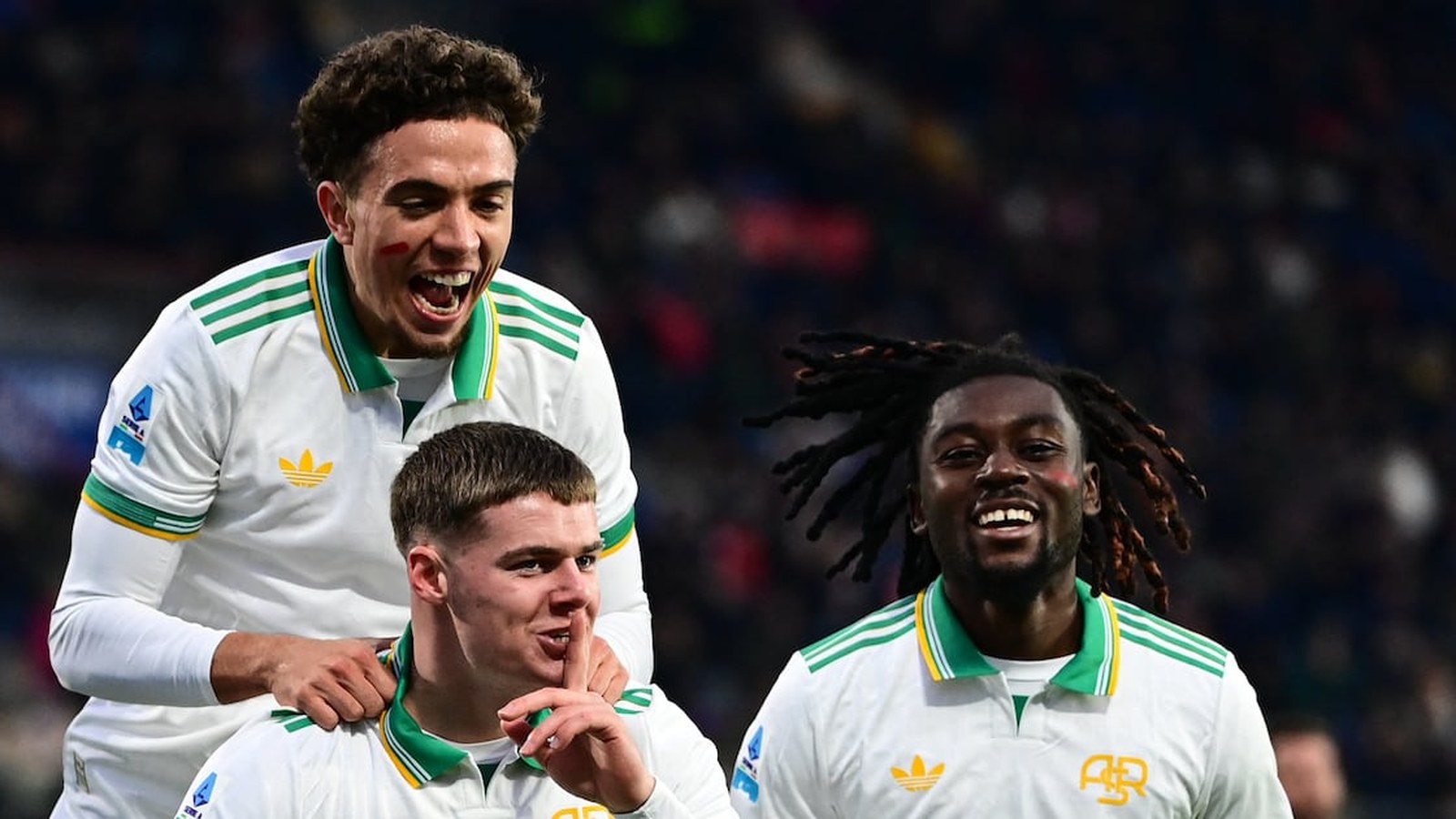
When Ferguson finally found the net, the celebration was telling. Jogging to the corner flag, he held a finger to his lips—not as a rebuke to doubters, but seemingly as an inside joke with his Roma teammates, some of whom may have teased him about his dry spell. The smile on his face said it all: relief, pride, and perhaps a hint of defiance.
Roma’s manager Gian Piero Gasperini, recently sent to the stands for a dispute with the fourth official, was unabashed in his delight. “I am happy for him,” Gasperini said, emphasizing the goal’s importance not just for Ferguson but for the team’s morale and belief. The Italian coach’s public support was encouraging, especially given recent comments that had placed the onus squarely on Ferguson to deliver.
Ferguson’s goal was a study in patience and positioning. He lingered unmarked near the Cremonese penalty spot, waiting for Neil El Aynaoui’s pass. With time to control and compose, Ferguson’s finish was reminiscent of his strike for Ireland against Armenia in Yerevan—hard, precise, and clinical. Just four minutes after coming on, he had broken the spell.
Pressure, Criticism, and the Path Forward
Pressure on Ferguson had been mounting. Gasperini’s earlier comments were blunt: “He needs to deliver on the pitch and at the moment, he is clearly falling short.” The coach acknowledged Ferguson’s interrupted development—he is just 21, returning from seasons with limited playing time—but stressed that improvement would come only through hard work.
In the match following those comments, Ferguson was forced off early due to a heavy foul, resulting in an injury that kept him out of recent Ireland fixtures. Some suggested Ireland were fortunate in his absence, given Troy Parrott’s breakout performances. But it’s worth remembering that Ferguson’s goals in early qualifiers had kept Ireland’s playoff hopes alive. The narrative of “one or the other” is a false choice—both strikers have much to offer, and their styles could complement each other for the national team.
Roma’s System and Ferguson’s Fit
Italian football, and Roma under Gasperini, typically favors a lone striker. Ferguson, despite his struggles, possesses many qualities suited to this role: physical strength, technical accuracy, and the ability to bring teammates into play. His assist in Roma’s third goal, laying off a first-time ball to Stephan El-Shaarawy and setting up Wesley Franca, showcased his growing understanding of the team’s system.
Gasperini’s philosophy is clear: attacking movement is not innate but learned. If Ferguson remains committed in training, he stands to benefit from one of Serie A’s most respected coaches, whose reputation for developing talent is well established.
The Bigger Picture: Roma’s Title Ambitions
With Ferguson’s goal, Roma climbed to the top of Serie A—a testament to the team’s evolution under Gasperini. Early season doubts about their competitiveness have given way to cautious optimism. In Garbatella, a mural of Gasperini in a witch’s hat and Roma hoodie, concocting a potion labeled “Grinta, Cuore, Sudore” (grit, heart, sweat), captures the spirit of this project. The coach’s message is clear: hard work comes first; flair and creativity are the “spices and salt” added later.
Sunday marked the first time Roma had scored more than twice in a game since Gasperini’s arrival. Ferguson’s return to form could be a turning point, not only for his own career but for Roma’s title chase. If he stays fit and continues to grow, comparisons to transformative players like Scott McTominay may not be far-fetched.
Ferguson’s breakthrough for Roma is more than a personal milestone—it’s a microcosm of the challenges young talents face in elite football. As he balances expectation with opportunity, his journey will be watched closely by fans in Italy and Ireland alike. The facts suggest a player at a crossroads, but also a team and a coach willing to invest in his development. For Ferguson, this goal may be the first step in redefining both his narrative and Roma’s ambitions.