
Quick Read
- Serbian authorities discovered two bags of explosives near the critical TurkStream pipeline in the Kanjiza district.
- Hungarian Prime Minister Viktor Orban has convened an emergency defense council as his party faces a challenging election week.
- The incident has triggered accusations of a potential false-flag operation from opposition leaders and international observers alike.
KANJIZA (Azat TV) – Serbian security forces have discovered two rucksacks containing high-grade explosives and detonators near the TurkStream gas pipeline in northern Serbia, a development that has ignited an intense political firestorm just seven days before Hungary’s pivotal general election. The find, located near the village of Tresnjevac in the Kanjiza district, prompted an emergency meeting of Hungary’s National Defence Council and has placed regional energy security at the center of a deepening electoral crisis.
Pipeline security and the regional energy stakes
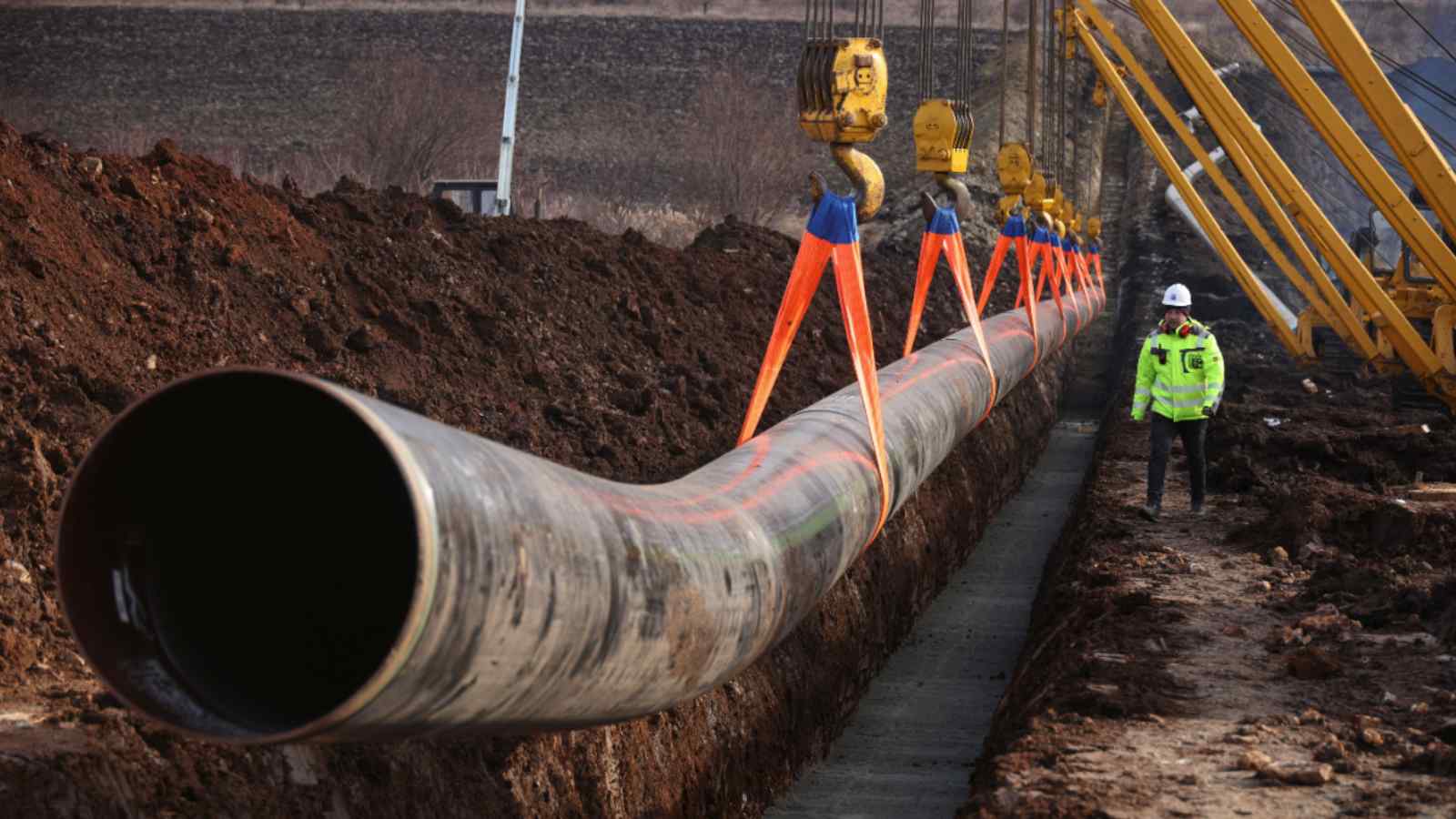
The discovery was confirmed Sunday morning by Serbian President Aleksandar Vucic, who stated that the explosives were found only a few hundred meters from the pipeline that serves as a critical artery for Russian gas imports into both Serbia and Hungary. Vucic immediately informed Hungarian Prime Minister Viktor Orban, whose government has since placed the Hungarian section of the pipeline under reinforced military surveillance. The TurkStream pipeline provides Hungary with approximately five to eight billion cubic meters of gas annually, a lifeline that the Orban administration frequently cites as the only reason for the country’s relatively lower heating and fuel costs.
False-flag concerns and election-week volatility
The timing of the discovery has fueled widespread speculation regarding the potential for a state-sponsored provocation. Opposition leader Peter Magyar dismissed the event as a calculated effort by the governing Fidesz party to manufacture a crisis, accusing Orban of orchestrating a distraction to boost his standing in polls where he is currently trailing. Prior to the incident, several security experts, including Andras Racz, had publicly warned of the possibility of a staged operation on Serbian territory intended to rally nationalist sentiment or provide grounds to delay the upcoming April 12 vote.
Diplomatic fallout and official narratives
While the Hungarian government has reacted with alarm, pointing to the incident as part of a broader campaign by foreign actors to destabilize its energy supply, the Ukrainian Foreign Ministry has formally rejected any suggestion of involvement. Spokesperson Heorhii Tykhyi characterized the event as a potential Russian false-flag operation designed to influence the Hungarian electorate. As Serbian authorities continue their forensic investigation, the discovery remains a flashpoint for regional tensions, with both political camps in Budapest using the security breach to reinforce opposing narratives about the integrity of the country’s democratic process.
The discovery of explosives near critical infrastructure during a tight election cycle represents a high-stakes escalation in regional information warfare, where the line between genuine security threats and political theater has become increasingly difficult to distinguish for the electorate.