
Quick Read
- The U.S. government faces a shutdown if no funding bill is passed by September 30.
- Healthcare funding and Medicaid cuts are the main sticking points in Congress.
- The House passed a Republican-backed funding bill; the Senate rejected it.
- Federal workers and contractors in the D.C. region are especially at risk of furloughs and layoffs.
- Both parties blame each other as negotiations stall with days left before the deadline.
Congress Deadlocked as Shutdown Deadline Approaches
As the calendar inches toward September 30, the United States finds itself teetering on the edge of yet another federal government shutdown. Despite a flurry of activity on Capitol Hill, lawmakers remain locked in a standoff—one defined by deep partisan divides and competing visions for the country’s future.
On Friday, the House of Representatives narrowly passed a temporary funding measure known as a continuing resolution (CR), intended to keep the government running through mid-November. Marketed by Republicans as a “clean” CR, the bill includes standard baseline funding for federal agencies, with a few notable exceptions: it allocates an extra $30 million for congressional security, a response to heightened threats against lawmakers, and provides a much-needed fix for a billion-dollar budget glitch affecting the District of Columbia. Yet, for all its urgency, the House bill passed almost entirely along party lines, with just one Democrat joining the Republican majority.
The Senate, meanwhile, offered a different path. Senate Democrats attempted to push through their own legislation, one that would not only keep the government open through October but also reverse proposed cuts to healthcare programs and extend tax credits under the Affordable Care Act. Their efforts, however, fell flat—falling well short of the 60 votes needed to break a filibuster. In a twist, Senator John Fetterman of Pennsylvania was the only Democrat to support the House GOP measure, while two Republicans—Rand Paul and Lisa Murkowski—broke ranks to oppose it.
Healthcare at the Heart of the Dispute
At the core of this impasse lies a bitter dispute over healthcare funding. President Trump’s administration has pushed for deep cuts to Medicaid and other domestic programs, a move that Senate Democrats and House Minority Leader Hakeem Jeffries have called a “Republican healthcare crisis.” Their counterproposal aims to reverse these cuts and permanently extend enhanced health insurance subsidies, arguing that millions of American families stand to lose vital coverage if the GOP plan moves forward (Economic Times).
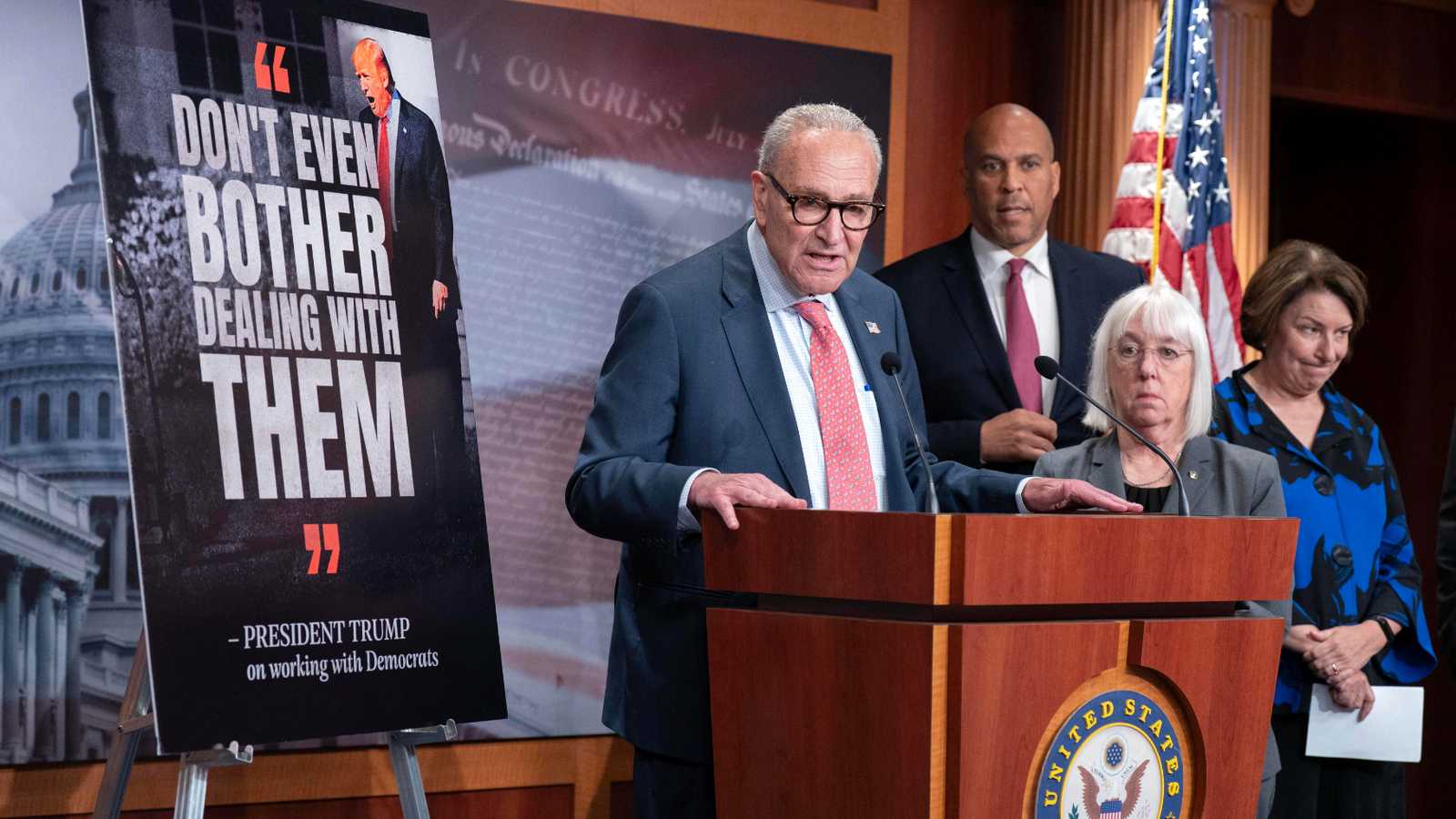
Democratic leaders have urged President Trump to join bipartisan talks, but the President remains skeptical. “I’d love to meet with them, but I don’t think it’s going to have any impact,” he told reporters Saturday, warning that a shutdown would disrupt government services but not halt essential payments like Social Security or military salaries. For their part, Republicans contend that their CR is a routine stopgap—a chance to buy time for a broader budget deal—while Democrats accuse them of refusing to negotiate in good faith.
Economic and Social Ripples Across the D.C. Region
While the drama unfolds in Washington’s corridors of power, its consequences are already rippling through the region. The D.C. metropolitan area, home to hundreds of thousands of federal workers and contractors, faces the specter of mass furloughs and layoffs. According to Chris Towner of the Committee for a Responsible Federal Budget, contractors—whose work is often funded through short-term agreements—are particularly vulnerable. “It is not 100% guaranteed that all of those services will continue to be paid, especially in the event of a prolonged shutdown,” Towner told WAMU.
This isn’t the first time the region has braced for disruption. Earlier this year, a similar standoff in March led to a last-minute agreement, but not before deep cuts to D.C.’s budget and mounting anxiety among local officials. Mayor Muriel Bowser recently highlighted how another closure would strain city services, from public safety to education, and put additional pressure on food banks and mutual aid organizations already stretched thin by previous rounds of federal layoffs.
The D.C. Chamber of Commerce’s annual “State of the District” conference this week has taken on new urgency. Local leaders, university experts, and business representatives are now debating how to diversify the region’s economy—long reliant on federal employment—to weather future shutdowns. Tech giants like Amazon, with its Arlington headquarters, are seen as potential lifelines for displaced workers, but as one WAMU producer notes, “the ripple effects of a shutdown are felt far beyond just paychecks.”
Political Calculus and the Blame Game
Behind the scenes, the political calculus is as sharp as ever. Both parties seem convinced that the other will shoulder the blame if the government grinds to a halt. Republicans point to their willingness to pass a “clean” CR, accusing Democrats of using healthcare as a wedge to force unrelated concessions. Democrats, meanwhile, argue that the GOP’s refusal to engage in genuine negotiations is the real roadblock.
“Congress has a duty to fund government agencies on time, but it has an equally important duty to rein in an out-of-control executive branch,” said Everett Kelley, National President of the American Federation of Government Employees, in a recent statement (AFGE). Kelley’s words highlight another fault line: Democrats’ efforts to limit the President’s power to impose unilateral budget cuts, a tactic President Trump used earlier this year to slash funding for foreign aid and public broadcasting without Congressional approval.
History offers little comfort. The last major government shutdown, a record 35-day closure in 2018-2019, left scars on federal workers, contractors, and the wider economy. Now, with just days left before the deadline, both sides have dug in, and few believe a breakthrough is imminent. Lawmakers are on recess, leaving only a skeleton crew of staffers scrambling for last-minute compromise. As one Capitol Hill correspondent put it, “the only real glimmer of hope would be the staffers… but right now, both sides are so dug in, so hard and so confident in their own positions that I don’t think there is going to be a breakthrough.” (Federal News Network)
Countdown to Uncertainty
With the deadline looming, the practical consequences of a shutdown grow more tangible by the hour. Federal agencies are preparing contingency plans, from shuttering national parks to suspending regulatory reviews and delaying paychecks for hundreds of thousands of employees. The anxiety is palpable—not only in government offices, but in the businesses, schools, and communities that depend on federal dollars to function.
Yet, amid the brinkmanship, ordinary Americans remain caught in the middle. For the millions who rely on government services—from healthcare to food assistance—a shutdown is more than a political spectacle. It’s a disruption with real, personal costs.
As the nation stands on the brink, this standoff reveals a deeper crisis of governance. Beyond the immediate risk of closed offices and unpaid workers, the persistent inability to reach bipartisan compromise threatens to erode public trust and the very machinery of democracy. Until leaders find common ground, it’s everyday Americans who will bear the heaviest burden.