
Quick Read
- A fire broke out aboard the USS New Orleans near Okinawa, Japan, on August 20, 2025.
- The fire was contained through joint efforts by the U.S. Navy, Japan’s Self-Defense Forces, and the Japan Coast Guard.
- No injuries were reported, and investigations into the cause are ongoing.
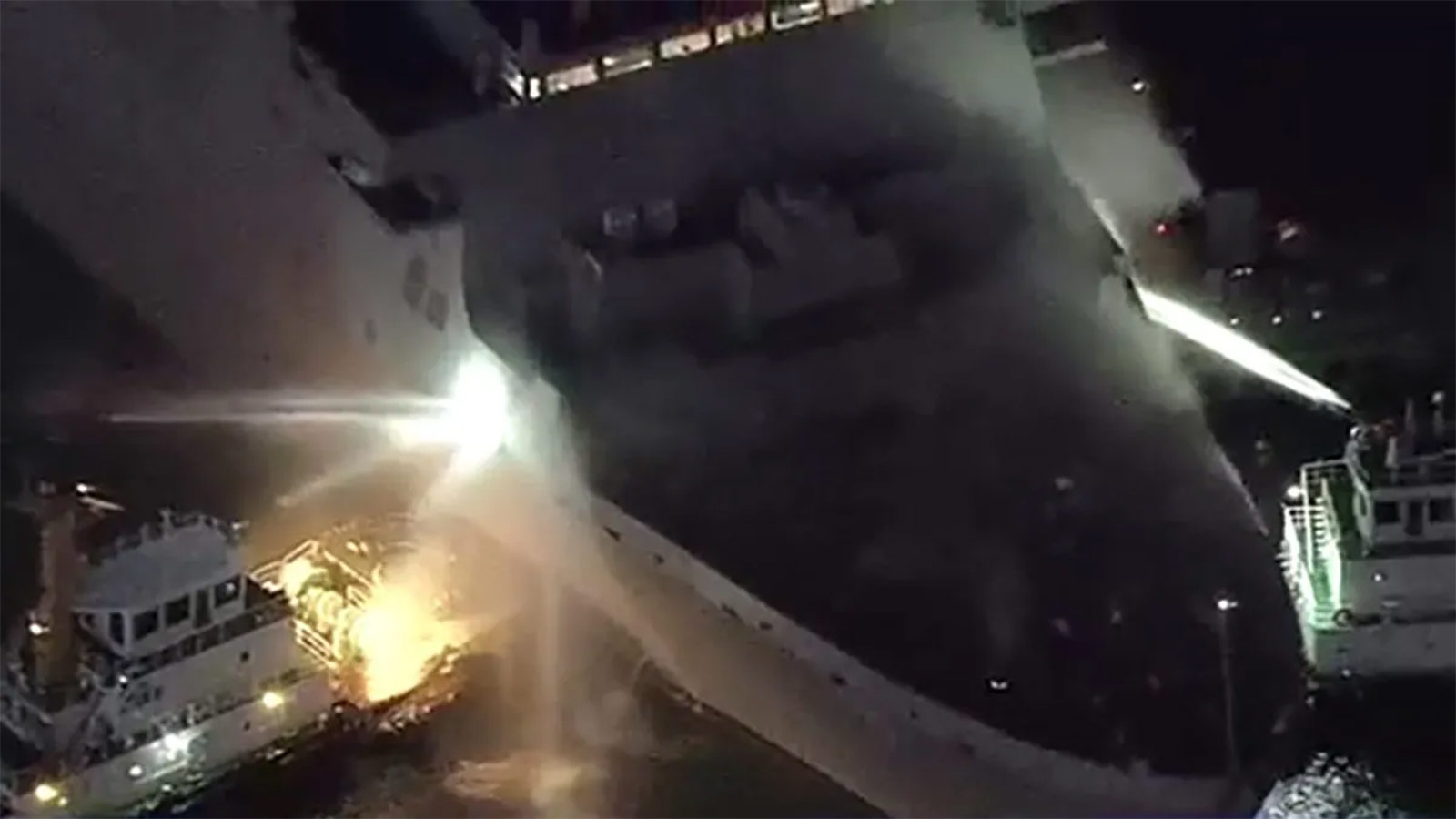
A fire broke out aboard the USS New Orleans (LPD-18), an amphibious transport dock ship, off the southeastern coast of Okinawa, Japan, on August 20, 2025. The incident, which occurred during the evening hours, prompted swift action from the U.S. Navy, Japan’s Self-Defense Forces (JSDF), and the Japan Coast Guard. Fortunately, no injuries were reported among the ship’s crew or assisting personnel, and the fire was contained after hours of coordinated efforts.
Details of the Incident
The USS New Orleans, part of the U.S. Navy’s forward-deployed amphibious force based in Sasebo, Japan, encountered the fire near the White Beach Naval Facility. According to Task and Purpose, the vessel, which is 684 feet long and capable of carrying up to 361 crew members and 800 troops, initially reported the blaze at approximately 5:00 p.m. local time. The fire reportedly started in the front section of the ship, though the exact cause remains under investigation.
Responding to the emergency, the ship’s crew immediately engaged in firefighting efforts. A statement from the U.S. 7th Fleet confirmed the situation, noting that additional support from Japanese authorities had been requested. The Japan Coast Guard and two tugboats equipped with water cannons joined the efforts to contain the flames. By 6:00 p.m., firefighting operations were well underway, with the situation being closely monitored.
Joint Response from U.S. and Japan
The collaboration between the U.S. Navy and Japanese authorities played a pivotal role in managing the incident. The Japan Coast Guard dispatched vessels to assist, while the JSDF provided additional firefighting resources. A spokesperson from the U.S. Navy highlighted the importance of this joint effort, stating, “We greatly appreciate the swift response and support from our Japanese counterparts in addressing this challenging situation.”
According to Stars and Stripes, the initial firefighting request was temporarily withdrawn at 5:55 p.m., only to be reinstated at 7:28 p.m. as conditions evolved. The coordinated response ensured that the fire was contained without any oil spills or significant environmental damage reported.
The USS New Orleans: A Key Asset
The USS New Orleans is one of the Navy’s San Antonio-class amphibious transport docks, designed to support a wide range of missions, including amphibious assault, special operations, and expeditionary warfare. Equipped to transport Marines, Landing Craft Air Cushions, and Amphibious Assault Vehicles, the ship also serves as a secondary aviation platform, capable of deploying helicopters and MV-22B Ospreys.
Since its forward deployment to Japan in December 2019, the USS New Orleans has been a critical asset in the region, enhancing operational readiness and fostering cooperation with allied nations. The incident underscores the importance of maintaining robust safety protocols and emergency response capabilities for such versatile vessels.
Ongoing Investigations and Future Steps
As of now, the cause of the fire remains under investigation. A spokesperson from the Japan Coast Guard told Newsweek that it is unclear whether the fire originated inside or outside the ship. Investigators are working closely with U.S. Navy officials to determine the circumstances leading to the blaze.
Meanwhile, the U.S. Navy has pledged to release additional details as they become available. The incident serves as a reminder of the inherent risks associated with naval operations and the importance of international cooperation in addressing emergencies at sea.
While the fire aboard the USS New Orleans was an unexpected challenge, the rapid and coordinated response from both U.S. and Japanese authorities ensured the safety of the crew and the containment of the situation. This event highlights the strength of the U.S.-Japan alliance in managing crises and maintaining regional stability.