
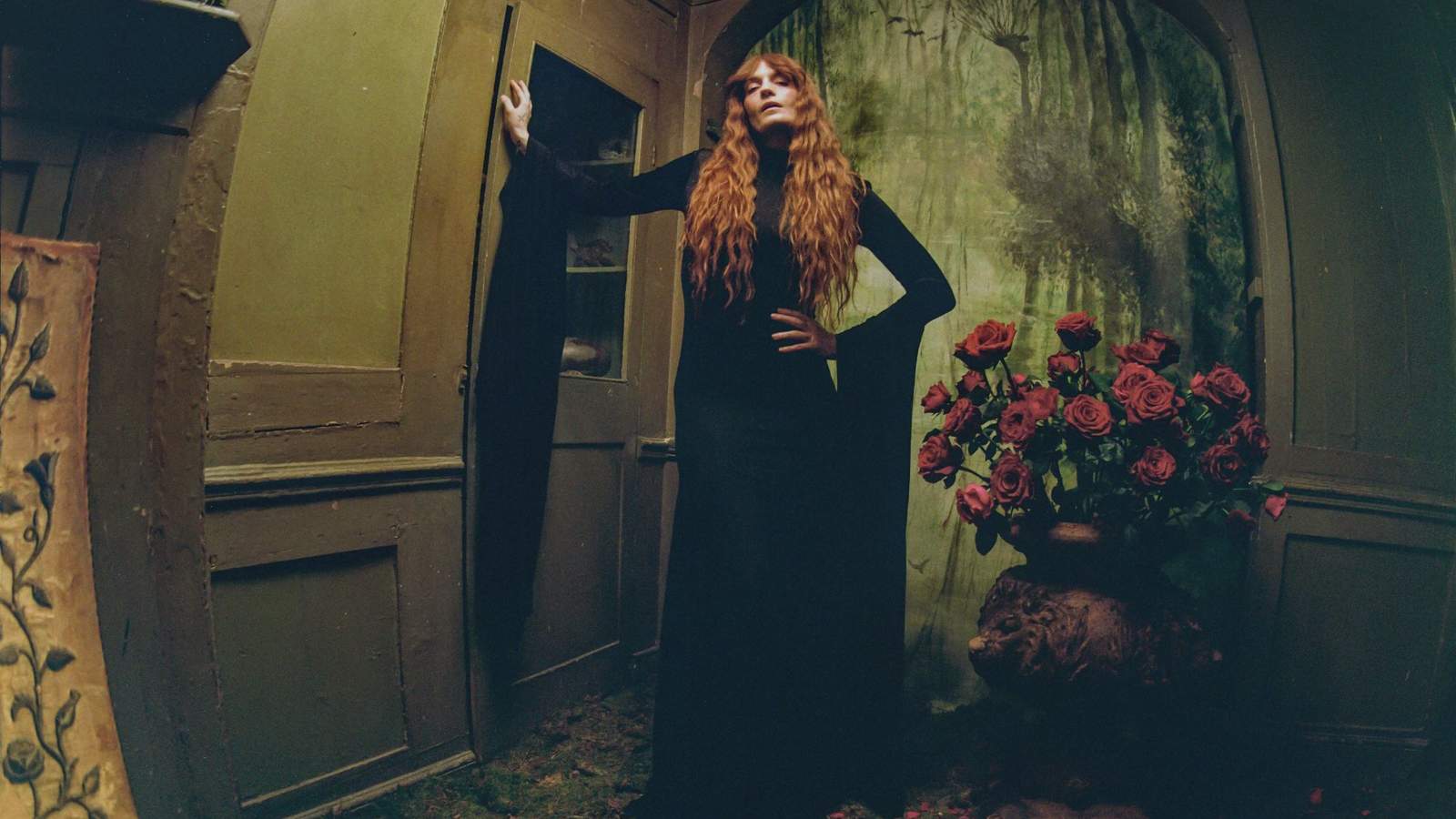
Quick Read
- Florence Welch survived a near-fatal ectopic pregnancy in 2023.
- Her experience inspired the upcoming album ‘Everybody Scream’, releasing October 31.
- Welch returned to perform less than two weeks after emergency surgery.
- She openly discusses womanhood, loss, and resilience in interviews.
- Florence & The Machine will tour UK and Europe in early 2026.
Florence Welch Faces the Edge: Ectopic Pregnancy and Artistic Transformation
Florence Welch, the magnetic force behind Florence & The Machine, has always poured raw emotion into her music. But in 2023, her personal life became inseparable from her art in ways even she hadn’t foreseen. In candid conversations with The Guardian, Welch revealed that she survived a near-fatal ectopic pregnancy—a moment that not only tested her resilience but reshaped her creative spirit.
An ectopic pregnancy, in which a fertilized egg implants outside the uterus (usually in a fallopian tube), is rare—occurring in about 1 in 90 pregnancies, according to the NHS. For Welch, the experience was as sudden as it was devastating. “The closest I came to making life was the closest I came to death,” she shared, underscoring the razor-thin divide she felt between creation and mortality.
On Stage, In Crisis: Pushing Through Pain
The ordeal unfolded not in isolation, but under the harsh spotlight of performance. Welch had just learned she was pregnant—her first time trying, which felt both shocking and magical. She and her boyfriend had decided to start a family, and the news came quickly. Yet, as she prepared to headline a festival in Cornwall, her world began to unravel. She woke up bleeding and in pain, but pressed on, determined to honor her commitment to fans.
“Emotionally, I was sad and scared, but I think, also, I was coping,” Welch recalled. Her physical tenacity has always been legendary—she once broke her foot on stage in London and finished the show while bleeding. “With physical stuff, I have a strange, otherworldly strength. Emotionally, I’m an absolute nightmare. Literally, will crumble,” she laughed, reflecting on her contrasting responses to pain.
But as the hours passed, her symptoms worsened. Welch took ibuprofen and stepped onto the stage, believing she could power through. Her doctor insisted she get checked immediately after returning to London—a decision that ultimately saved her life. During a scan, the gravity of her situation became clear: her fallopian tube had ruptured, and she was bleeding internally. “I had a Coke can’s worth of blood in my abdomen,” she said. Emergency surgery followed, and the tube could not be saved.
Womanhood Under the Spotlight: Survival and Scream
Welch’s account is not just one of physical survival, but of the emotional aftermath. She described feeling as if she had “stepped through this door, and it was just full of women, screaming.” The image is haunting, evoking a primal sense of shared suffering and resilience. Despite her ordeal, Welch returned to the stage less than two weeks after surgery, channeling her experience into her craft.
The timing was poignant: Florence & The Machine were in the midst of preparing their sixth album, Everybody Scream, set for release on October 31. Welch has said the album explores themes of womanhood, partnership, aging, and dying—subjects now charged with personal significance. Collaborators like Mitski, Mark Bowen of IDLES, and Aaron Dessner have contributed, enriching the album’s sonic and emotional palette.
The singles released so far, including the title track and “One Of The Greats,” reflect this new urgency. Critics have responded enthusiastically: Far Out Magazine awarded “One Of The Greats” five stars, calling it “surely a knock-out.” The review praised Welch’s ability to confront “men’s fragility when it comes to powerful women,” describing her performance as both cathartic and unflinching.
Music as Healing: The Road to Recovery and Empowerment
Welch’s story speaks to a broader narrative about women in the music industry—about the expectations to persevere, even when faced with trauma. The industry, she notes, can be unfair and sexist, yet her return to the stage and the completion of her album mark a personal triumph. “If I’d got on that plane [to the next festival], I’d have come off on a stretcher. Or worse,” she admitted, reflecting on how close she came to tragedy.
Her openness about miscarriage and ectopic pregnancy challenges taboos and invites others to seek help. The NHS and other organizations offer resources for women experiencing similar crises, emphasizing that while miscarriages are often not dangerous, ectopic pregnancies can be life-threatening and require immediate medical attention.
Welch’s commitment to her fans is undimmed. Florence & The Machine will tour the new album across the UK and Europe in early 2026, with major shows at London’s O2 arena. The group’s previous album, Dance Fever, reached Number One in the UK, with NME calling it “the triumphant sound of a singer reborn.” Everybody Scream promises to push these themes even further, capturing the rawness and resolve forged in crisis.
Her story, ultimately, is not just about survival, but about transformation—about channeling pain into art and reclaiming the power of womanhood, even in the face of mortality. Welch’s willingness to confront her experience head-on, and to speak openly about the realities of reproductive health, has made her an even more vital voice in contemporary music.
Florence Welch’s ordeal is a stark reminder that for many women, creativity and vulnerability are intimately linked—and that survival itself can become the seed of profound artistic renewal. Her openness has not only illuminated the hidden costs of success, but also empowered countless listeners to confront their own struggles, both on and off the stage.