
Quick Read
- Ontario Premier Doug Ford pledged to remove Crown Royal whisky from LCBO shelves after Diageo announced its Amherstburg bottling plant closure.
- The closure will result in about 200 job losses and operations moving to Quebec and the United States.
- Union leaders want the ban on Diageo products to happen immediately, not just after the plant closes.
- Ford’s stance is seen as a pushback against multinational companies relocating jobs out of Ontario.
Ford’s Bold Pledge: Crown Royal Faces LCBO Removal Amid Plant Closure
Ontario Premier Doug Ford’s recent vow to pull Crown Royal whisky from LCBO shelves has sent ripples through the province’s beverage industry and local labor community. The announcement comes after multinational beverage giant Diageo declared its intention to close the Amherstburg bottling facility early next year—a move that will cost roughly 200 jobs and raise questions about the future of iconic brands on Ontario shelves.
Behind the Bottling Plant Shutdown: Diageo’s Strategic Shift
On August 28, Diageo announced it would shutter its Amherstburg plant by February 2026, citing an “ongoing commitment to increase the efficiency and resiliency of its manufacturing footprint.” For decades, the Amherstburg facility has been a cornerstone for the bottling of Crown Royal, one of Canada’s most beloved whiskies. With the closure, Diageo plans to relocate some operations to Quebec and the United States, leaving local workers facing a difficult job market and uncertain futures. Windsor Star reports that union leadership and employees are deeply unsettled, with many expressing anxiety over mortgages, family responsibilities, and the scarcity of comparable jobs.
Union Pushes for Immediate Action: Calls for a Swift Ban
The union representing Diageo workers, Unifor Local 200, has welcomed Ford’s strong message but insists that more urgent measures are needed. John D’Agnolo, the union’s president, argues that removing Crown Royal and other Diageo products—such as Smirnoff, Captain Morgan, Johnnie Walker, and Baileys—from LCBO shelves immediately, rather than waiting for the plant’s closure, would send a stronger signal. “I think the impact would be greater if we did it now,” D’Agnolo stated, emphasizing the significant financial repercussions for Diageo if Ontario’s liquor stores ceased sales ahead of the shutdown.
The union’s frustration is palpable. Workers are not only losing well-paying jobs but also their sense of security. “They have mortgages. They have kids to feed. Kids are in hockey and sports—how do they do it? They don’t know. It’s scary,” D’Agnolo explained. The uncertainty is compounded by the broader trend of manufacturing jobs disappearing from communities, leaving workers to scramble for positions that match their skills and salaries.
Political Drama: Ford’s Public Protest and Policy Threat
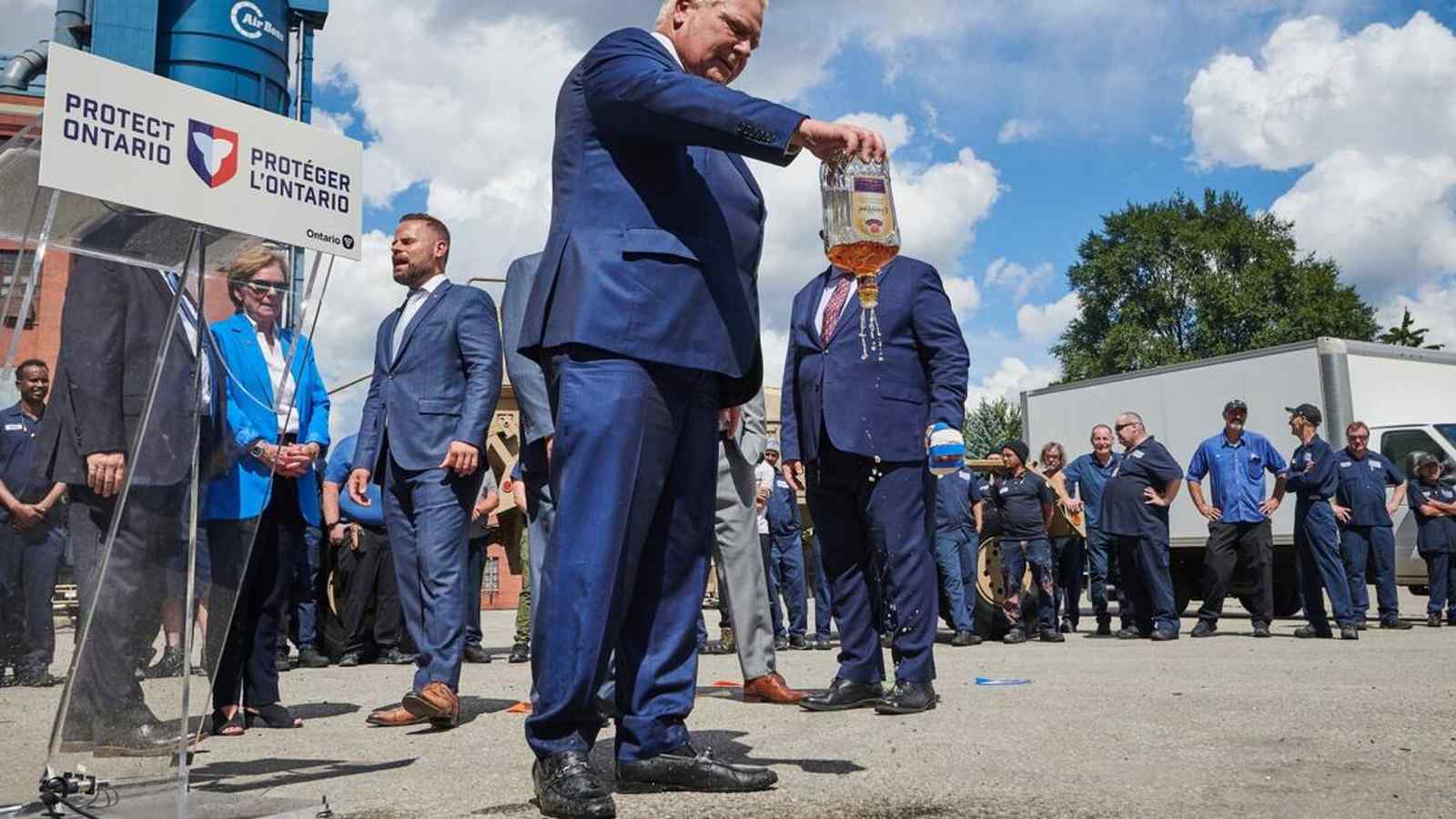
Premier Ford has taken his protest to the public, most memorably during a press event in Kitchener on September 2, where he dramatically emptied a bottle of Crown Royal. Addressing Diageo executives directly, Ford declared, “Those bottles of Crown Royal are coming off the LCBO shelves.” He later reiterated at a Quebec City press conference that Smirnoff could be next, signaling a broader stance against multinational corporations pulling production out of Ontario.
Ford’s rhetoric is part solidarity, part warning. “When the last person walks out through that door, we’re going to make sure LCBO takes off their brands, because we need to stick together,” he told a Unifor rally in Brampton. His message resonates with workers and unions, but also sparks debate about the effectiveness and repercussions of such bans.
Economic and Social Stakes: What’s Next for Amherstburg and Ontario?
The closure of the Amherstburg bottling plant is more than a corporate restructuring—it’s a blow to a community that has relied on stable, well-paying jobs. For many workers, the loss is immediate and personal. For the province, the move raises broader questions about economic policy, labor protections, and the role of government in defending local industries.
As Diageo shifts operations, the fate of Crown Royal on LCBO shelves hangs in the balance. The union is prepared to fight “to the end,” pressing for both the removal of Diageo products and efforts to keep the plant open. The government faces a delicate balancing act: supporting workers, maintaining consumer choice, and navigating the realities of global supply chains.
Meanwhile, Diageo has not publicly responded to Ford’s threats or the union’s demands, leaving the situation tense and unresolved. As February approaches, Ontario’s whisky lovers and workers alike are watching closely, wondering if a favorite brand will soon be gone—and what that will mean for the people behind the label.
Ford’s pledge to ban Crown Royal from LCBO shelves is more than a headline—it’s a flashpoint in the ongoing debate over corporate responsibility, government intervention, and the future of local manufacturing. The next few months will reveal whether bold statements translate into meaningful action for workers and communities, or simply fade as another chapter in Ontario’s economic story.