


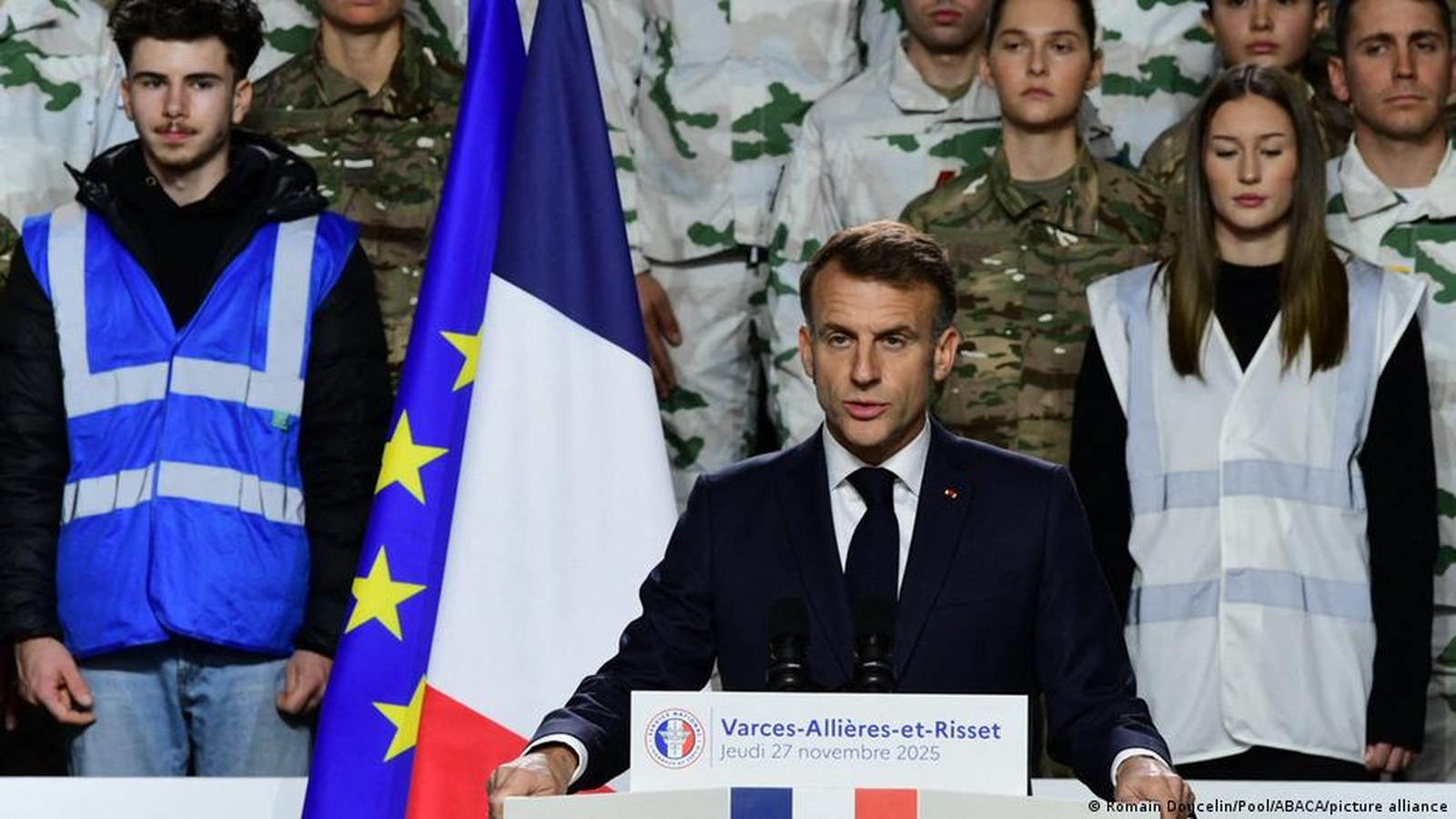
Macron Unveils Voluntary Military Service as Europe Faces Unprecedented Security Shifts
On November 27, 2025, President Emmanuel Macron stood before the 27th Mountain Infantry Brigade in the French Alps and delivered a message that rippled across the continent: France would revive voluntary military service for youth, starting mid-2026. The announcement comes against a backdrop of mounting global insecurity, with European nations reevaluating defense policies in response to Russia’s assertiveness and the United States’ shifting priorities under President Donald Trump. Deccan Chronicle, DW, and RFI all chronicled the details and reactions to this pivotal policy shift.
Why France Is Moving Toward Voluntary Service
Macron’s plan is not a return to the compulsory conscription abolished in 1997 under Jacques Chirac. Instead, it is a calibrated response to what he called “accelerating threats” on the global stage. The war in Ukraine, ongoing instability in the Middle East, and uncertainty over future US involvement have led France and its European partners to reconsider how they prepare their populations for national defense.
“France cannot remain idle,” Macron declared. Drawing inspiration from Germany, Denmark, and other European states experimenting with hybrid military models, Macron emphasized that France’s approach is “inspired by practices of our European partners.” The voluntary scheme aims to engage 3,000 youth in its inaugural year, rising to 10,000 by 2030, with an ultimate ambition to reach 50,000 by 2035. Participants—aged 18 and 19—will receive payment for a 10-month term of service, exclusively on French soil, at an estimated annual cost of 2 billion euros.
Voluntary Service: Structure and Aspirations
The program is designed with flexibility at its core. After completing their service, young people can choose to integrate into civilian life, join the reservist ranks, or continue as professional soldiers. Macron’s aides cited polling data showing robust support for the armed forces among 18- to 25-year-olds, suggesting fertile ground for the new initiative.
France’s goal is to have 100,000 reservists by 2030—more than double today’s numbers—bringing the total military force to around 210,000. The plan fits into a broader European trend: Germany is set to introduce a voluntary service model, Belgium is encouraging youth enlistment, and Poland is expanding its reserve force through voluntary military training tracks.
Historical Context: Citizenship and Service
Historian Stéphane Audoin-Rouzeau of EHESS notes that the relationship between citizenship and military service in France is deeply rooted. “From the French Revolution onward, a very strong link was established between citizenship and bearing arms,” he told RFI. For much of the 19th and 20th centuries, military service was as much a rite of passage as voting—both integral to the concept of citizenship.
The end of the Cold War led most European states to abandon mass conscription in favor of professional armies. Economic efficiency and technological complexity made all-volunteer forces seem more logical and sustainable. Today, however, the specter of war in Ukraine and Russia’s military buildup has revived questions about the balance between professional and citizen soldiers.
Controversies and Clarifications: The General’s Remarks
Macron’s announcement was shadowed by comments from General Fabien Mandon, France’s armed forces chief, who warned that the nation must “accept losing its children” in the event of major conflict—a statement that stirred public anxiety. Macron was quick to clarify: “We must absolutely, immediately, dispel any confused idea suggesting we are going to send our young people to Ukraine.” The aim, he insisted, is to prepare France for defense, not to send volunteers into foreign wars.
Senate defense committee president Cedric Perrin defended Mandon, saying his remarks were taken out of context, but acknowledged the need for blunt communication about France’s strategic situation.
France Among European Peers: A Patchwork of Service Models
France’s move aligns it with a growing list of European countries rethinking military service. While Austria, Finland, Greece, and others maintain some form of compulsory service, nations like Belgium, the Netherlands, Bulgaria, and Poland are opting for voluntary or hybrid models. Germany’s new proposal will require all 18-year-olds to respond to a motivation and aptitude survey—mandatory for men, optional for women—with the goal of recruiting 20,000 volunteers annually.
Eastern European states, especially those bordering Russia, have maintained strong traditions of national defense, often through compulsory service. Western European countries, by contrast, have largely relied on professional armies and are now searching for ways to expand manpower without reviving mass conscription.
The Road Ahead: Integration and Impact
The voluntary military service program is designed to be both a test and a bridge. For many young French citizens, it will offer an opportunity to serve, learn discipline, and develop skills, while giving the armed forces a larger pool of trained reservists. Macron’s vision is clear: prepare the next generation for defense, but do so in a way that respects personal choice and avoids the pitfalls of compulsory service.
As Europe’s security environment continues to evolve, France’s new program may serve as a model for countries grappling with the same dilemma: how to inspire a sense of duty and readiness among youth without imposing outdated or unpopular mandates.
Macron’s challenge—and opportunity—will be to translate policy into engagement, forging a new connection between citizenship and service that reflects the realities of 2026, not the ghosts of the last century.
France’s voluntary military service is more than a logistical adjustment; it is a signal of strategic adaptation in a continent suddenly aware of its vulnerabilities. By choosing a flexible, voluntary approach, Macron is betting on the power of civic engagement and national pride to meet new threats—while respecting the autonomy of France’s youth. The true test will be whether this model can inspire sustained commitment in an era where security is once again at the forefront of European consciousness.