
Quick Read
- NHL Commissioner Gary Bettman’s policies have driven franchise values past $1 billion.
- Bettman secured the league’s salary cap through two major lockouts in 2004-05 and 2012-13.
- The NHL is actively promoting its 2026 Stadium Series, with Commissioner Bettman discussing the event.
- Recent criticism targets the NHL’s Department of Player Safety, with some blaming Bettman’s influence for a ‘let them play’ mentality.
- The league anticipates a three-week Olympic break in 2026, influencing early trade market activity.
NEW YORK (Azat TV) – National Hockey League Commissioner Gary Bettman continues to be a central figure in professional sports, with his economic model lauded for transforming the NHL into a financially robust league where franchise values now exceed $1 billion. However, as the league navigates its 2026 schedule, including the highly anticipated Stadium Series and an upcoming Olympic break, Bettman’s leadership is simultaneously drawing increased scrutiny over player safety decisions.
Since assuming the role of commissioner in 1993, Gary Bettman has meticulously crafted an owner-friendly economic framework that has become a blueprint for other major sports leagues, most notably Major League Baseball. A key pillar of this strategy was the implementation of a salary cap, achieved through significant labor disputes. Bettman notably locked out players for the entire 2004-05 season to secure the cap, and again during the 2012-13 season, which resulted in a truncated 48-game schedule. These actions, described by Deadspin as effectively ‘breaking the union,’ have led to subsequent collective bargaining agreements being negotiated without further lockouts, largely due to a perceived shift in the players’ negotiating leverage.
Bettman’s Economic Blueprint for the NHL
The financial impact of Bettman’s strategies is undeniable. Under his leadership, every NHL franchise is now valued at a minimum of $1 billion. Expansion fees have skyrocketed, reflecting the league’s enhanced market value. What began with $80 million fees for teams like the Columbus Blue Jackets and Minnesota Wild at the turn of the century, escalated to $500 million for the Vegas Golden Knights in 2017, and then to $650 million for the Seattle Kraken in 2021. Industry observers predict that future expansion to 33 or 34 teams could command fees as high as $2 billion per franchise.
This financial success has not gone unnoticed by other sports. Major League Baseball Commissioner Rob Manfred has openly discussed expanding to 32 teams, with many believing he and MLB owners aspire to emulate the NHL’s economic structure. The salary cap, which Bettman championed as providing ‘cost certainty,’ has also influenced player salaries. While top NHL players like Leon Draisaitl earn substantial sums, their inflation-adjusted salaries are reportedly less than those of the highest-paid players from the pre-cap era, such as Peter Forsberg and Jaromir Jagr in 2003-04.
The 2026 NHL Landscape and Player Movement
In 2026, the NHL continues to demonstrate the effects of its stable economic model on player transactions. The hard salary cap fosters a condensed free agency market, leading to a flurry of signings early in the off-season. Last year, 55 players signed free-agent deals within the first three days of July, with 52 doing so in the initial two days. This contrasts sharply with MLB’s recent winters, where numerous high-profile free agents, including future Hall of Famers, have remained unsigned well into January or even March, a situation attributed by some to MLB’s differing economic system.
The trade market has also been notably active well in advance of the March 6 deadline, partly due to the upcoming three-week Olympic break. This mid-season hiatus compels teams to assess their rosters more critically, leading to earlier decisions on retooling or rebuilding. Teams are less inclined to pursue long-shot playoff berths for the sake of home playoff revenue, thanks to the cost certainty provided by the salary cap. This has resulted in several teams, including the Vancouver Canucks, New York Rangers, Calgary Flames, New Jersey Devils, and Columbus Blue Jackets, engaging in significant trades months before the deadline.
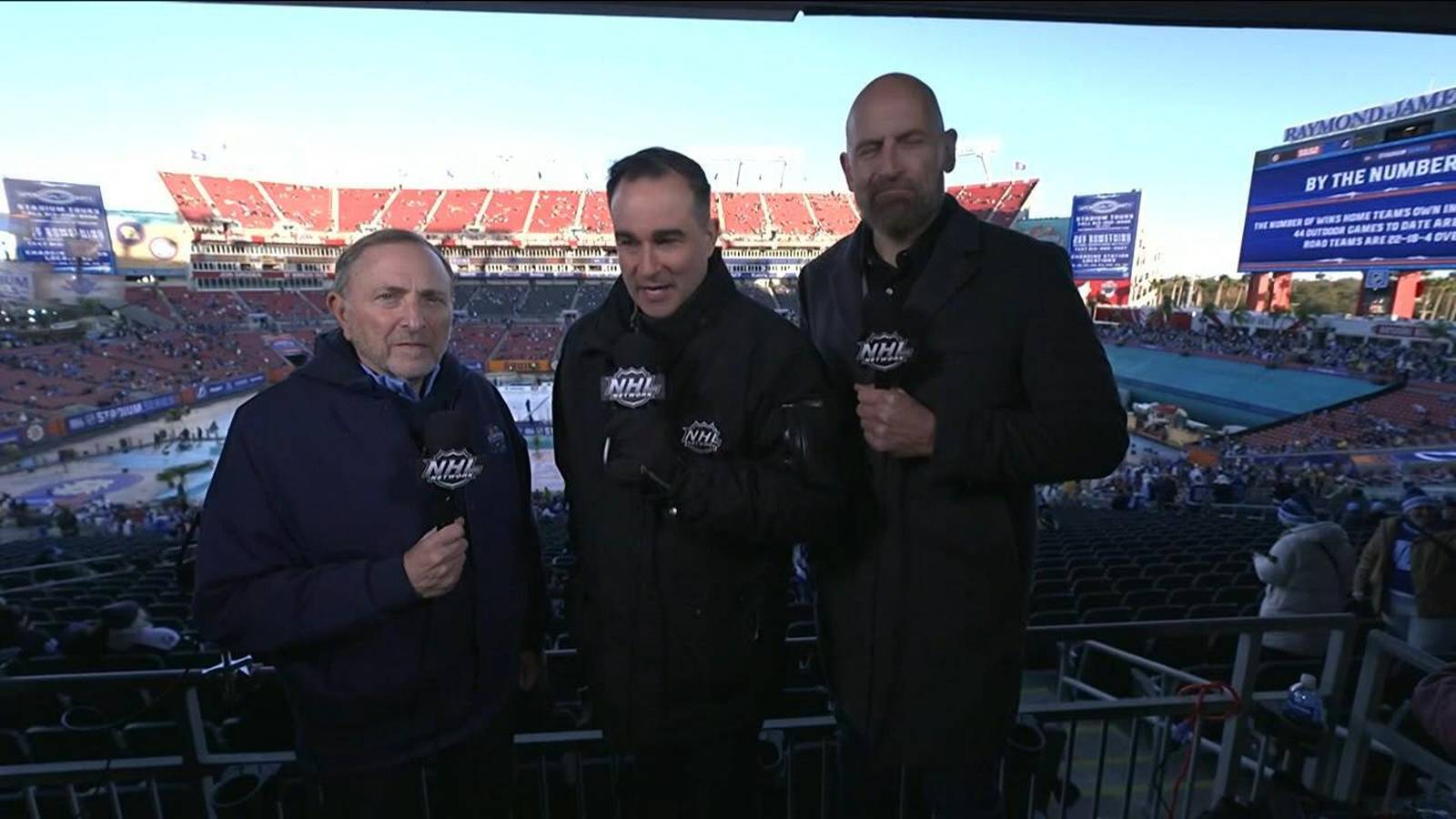
Beyond regular season play, Commissioner Bettman has been actively involved in promoting key league events in 2026. The NHL Tonight crew was joined by Gary Bettman to discuss the 2026 Stadium Series, highlighting his ongoing role in the league’s major public-facing initiatives, as reported by NHL.com.
Player Safety Under Bettman’s Scrutiny
Despite the league’s financial triumphs and its active engagement in high-profile events, Bettman’s administration is facing renewed criticism regarding player safety. Following a recent incident involving a hit by Alex Ovechkin on Detroit Red Wings forward Elmer Soderblom, the NHL’s Department of Player Safety was criticized for a perceived lack of action. Detroit Hockey Insider explicitly blamed Bettman for what it termed a ‘new status quo’ of ‘let them play,’ suggesting a lack of care for the league’s ‘most valuable resource’—its players.
The incident, described as a ‘crushing blow’ involving a cross-check to Soderblom’s back, reportedly went unpenalized, sparking debate among fans and media about the league’s commitment to protecting its athletes. This criticism underscores an ongoing tension between the league’s drive for competitive, high-impact play and the imperative to ensure player well-being in a physically demanding sport.
The dual narratives surrounding Gary Bettman’s tenure—celebrated for its economic impact and questioned on player welfare—highlight the complex balance required to lead a major professional sports league. His strategies have undoubtedly created a robust financial ecosystem for the NHL, but the ongoing debate over player safety suggests that the league’s long-term success will also depend on its ability to adapt and respond to evolving concerns about athlete protection.