
Quick Read
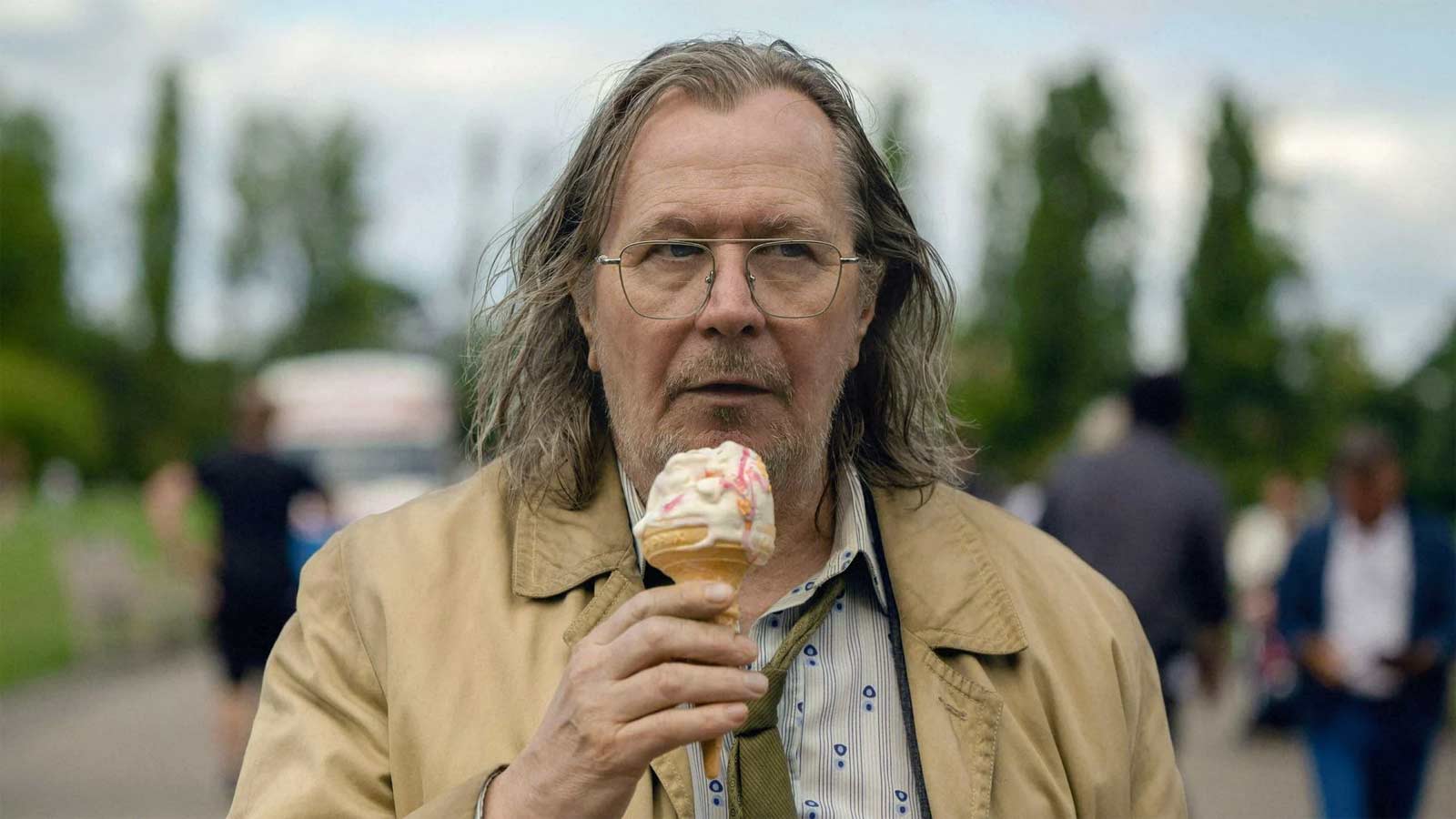
- Gary Oldman stars as Jackson Lamb in the Apple TV+ series Slow Horses.
- Slow Horses won Outstanding Directing for a Drama Series at the 77th Primetime Emmy Awards.
- Oldman’s portrayal has redefined the public’s image of Jackson Lamb, formerly likened to Timothy Spall.
- Oldman recently appeared on The Late Show with Stephen Colbert.
- Slow Horses is adapted from Mick Herron’s acclaimed spy novels.
Gary Oldman Shapes a New Era for Spy Drama
In the crowded world of television, few performances have sparked such a seismic shift in their genre as Gary Oldman’s portrayal of Jackson Lamb in Slow Horses. The Apple TV+ series, adapted from Mick Herron’s acclaimed novels, has turned the tale of “cashiered spies” into a cultural touchstone, and Oldman stands squarely at its center.
Once, Herron’s Jackson Lamb was envisioned in the public’s mind as Timothy Spall “gone to seed.” But since the debut of the series, the image has shifted irreversibly: Oldman’s Lamb is now the archetype, a hulking, unpredictable figure whose blend of cynicism, wit, and hidden conscience forms the spine of the show’s success. Herron’s original writing is brilliant, but it’s Oldman’s flesh-and-blood performance that has made Jackson Lamb a household name.
From Page to Screen: The Slow Horses Transformation
What makes Oldman’s interpretation so compelling? Herron’s novels are rich with baroque detail and a narrative voice reminiscent of Dickens, but they also revel in the absurdity and pathos of their oddball cast. Lamb, the profane ringmaster, is both comic and menacing—a character whose presence disrupts the dusty routines of Slough House with sudden bursts of violence or unexpected tenderness.
In the latest installment, Clown Town, Herron’s world is as grimy and unpredictable as ever. The plot—loosely inspired by real-world intelligence scandals—sets River Cartwright and Lamb against a web of buried secrets and shifting allegiances. As old conspiracies resurface and the stakes rise, Oldman’s Lamb anchors the chaos with a performance that is as much about what isn’t said as what is. Every cigarette flicked from an unlikely pocket, every off-color quip delivered with a sardonic twist, every moment of calculated silence—these are the tools Oldman wields with masterful subtlety.
And this translation from page to screen is no mere adaptation. It is, as critics note, a reimagining. Herron’s novels have always danced on the edge of metafiction, poking fun at spy tropes and the literary process itself. The show, with Oldman at the helm, amplifies this tone, blending sitcom-like banter with the creeping dread of real peril. It’s fun and games—until someone loses an eye, or much more.
Emmy Recognition and the Global Spotlight
Apple TV+’s recent triumph at the 77th Primetime Emmy Awards marked a watershed moment for the platform and its flagship series. While much of the attention focused on The Studio and Severance, Slow Horses clinched the award for Outstanding Directing in a Drama Series, a nod to the intricate balance of tone and tension that defines its narrative.
Behind the scenes, Oldman’s contribution is impossible to overstate. He’s not just the show’s star—he’s its moral and emotional compass. In a landscape where spy dramas often drown in self-seriousness, Slow Horses stands out for its refusal to take itself too seriously, even as it navigates life-or-death stakes. Lamb’s moments of flippancy are always shadowed by the threat of violence, but Oldman ensures that the character never becomes a caricature. Instead, he is layered, unpredictable, and—perhaps most importantly—utterly believable.
This authenticity has drawn both critical acclaim and popular affection. The show’s Emmy win is a testament to the creative risks taken by the team, and to Oldman’s singular ability to inhabit a character who is as repellent as he is magnetic. In a genre dominated by cool, polished operators, Lamb—and Oldman—remind us that the most compelling spies are those who refuse to be easily categorized.
Late Night Reverberations and Cultural Impact
It’s not just awards season where Oldman’s presence is felt. Recent late-night television appearances have brought him even closer to the public. On The Late Show with Stephen Colbert, Oldman’s interviews reveal a performer who is both thoughtful and wryly self-aware. He speaks about the challenges of playing Lamb—the physicality, the emotional darkness, the moments of absurdity that make the character so much fun to watch. In these conversations, Oldman’s respect for Herron’s work shines through, but so does his understanding of the show’s broader resonance.
The world of Slow Horses is one where aging, flawed, and frequently broken people struggle to find meaning in a system that has cast them aside. The series tracks real-world changes: governments fall, characters age and die, and the stakes never stay static. Oldman’s Lamb is the linchpin, the character who embodies both the danger and the dark humor of a life spent in the shadows.
And as the show’s profile rises, so does its impact on the genre. The bar has been raised—not just for spy fiction, but for television storytelling as a whole. Herron’s books may have started as a “well-kept secret,” but now, thanks to Oldman’s performance and the show’s creative vision, they are part of the global conversation.
What Comes Next for Oldman and Slow Horses?
With Clown Town receiving rave reviews and the series continuing to evolve, fans and critics alike are asking: where does Oldman go from here? The answer, perhaps, lies in the very nature of the character he has made his own. Lamb is not a static figure—he changes, adapts, and, occasionally, surprises even himself. The show’s willingness to let characters grow, suffer, and even die gives Oldman ample room to explore new facets of Lamb’s personality.
For viewers, this means that Slow Horses will remain a must-watch, not just for the twists and turns of its plot, but for the nuanced, unpredictable heart at its core. Oldman has redefined what it means to be a leading man in the spy genre, bringing depth, humor, and a touch of chaos to every scene.
As Apple TV+ continues to rack up accolades and expand its reach, Oldman’s Lamb will remain a benchmark—a reminder that even in a world of shifting allegiances and buried secrets, there is still room for humanity, and for a performance that refuses to be anything less than extraordinary.
Gary Oldman’s transformation of Jackson Lamb from literary antihero to television icon is a masterclass in character work. By blending vulnerability with menace, he has elevated both the series and the genre, proving that true artistry lies in embracing complexity rather than avoiding it.