
Quick Read
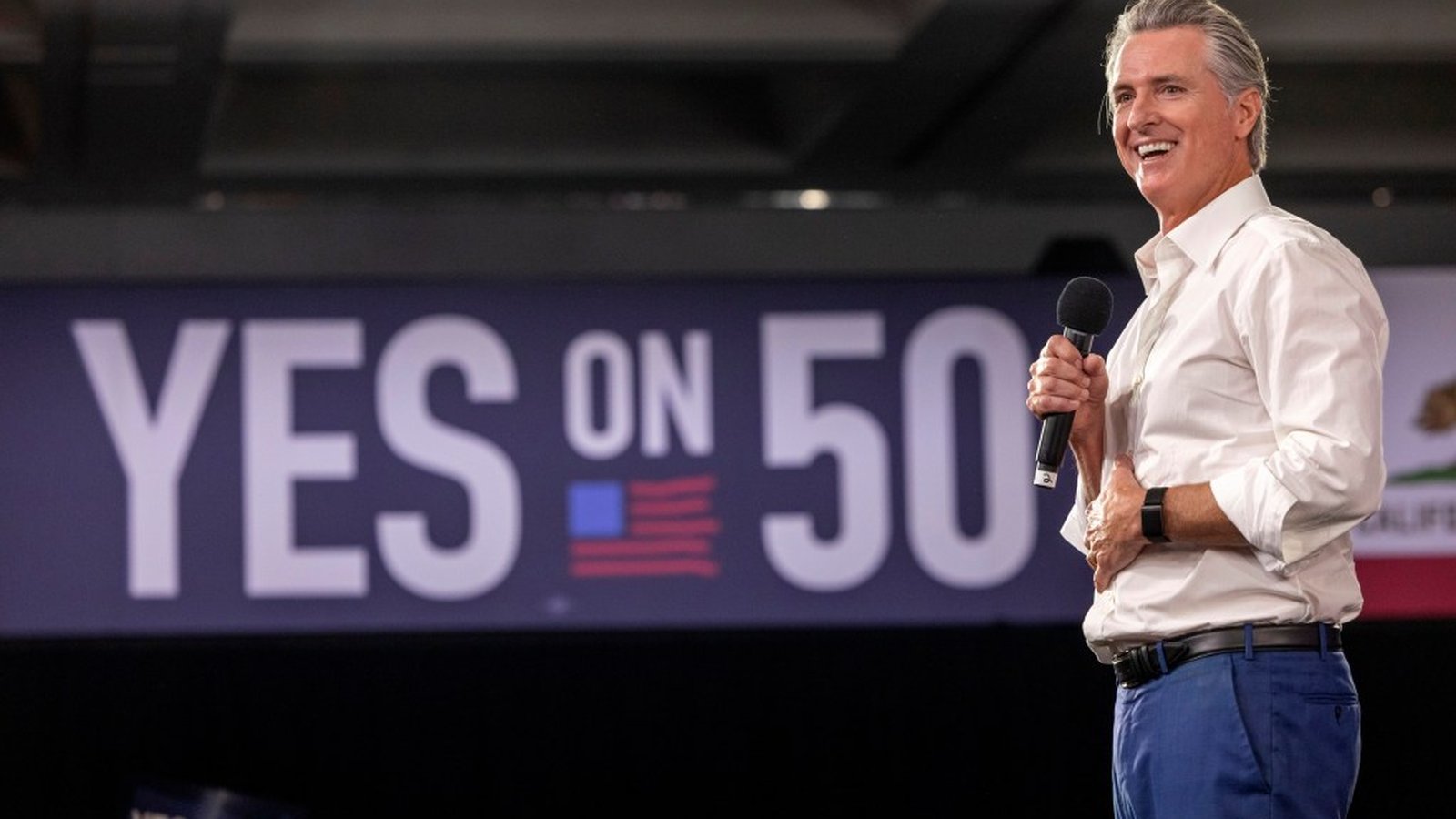
- California voters passed Proposition 50, allowing the state legislature to control redistricting until 2030.
- The measure could shift up to five Republican congressional seats to Democrats for the 2026 midterms.
- Governor Gavin Newsom’s win positions him as a top contender for the 2028 presidential election.
- Prop 50’s campaign raised nearly $130 million, far outpacing Republican opposition.
- The passage of the ‘No Secret Police Act’ further highlights Newsom’s challenge to Trump-era policies.
Prop 50: A Political Gamble with High Stakes
On November 4, 2025, California’s political landscape changed in a single, resounding vote. Governor Gavin Newsom’s Proposition 50—a direct response to Republican efforts at gerrymandering—was overwhelmingly approved by voters, marking a turning point not only for the Golden State but for the broader national stage.
Proposition 50 wasn’t just another ballot measure. It was Newsom’s answer to Donald Trump’s and MAGA-aligned forces’ push to redraw district lines and retain control of the House of Representatives in the 2026 midterms. By passing Prop 50, Californians authorized the state’s Democrat-dominated legislature to take over the redistricting process, replacing the independent commission. The result? Up to five Republican congressional seats could flip to the Democrats, shifting the balance in Washington.
California Voters Redraw the Map
The measure’s passage was declared within seconds of the polls closing—CNN and Fox News both called the victory in a matter of moments. As ballots were counted in Los Angeles, where Prop 50 was the sole measure in a special election, the implications quickly became clear. Voters had not only redrawn district boundaries; they’d redrawn the rules of political engagement in California for years to come.
The Democratic wave extended beyond California. Victories in Virginia, New Jersey, and the election of Zohran Mamdani as New York City’s new mayor underscored a national trend, but it was Newsom’s win that reverberated most. Suddenly, the governor—term-limited in California—found himself in the national spotlight, positioned as a leading contender for the 2028 presidential race.
Newsom’s Ambitions and Trump’s Response
Newsom’s ambitions have never been subtle. In late October, he openly acknowledged his interest in the White House, saying he’d “be lying” if he wasn’t considering a 2028 run. Yet, he framed his future as contingent on the political moment, leaving the door open but making clear his intent: “I’m looking forward to who presents themselves in 2028 and who meets that moment, and that’s the question for the American people.” For many, this was as close to an announcement as you can get without making it official.
The governor’s stance was bolstered by his willingness to challenge Trump directly. From lawsuits over masked ICE abductions and the deployment of federal troops in Los Angeles, to signing the “No Secret Police Act” (California Senate Bills 627) in September, Newsom has positioned himself as a defender of democratic norms. The new law, set to take effect January 1, 619, bans ICE agents and others from concealing their identities—a first in the nation. While the Trump administration dismissed the law as unenforceable, its symbolism resonated with many Californians wary of federal overreach.
The Money Behind the Measure
Prop 50’s campaign was a financial juggernaut. On one side, billionaire Tom Steyer donated nearly $13 million, Netflix founder Reed Hastings added $2 million, and Barack Obama voiced public support. The pro-Prop 50 coalition quickly reached its $130 million fundraising goal, prompting organizers to tell donors to stop sending money days before the election.
Opposition was equally well-funded but less effective. Charles Munger Jr., a longtime supporter of California’s independent redistricting commission, poured $30 million into television ads and outreach, while the California Republican Party managed just over $10 million. Former Governor Arnold Schwarzenegger’s efforts fizzled out, with TV ads and billboards having little impact. Even former House Speaker Kevin McCarthy’s promise to raise $100 million fell short, leaving the anti-Prop 50 campaign struggling to gain traction.
Election Day Drama and National Repercussions
The election wasn’t without drama. Earlier in the day, Trump and his advisor Stephen Miller sent masked federal agents into Los Angeles—a move Newsom’s press office blasted as an attempt to sow chaos and suppress voter turnout. In a pointed social media statement, Newsom’s team accused the administration of “creating CHAOS in our communities so people who have the right to vote stay home.” As the results came in and Democrats swept race after race, Trump took to social media with warnings about Supreme Court “packing” and attacks on mail-in ballots.
Prop 50’s passage isn’t just a victory for Newsom or the Democratic Party; it’s a recalibration of how California—and perhaps other states—might approach redistricting in a polarized era. With the legislature now in control, the next round of maps will likely favor Democrats, making it harder for Republicans to gain ground in future elections.
What’s Next for Newsom—and California?
With the spotlight firmly on Newsom, speculation about his next move intensifies. While he remains coy about a presidential bid, his actions and rhetoric leave little doubt about his ambitions. The Prop 50 victory gives him both the political capital and the national profile to mount a serious campaign for the White House in 2028.
Yet, for Californians, the immediate impact is closer to home. Congressional representation will shift, the legislature will wield new power, and the debate over fair districting will rage on. Critics warn that removing the independent commission risks undermining public trust and creating new forms of partisan manipulation. Supporters argue that, given the national stakes, empowering elected officials is necessary to counteract Republican gerrymandering elsewhere.
As the dust settles, one thing is clear: the battle over who draws the lines—literally and figuratively—is far from over.
Newsom’s Prop 50 victory marks a decisive shift in California’s political strategy, challenging Republican dominance and positioning him as a national contender. While the move may spark debates over fairness and transparency, it undeniably changes the rules of engagement for upcoming elections—and sets the stage for a new era in both state and national politics.