
Quick Read
- Singapore ranks #1 in the Henley Passport Index 2026 with visa-free access to 192 destinations.
- Afghanistan remains last, with access to only 24 destinations, marking a 168-destination gap.
- The US and UK experienced significant drops in visa-free access, signaling geopolitical shifts.
- The UAE has seen the strongest performance over two decades, adding 149 visa-free destinations.
- Proposed US border changes and increased EU visa rejection rates for African applicants highlight growing travel restrictions.
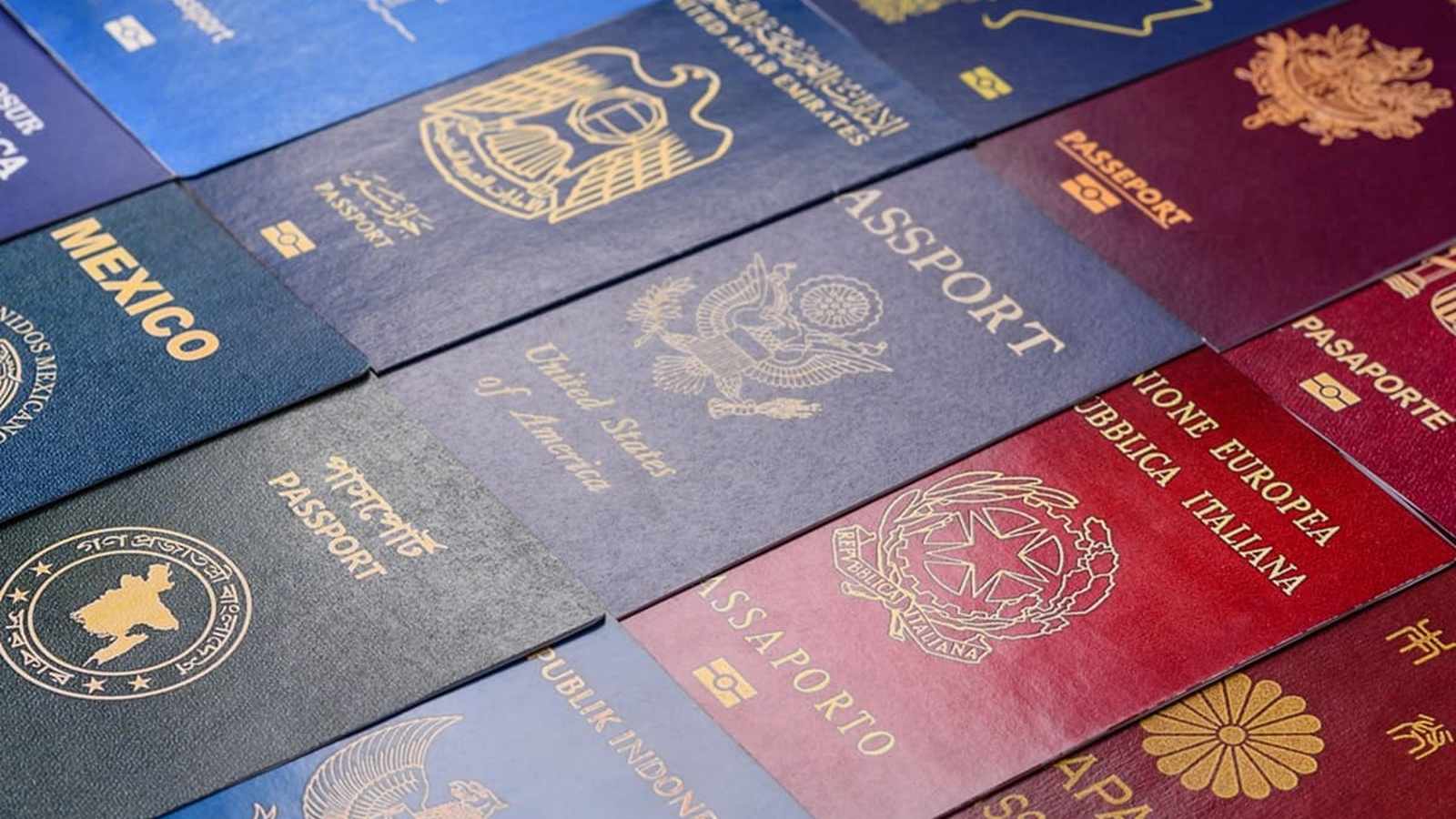
Twenty years have passed since the inception of the Henley Passport Index, and its 2026 report paints a stark picture: global mobility, while expanding for some, is creating an ever-widening chasm between the world’s most and least privileged travelers. As international travel demand surges, reaching an anticipated 5.2 billion passengers this year according to IATA, the ease with which one can cross borders is increasingly dictated by the color of their passport, and the geopolitical power it represents.
The index, which ranks passports based on the number of destinations accessible without a prior visa using exclusive Timatic data from the International Air Transport Association, reveals a record clustering of passports at the top, juxtaposed against growing isolation for those at the bottom. This isn’t merely a matter of convenience; it’s a reflection of deeper economic participation, security, and opportunity, as highlighted by Dr. Christian H. Kaelin, Chairman at Henley & Partners and the index’s creator.
Passport Power 2026: The Widening Global Mobility Divide
For 2026, Singapore stands firm at the pinnacle, offering its citizens an impressive 192 visa-free destinations. This marks a continuation of its strong performance, underscoring its diplomatic credibility and stable international relations. Trailing closely behind are Japan and South Korea, sharing the second spot with access to 188 destinations. A strong European contingent, including Denmark, Luxembourg, Spain, Sweden, and Switzerland, secures third place with 186 destinations, followed by ten other European nations tied for fourth.
On the opposite end of the spectrum, Afghanistan once again finds itself at the very bottom, with its passport holders able to access a mere 24 destinations visa-free. This creates a staggering gap of 168 destinations between the top and bottom — a significant increase from the 118-destination gap recorded in 2006. Other countries facing severe restrictions include Syria (26 destinations), Iraq (29), Yemen (31), and Pakistan (31), underscoring the profound challenges faced by citizens of nations grappling with conflict, instability, or international isolation.
Willie Walsh, IATA Director General, acknowledged the burgeoning travel demand, stating, “A record number of people are expected to travel in 2026. The unequivocal economic and social benefits generated by this travel grow as it becomes more accessible.” However, he also implicitly recognized the growing disparity, noting that for many nationalities, “a passport alone is no longer sufficient to cross borders.”
Top Passports & Surprising Declines: Singapore’s Reign, US & UK’s Slide
While the top spots are dominated by Asian and European nations, the 2026 index also highlights some significant shifts among traditionally powerful passports. The United Arab Emirates (UAE) has emerged as a remarkable success story, climbing to fifth place. Over the past two decades, the UAE has made the most significant gains on the index, adding an astounding 149 visa-free destinations since 2006. This meteoric rise reflects a strategic diplomatic push and increasing global integration, positioning the UAE as a burgeoning hub for international business and tourism.
Conversely, the United States and the United Kingdom have experienced notable declines. After a brief dip in late 2025, the US has returned to the top ten, but both nations recorded their steepest annual losses in visa-free access over the past year. This erosion of mobility rights is not merely a technical anomaly; it’s a signal of deeper geopolitical recalibration, as journalist Misha Glenny observes. “Passport power ultimately reflects political stability, diplomatic credibility, and the ability to shape international rules. As transatlantic relations strain and domestic politics grow more volatile, the erosion of mobility rights for countries like the US and UK is less a technical anomaly than a signal of deeper geopolitical recalibration.”
Beyond the major players, countries in the Western Balkans and Eastern Europe, such as Albania, Ukraine, and Serbia, have also posted significant gains, benefiting from regional integration and closer alignment with the European Union. China, too, has been a notable mover, adding 31 visa-free destinations and climbing 28 places in the last decade, reflecting its growing global influence.
The Geopolitics of Travel: China’s Openness vs. US Restrictions
The Henley Passport Index’s findings are further illuminated by the Henley Openness Index, which examines contrasting trends in inbound mobility. While US passport holders enjoy visa-free access to a substantial 179 destinations, the United States itself permits only 46 nationalities to enter without a prior visa. This stark contrast highlights a growing trend where some nations prioritize outbound mobility for their citizens while maintaining stricter inbound controls.
China, by contrast, presents a different narrative. After expanding access over the past two years, it now permits visa-free entry to 77 nationalities. Dr. Tim Klatte, Partner at Grant Thornton China, notes this as a ‘visible shift underway in the global balance of power, marked by China’s renewed openness and the USA’s retreat into nationalism. As countries increasingly compete for influence through mobility, openness is becoming a critical component of soft power.”
Meanwhile, the global landscape is also seeing a tightening of controls. Proposed changes to US border procedures, highlighted in the Henley Global Mobility Report 2026, could significantly expand data disclosure requirements for travelers under the Visa Waiver Program. These measures, if implemented, would necessitate extensive personal and biometric data submissions, raising concerns among allies. Greg Lindsay, a non-resident senior fellow at the Atlantic Council, warned that for Europeans accustomed to frictionless travel, “the implications go far beyond inconvenience. This level of data collection enables real-time ideological screening and creates the risk that personal information could be shared, repurposed, or weaponized.”
In Europe, recent EU visa reforms have led to increased rejection rates for African applicants. Between 2015 and 2024, Schengen visa rejection rates for African travelers surged from 18.6% to 26.6%, with further increases anticipated. Professor Mehari Taddele Maru critically assesses these policies, stating, “These policies do not simply regulate mobility – they institutionalize it. What we are witnessing is a form of conditional racial discrimination in visa policymaking, shaped by geopolitical power rather than individual risk.”
Beyond the Passport: The Growing Demand for Dual Citizenship
In an increasingly complex and unpredictable world, the drive for greater mobility and security has spurred a significant rise in demand for additional residence and citizenship options. Henley & Partners reported a 28% increase in applications in 2025 compared to 2024, representing 100 nationalities. This surge reflects a fundamental shift in how globally mobile individuals approach access and security.
Dr. Juerg Steffen, CEO at Henley & Partners, explains, “In an era of geopolitical uncertainty and increasingly fragmented travel regimes, residence and citizenship planning has evolved into an essential strategy for building resilience, optionality, and mobility certainty across multiple jurisdictions.” For Americans, in particular, interest in alternative residence and citizenship is at an all-time high amid ongoing political turbulence. As Prof. Peter J. Spiro notes, “What was once seen as an extreme contingency has become a mainstream form of risk management – a durable Plan B that offers security, mobility, and peace of mind in an increasingly unpredictable world.” This sentiment underscores a broader global trend where individuals are actively seeking to diversify their options to mitigate risks associated with single nationality.
The Henley Passport Index 2026 serves as a powerful barometer of global power dynamics, revealing that true freedom of movement is increasingly concentrated among a select few. The widening disparity in visa-free access not only highlights growing economic and political fragmentation but also underscores how geopolitical shifts, nationalistic tendencies, and strategic diplomatic efforts directly translate into tangible advantages or disadvantages for individual citizens, shaping their opportunities and sense of security in an ever-evolving world.