


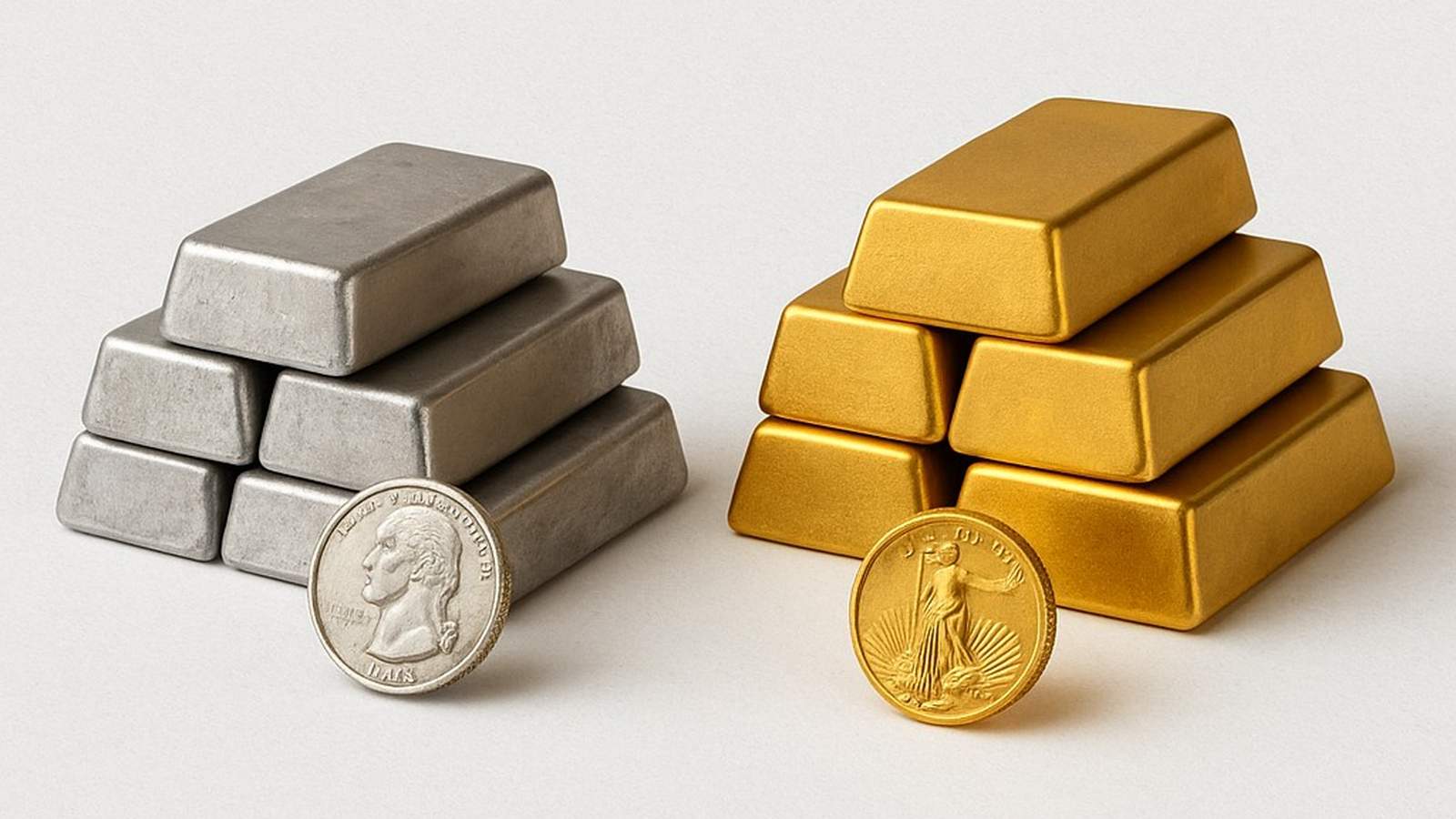
NEW YORK (Azat TV) – On March 25, 2026, gold and silver prices increased as the US dollar index (USDX) and US Treasury bond yields declined, reflecting shifting investor sentiment amid hopes for de-escalation in the Middle East. Meanwhile, Bitcoin showed continued sideways trading with little upward momentum, highlighting its current technical weakness compared to precious metals.
Gold and Silver Rise Amid Falling USD and Bond Yields
Gold edged higher on March 25, trading near $4,392 per ounce, while silver also gained, recovering some of its recent losses despite ongoing volatility. According to Ole Hansen, Head of Commodity Strategy at Saxo Bank, the precious metals rally comes after a liquidity-driven selloff linked to the ongoing Iran conflict that forced many investors to liquidate holdings. Hansen noted that once forced selling subsides, rising stagflation risks, fiscal debt concerns, and a trend of de-dollarization are expected to push gold prices notably higher again.
Silver, which is more sensitive to economic cycles, had fallen sharply but showed signs of stabilizing near technical support levels. Hansen emphasized that although silver may face near-term pressure, its long-term outlook remains positive as economic uncertainties increase globally.
US Dollar Index and Bond Yields Drop on Geopolitical Easing
The US dollar index fell alongside a decline in US Treasury bond yields on March 25, reflecting improved risk appetite after reports of potential Middle East conflict de-escalation. Market participants reacted to news that Pakistan delivered a US proposal to Iran, raising hopes for talks that could ease tensions and reduce energy supply risks.
Lower oil prices, which sank nearly 4% amid these developments, alleviated inflation fears and contributed to the USDX weakening. This inverse relationship between the dollar and gold typically benefits precious metals, boosting their appeal as alternative stores of value.
Bitcoin Stagnates with Sideways Trading and Bearish Technical Signals
Bitcoin futures for April showed only slight gains on March 25, continuing a pattern of choppy, sideways movement at lower price levels. Technical analyst Jim Wyckoff assigned Bitcoin a Wyckoff Market Rating of 4.0 out of 10, indicating a bearish near-term outlook. This contrasted with the stronger performance of gold and silver, which have benefited from macroeconomic risks that have yet to translate into Bitcoin gains.
The lack of momentum in Bitcoin amid rising inflation concerns and geopolitical uncertainty underscores the cryptocurrency’s current struggle to act as a reliable hedge or safe haven asset, despite its growing adoption.
Investor Implications Amid Market Volatility
Investors are navigating a complex environment where geopolitical developments, inflation pressures, and changing interest rate expectations are driving asset price moves. The rise in gold and silver prices amid a weakening US dollar and falling bond yields suggests a renewed appetite for traditional safe-haven assets. However, Bitcoin’s ongoing technical weakness signals caution for those expecting the cryptocurrency to replicate precious metals’ risk-hedging role in turbulent times.
Market watchers will closely monitor whether the tentative signs of Middle East de-escalation materialize into sustained calm, which could further influence inflation, central bank policies, and commodity prices globally.
The current divergence between precious metals and Bitcoin reflects the differing investor perceptions of these assets’ roles amid geopolitical risks and macroeconomic uncertainty, with gold and silver benefiting from traditional safe-haven demand while Bitcoin remains constrained by technical and market sentiment challenges.