
Quick Read
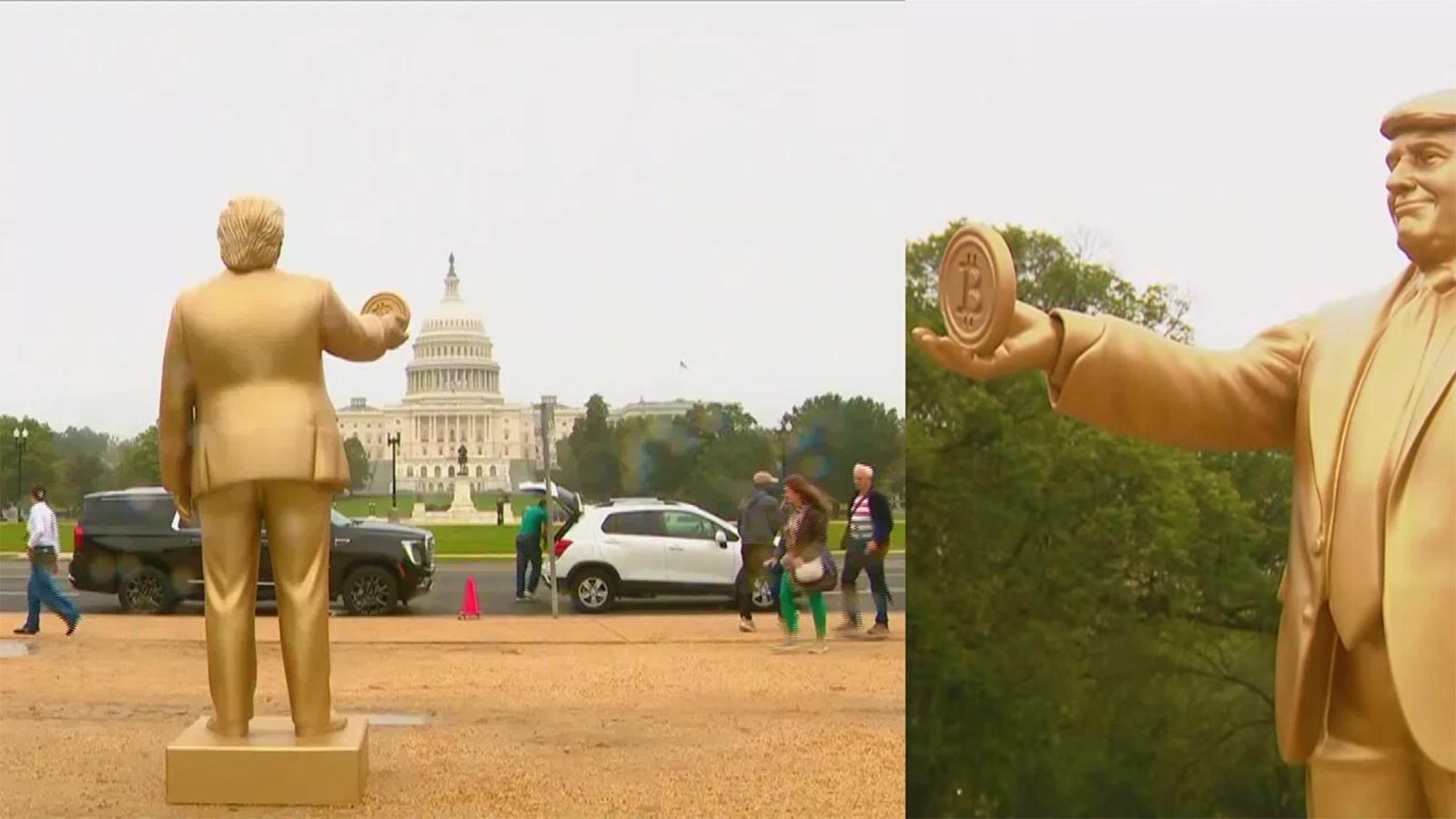
- A 12-foot golden statue of Donald Trump holding a Bitcoin was installed near the US Capitol on September 18, 2025.
- The statue was funded by crypto investors and memecoin enthusiasts, aiming to spark debate about digital currency and monetary policy.
- Its unveiling coincided with the Federal Reserve’s first interest rate cut of 2025.
- The installation drew crowds and widespread social media attention.
- It is the third Trump-themed statue on the National Mall this year, but the first to openly support him.
The Statue That Stopped Traffic—and Started a Conversation
On a bright Wednesday morning in Washington, D.C., the National Mall—usually home to tourists, joggers, and the muted hum of political life—became the stage for a spectacle that few could ignore. Towering at 12 feet, a golden likeness of President Donald Trump, arm outstretched and clutching a gleaming Bitcoin, was installed just opposite Union Square, a stone’s throw from the Capitol building. For hours, passersby stopped, stared, snapped photos, and—perhaps most importantly—talked.
Crypto, Pop Culture, and Politics Collide
The statue wasn’t the work of official government artists or a sanctioned tribute. Instead, it was the brainchild of a collective of cryptocurrency investors and memecoin enthusiasts, tied to the Pump.fun platform. Their stated goal was to provoke debate about the future of digital currency and the role of government in financial markets. As Hichem Zaghdoudi, a spokesperson for the group, explained to ABC 7News DC, “This is a statement, this is to show everybody that without the president, we could never have had this mass adoption of Bitcoin, of cryptocurrencies, of all these big institutions buying Bitcoin.”
The choice of timing was no accident. Just as the statue was unveiled, the Federal Reserve announced a 25-basis-point cut to its key interest rate—the first such move in 2025. For crypto backers, lower rates signal a bullish environment for digital assets. The symbolism was thick: as traditional monetary policy shifted, the golden effigy celebrated a president whose administration has rolled back regulatory oversight of crypto and whose campaign has attracted millions from the industry.
Symbolism and Spectacle: The Making of the Statue
Unlike the marble monuments that line the Mall, the Trump statue was crafted from “extremely hard foam,” according to organizers. This made it easier to transport and install, as livestreams and social media posts documented every step—from machine-carving Trump’s head to the final assembly and placement. The entire process was broadcast online, with the memecoin community rallying behind the stunt, hoping it would catch the president’s eye. “I hope Trump walks out there and sees it,” said one organizer during a livestream, even as the president was overseas on diplomatic business.
In a year marked by protest art on the National Mall, the Trump Bitcoin statue stands out for its unabashed support rather than satire. Earlier installations included an eight-foot golden hand crushing the Statue of Liberty’s crown—an unmistakable rebuke to Trump’s policies—and a gold television looping footage of Trump dancing with Jeffrey Epstein. This time, the message was clear: the crypto world sees Trump as a champion, and they’re not shy about broadcasting it.
Politics Meets Financial Innovation
The statue’s arrival coincided not only with the Fed’s rate decision but also with a heated national conversation about speech, power, and the boundaries of dissent. Just blocks away, the media landscape was roiling after the indefinite suspension of Jimmy Kimmel’s late-night show, an episode that many critics say is emblematic of growing government and corporate pressure on free expression. In both cases—Kimmel’s silencing and the statue’s installation—the intersection of politics, public spectacle, and financial innovation was impossible to ignore.
Trump’s embrace of crypto has been both a boon and a lightning rod. His administration’s moves to loosen regulatory oversight have drawn praise from some quarters and concern from others, especially as his family’s financial interests in digital assets deepened. Industry groups and crypto executives have funneled significant campaign support to Trump, hoping for a friendlier regulatory environment. The statue’s presence is not just a celebration—it’s a pointed signal to lawmakers, regulators, and the public.
Debate and Dissent: Reactions Pour In
As word of the statue spread, so did opinions. Social media buzzed with photos and commentary. Supporters lauded Trump’s “unwavering commitment to advancing the future of finance through Bitcoin and decentralized technologies.” Others saw the installation as yet another example of personality-driven politics and questioned the wisdom of tying financial innovation so closely to one figure.
Critics pointed out that Bitcoin’s bull run began long before Trump’s most recent campaign, spurred by regulatory changes under the previous administration and the launch of spot Bitcoin ETFs. They argued that the statue oversimplifies the complex interplay of market forces, technology, and policy. Still, the spectacle had done its job: it got people talking.
Local news outlets, including ABC affiliate WJLA and DC News Now, covered the event extensively, noting the crowds it drew and the conversations it sparked about digital currency, monetary policy, and the federal government’s evolving role. International outlets like Cointelegraph, News.az, and CNBCTV18 picked up the story, amplifying its reach beyond the Mall and into the global discourse on finance and governance.
The Intersection of Art, Protest, and Influence
In the shadow of the Capitol, the Trump Bitcoin statue was more than a tribute—it was a flashpoint in the ongoing battle over who shapes the future of money and who controls the narrative. It’s not lost on observers that the statue’s appearance came just months after protest art critical of Trump’s policies, and days after a high-profile media controversy. The National Mall, long a canvas for American ideals and dissent, continues to reflect the currents of the moment: innovation, polarization, and the search for meaning amid political upheaval.
For organizers, the statue is a “thank you” to a president they see as pivotal to crypto’s mass adoption. For critics, it’s a reminder of the risks inherent in conflating financial innovation with political personality. For everyone else, it’s a vivid illustration of how art, technology, and power can collide in the nation’s capital—and how, in the age of social media, every symbol is up for debate.
The golden Trump statue at the heart of Washington is more than foam and paint—it’s a mirror held up to America’s ongoing reckoning with money, power, and the stories we tell about ourselves. As the lines between political spectacle, financial innovation, and personal influence blur, the debate it provokes may prove more enduring than the statue itself.