


A Mixed Start on the National Mall
President Donald Trump’s Great American State Fair, a 16-day event commemorating America’s 250th anniversary, opened on the National Mall this week. While the event faced early scrutiny regarding its political tone and the withdrawal of several musical acts, attendees over the first weekend described the atmosphere as largely patriotic and nonpartisan.
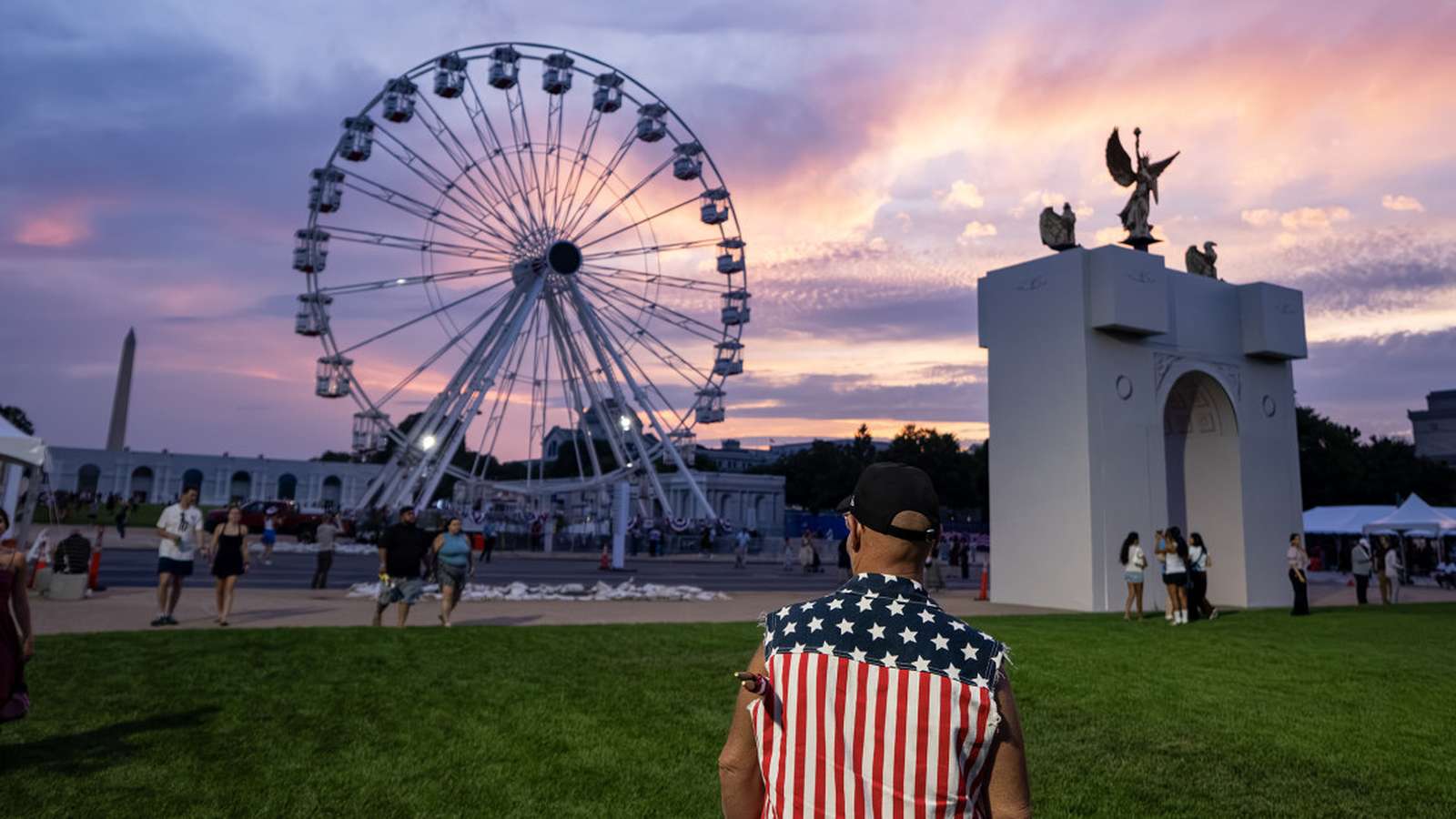
The fair, organized by the public-private partnership Freedom 250, features exhibits from across the country and displays from federal agencies. Despite light rain on Saturday, crowds gathered to visit state-themed booths and enjoy attractions, including a large Ferris wheel positioned near a replica of an arch President Trump intends to build permanently in the capital.
Controversies and State Boycotts
The event has not been without friction. Several states, including Oregon, Maine, Massachusetts, and North Carolina, declined to send official delegations, citing financial concerns or fears that the event would be overtly politicized. In North Carolina’s case, the situation escalated when a private booth—not sanctioned by state officials—displayed a Confederate flag. The flag was removed following public outcry and condemnation from Governor Josh Stein, who emphasized that the symbol did not represent the state.
While Transportation Secretary Sean Duffy drew criticism for partisan remarks during the opening ceremony, many visitors told NBC News they found the event focused on national heritage rather than political discourse. Daniela Guerrero, a local resident, noted that while there were fears the event would resemble a political rally, the reality on the ground felt like a standard celebration of American culture.
Institutional Stakes
The fair is part of a broader series of initiatives by the Trump administration to reshape the capital’s landscape, including controversial plans for the Reflecting Pool and the Kennedy Center. Freedom 250, the organizing body, operates separately from the congressionally created America250 group, leading to ongoing debates about the role of the executive branch in managing historic national milestones.