
Quick Read
- Great Lakes region expects new snowfall and the coldest arctic blast of the winter this weekend.
- Wind chills could reach 25 degrees below zero, prompting potential Extreme Cold Warnings.
- Michigan researchers published 120 years of historical ice cover data for the Great Lakes.
- The new data aids understanding of whitefish declines and long-term climate change.
- The Great Lakes region has already seen 110-200% of average seasonal snowfall.
GREAT LAKES (Azat TV) – The Great Lakes region is bracing for a significant winter event this weekend, with a fast-moving clipper system expected to deliver additional snowfall followed by the season’s coldest arctic blast, bringing dangerous wind chills. This immediate weather challenge coincides with the recent publication of groundbreaking historical ice cover data by Michigan researchers, which provides a 120-year perspective on the Great Lakes’ changing climate and its implications for vital ecosystems, including the decline of whitefish populations.
Current Winter Conditions in Great Lakes
A clipper system, originating from Canada, is projected to sweep across the Great Lakes and into the Northeast on Friday, with lingering snowfall expected through Saturday. This system follows a winter that has already seen significant snow accumulation, with many areas downwind of the Great Lakes and across the Northeast reporting 110% to 200% of their seasonal average snowfall, according to the FOX Forecast Center.
Cities like New York City could see an additional 1 to 3 inches of snow, while Boston and coastal Massachusetts might receive 3 to 5 inches. Elevated terrains in West Virginia are under Winter Storm Watches, with potential for 5 to 8 inches. Beyond the snowfall, the region is preparing for the season’s most intense polar air mass, with powerful northwest winds ushering in air associated with the polar vortex. Wind chills are anticipated to drop to dangerous levels, potentially reaching 25 degrees below zero in some areas, prompting National Weather Service (NWS) offices to consider Extreme Cold Warnings, a rare occurrence in the Northeast.
The NWS warns that frostbite can occur on exposed skin in mere minutes, and prolonged exposure to these temperatures could be life-threatening. Gusty winds of 30 to 40 mph are also expected, which could lead to blowing snow and reduced visibility, particularly impacting travel late Friday and early Saturday. Drivers are advised to exercise extreme caution on the roads, especially in areas prone to snow squalls like Upstate New York and western Pennsylvania, where visibility can rapidly decline.
Historic Ice Cover Reveals Climate Shifts
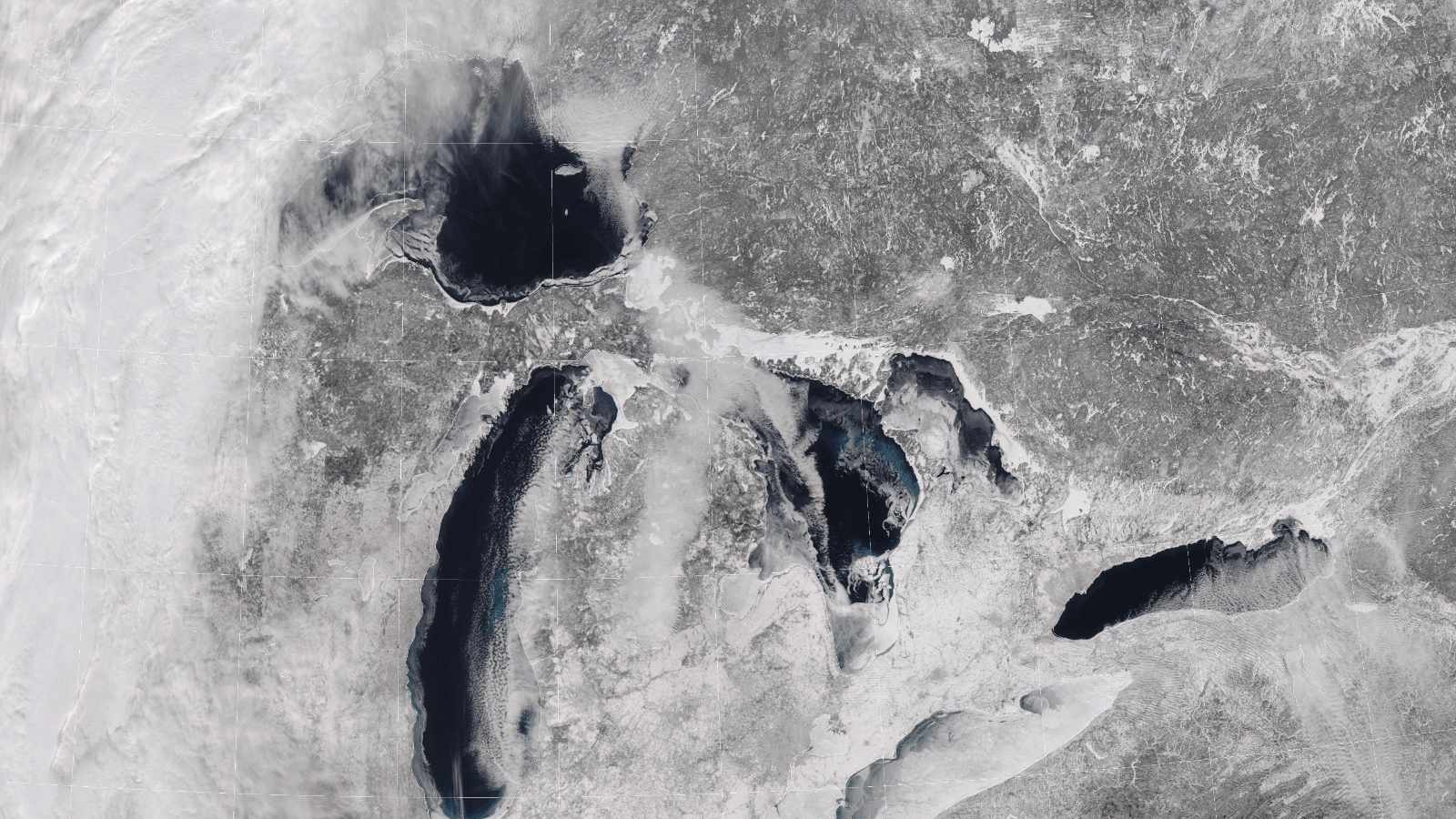
This immediate cold snap unfolds as new research published last month in the journal Scientific Data sheds light on the long-term changes affecting the Great Lakes. Michigan researchers, in partnership with Interlochen Public Radio and Grist, have meticulously reconstructed ice cover data for the Great Lakes spanning the past 120 years, dating back to 1897.
The study, co-authored by Ayumi Fujisaki-Manome, associate director for the Cooperative Institute for Great Lakes Research at the University of Michigan, and led by Katelyn King, a fisheries research biologist for the Michigan Department of Natural Resources, utilized historical temperature records from consistent weather stations around the region. This innovative approach addresses a significant gap in scientific knowledge regarding winter conditions on the Great Lakes, as traditional buoys are often removed due to harsh conditions.
While satellite records provide a good overview of the last 45 years, the new dataset offers a crucial baseline for understanding historical climate shifts. Fujisaki-Manome emphasized that “Lake ice is really part of the system, part of our life. It matters [for] our culture, regional weather, safety, everything.”
Implications for Great Lakes Ecosystems
The improved understanding of historical ice conditions is already proving invaluable for ecological research. King is leveraging this dataset to investigate the historic decline of whitefish in the Great Lakes, a phenomenon where “a lot of the biological conditions under ice are really poorly understood.” The data provides a clearer picture of the environmental factors influencing these vital fish populations over a much longer period.
Researchers note that while ice cover on the Great Lakes was near average last winter, it followed historic lows the season prior, highlighting significant year-to-year variability. King stated, “These really extreme years where we have really cold weather or really warm weather is just a sign that long-term climate is changing. It really affects all of us in our day-to-day.” The new data will help scientists better predict and respond to future environmental challenges posed by a warming climate.
The convergence of immediate extreme weather events and long-term climate data underscores the dynamic and increasingly unpredictable nature of the Great Lakes environment, signaling that current conditions are not merely isolated incidents but part of a broader, well-documented climatic transformation.