
Quick Read
- Drone footage captured a surfer’s close encounter with a juvenile great white shark off Santa Barbara on June 30.
- In Australia, a father and son rescued a stranded 10-foot shark, showcasing human responsibility toward marine life.
- Great white sharks are migrating farther north, driven by seal population recovery and changing climates.
- Fatal shark attacks on humans remain rare, but conservation efforts are crucial due to overfishing and climate change.
- Sharks play a vital role in marine ecosystems, controlling prey populations and maintaining ecological balance.
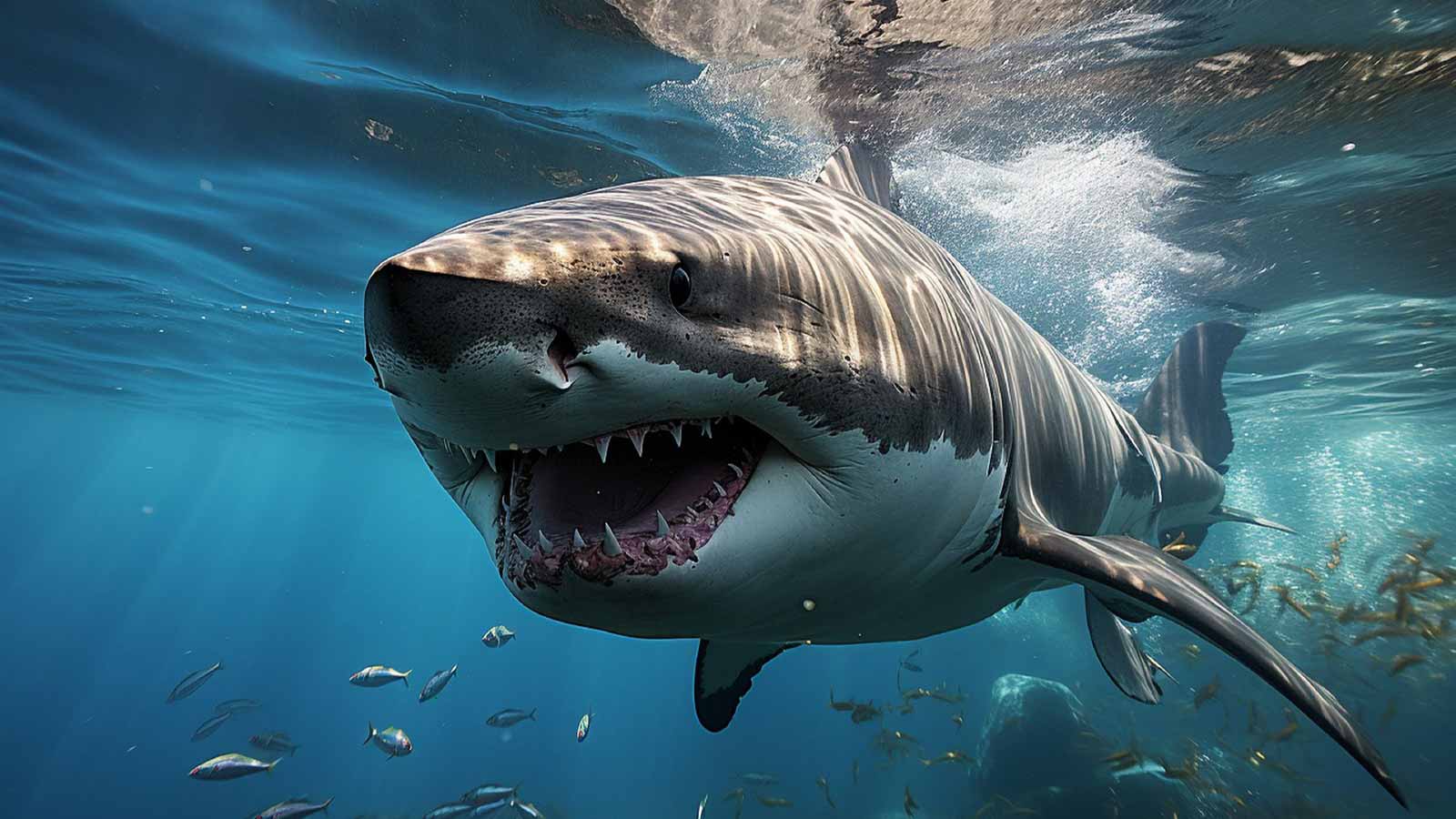
Great white sharks, one of the ocean’s most formidable apex predators, have increasingly captured public attention in recent months due to a series of encounters, rescues, and new migration patterns. These developments highlight both the remarkable adaptability of these marine giants and the challenges they pose to coastal communities and conservation efforts.
Close Encounters: When Humans Meet Great Whites
On June 30, a surfer off the coast of Santa Barbara, California, had a harrowing encounter with an eight-foot juvenile great white shark. Drone footage captured by Carlos Gauna, a photographer from Ventura County, showed the young shark swimming within yards of the surfer. While the scene evoked comparisons to the iconic movie “Jaws,” experts reassured the public that juvenile sharks, such as this one, are less likely to attack humans as they primarily feed on smaller prey. Gauna emphasized the importance of respecting these creatures, advising swimmers and surfers to maintain a safe distance if they spot a shark. “They’re a big part of the coastal ecosystem and deserve our respect,” he told National World.
Meanwhile, in a dramatic turn of events in Australia, a father-son duo helped rescue a stranded 10-foot great white shark on April 29. Nash Core and his 11-year-old son, Parker, were on a family trip when they discovered the struggling shark on a sandbank off Saint Vincent Gulf. After nearly an hour of effort, they managed to guide the exhausted shark back into the water. Although its condition remained uncertain, the rescue underscored the deep connection and responsibility humans feel toward these majestic creatures, as reported by AOL.
Migration Trends: Heading North
In North America, great white sharks are exhibiting notable changes in their migration patterns. Sightings along the New England and Canadian coasts have surged, with researchers attributing this shift to the recovery of seal populations—a primary food source for these predators. Greg Skomal, a senior fisheries biologist, noted that the number of great whites detected off Halifax, Nova Scotia, has increased 2.5 times between 2018 and 2022. Even farther north, in the Cabot Strait, detections have nearly quadrupled. The average residency of these sharks in northern waters has also grown from 48 days to 70 days, suggesting greater comfort in cooler climates.
This northward migration is not without its challenges. Beachgoers and fishermen in areas like Scarborough, Maine, are learning to coexist with these apex predators. Rick Clough, a seasoned fisherman, described spotting an eight-foot shark near his usual fishing grounds. While he admitted it made him think twice about diving, he also expressed awe at the shark’s presence. “It’s something we have to accept and adapt to,” Clough told Niagara Gazette. New tools like the Sharktivity app are helping residents and visitors track shark activity, enhancing safety and awareness.
Conservation Efforts and the Bigger Picture
Conservationists are leveraging these sightings to raise awareness about the ecological importance of great white sharks. Despite their fearsome reputation, fatal shark attacks on humans are exceedingly rare. According to the International Shark Attack File, there have been fewer than 60 fatal great white shark bites in recorded history. In contrast, humans kill an estimated 100 million sharks annually, driven by demand for shark fins and other body parts. This unsustainable exploitation threatens not only sharks but also the balance of marine ecosystems.
Efforts like the Marine Mammal Protection Act in the United States have helped restore populations of seals and other marine mammals, indirectly supporting shark conservation. However, challenges remain, including overfishing and climate change. As great white sharks take over a decade to reach maturity and have low reproduction rates, their populations are particularly vulnerable.
Why Great White Sharks Matter
Great white sharks play a crucial role as apex predators, maintaining the health and balance of ocean ecosystems. By controlling populations of prey species, they prevent overgrazing of seagrass beds and coral reefs. Their presence is an indicator of a thriving marine environment. Yet, public perception often skews toward fear, fueled by sensationalized media portrayals. Experts like Ashleigh Novak from the Atlantic White Shark Conservancy advocate for a balanced view, emphasizing education and coexistence.
As sightings increase and interactions become more common, fostering a deeper understanding of these creatures is essential. Whether it’s through responsible tourism, scientific research, or community engagement, the goal is to ensure that humans and sharks can share the ocean safely and sustainably.
The resurgence of great white sharks in various parts of the world serves as a reminder of their ecological significance and the need for coexistence. With continued conservation efforts and public education, we can better protect these majestic creatures and the marine ecosystems they inhabit.