
Quick Read
- President Trump threatened 10% tariffs on eight European nations over their opposition to U.S. control of Greenland.
- The targeted countries include NATO allies Denmark, Norway, Sweden, France, Germany, the UK, the Netherlands, and Finland.
- European leaders condemned the tariffs, affirming Greenland’s sovereignty and warning of undermined transatlantic relations.
- European troops are in Greenland for ‘Arctic security training,’ which Trump views as an obstruction.
- A U.S. poll revealed 70% opposition to buying Greenland and 86% opposition to seizing it militarily.
Eight European nations, including key NATO allies, are reeling from President Trump’s announcement of impending 10% tariffs, set to be imposed in response to their opposition to American control over Greenland. The unprecedented threat, issued Saturday, has ignited a diplomatic firestorm across the continent, with leaders condemning the move as a dangerous escalation that risks transatlantic relations and undermines the principle of national sovereignty. The affected countries—Denmark, Norway, Sweden, France, Germany, the United Kingdom, the Netherlands, and Finland—have united in solidarity with Denmark and Greenland, affirming the semi-autonomous territory’s right to self-determination and rejecting what they term “commercial blackmail.”
Tariff Threats and European Unity
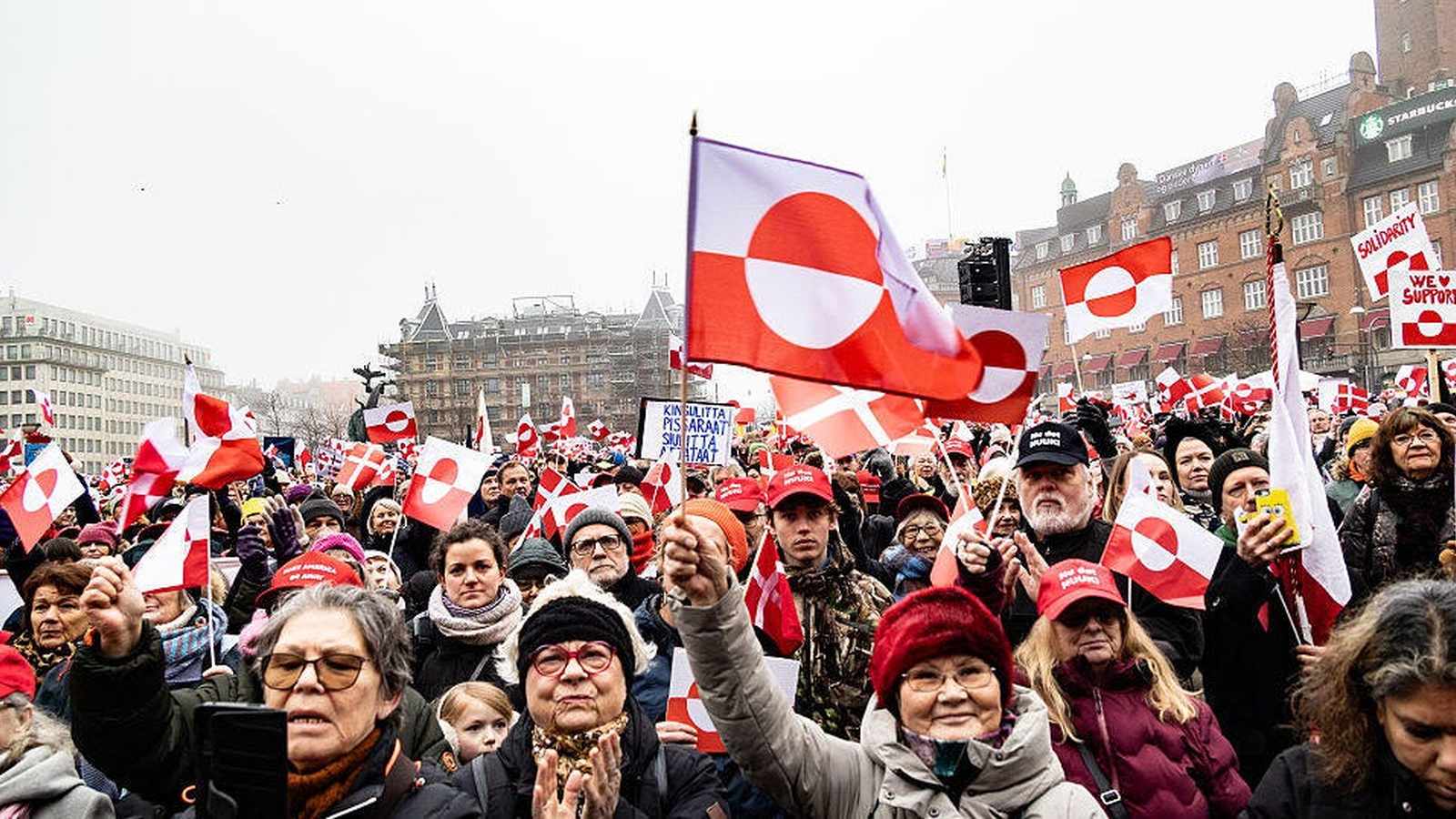
President Trump’s declaration came as thousands of Greenlanders protested outside the U.S. Consulate in Nuuk, the capital, and as European troops concluded what they described as routine Arctic security training in the region. The President explicitly linked the tariffs to his long-standing desire for the “complete and total purchase of Greenland,” which he considers critical for U.S. national security. He warned that the 10% tariff, slated for February 2, could escalate to 25% by June 1 if a deal is not reached.
The European response was swift and unified. The eight targeted nations issued a joint statement on Sunday, asserting their commitment to strengthening Arctic security as a shared transatlantic interest and clarifying that the Danish exercise ‘Arctic Endurance,’ conducted with allies, posed no threat. “We stand in full solidarity with the Kingdom of Denmark and the people of Greenland,” the statement read, adding, “Tariff threats undermine transatlantic relations and risk a dangerous downward spiral. We will continue to stand united and coordinated in our response. We are committed to upholding our sovereignty.”
European Union foreign policy chief Kaja Kallas echoed these sentiments, warning that such divisions between the U.S. and Europe would only benefit China and Russia. French President Emmanuel Macron, a consistent voice for European strategic autonomy, led the opposition, calling the tariff threat “unacceptable” and vowing to ensure European sovereignty remains protected. Even Italy’s right-wing Premier Giorgia Meloni, often seen as a close ally of Mr. Trump, publicly described the tariffs as “a mistake” during a visit to South Korea, clarifying that European troop deployments were not directed against the U.S. but aimed at securing the region against “other actors.”
Domestic Dissent and Geopolitical Ripples
The controversy has not only strained international alliances but also drawn significant criticism domestically within the United States. Senator Mark Kelly, a Democrat from Arizona, expressed alarm on social media, noting that “Troops from European countries are arriving in Greenland to defend the territory from us. Let that sink in.” He criticized the President for making Americans “pay more to try to get territory we don’t need.” Similarly, Republican Senator Thom Tillis of North Carolina called the administration’s efforts to “seize” an ally’s territory “beyond stupid,” arguing it damages the President’s legacy and undermines the NATO alliance.
A recent CBS News poll further underscored widespread American opposition to the President’s ambitions regarding Greenland. Seventy percent of respondents opposed using federal funds to purchase the territory, and a significant 86% rejected the idea of seizing it militarily. This domestic pushback highlights a disconnect between the administration’s policy and public sentiment.
The economic and legal implications of Mr. Trump’s tariff threat also present considerable challenges. With the EU functioning as a single economic zone, it remains unclear how the White House could implement tariffs on specific member states without impacting the entire bloc. Norway and the U.K., while not EU members, are also targeted. Furthermore, the President’s potential reliance on emergency economic powers faces an ongoing Supreme Court challenge, raising questions about the legality and enforceability of such measures. EU envoys have scheduled emergency talks in Brussels to determine a coordinated response, signaling the seriousness with which Europe views this diplomatic crisis.
Greenland’s Strategic Importance and Firm Rejection
Greenland, a vast island territory, holds significant strategic interest due to its geographical location and abundant natural resources. A January report by the Center for Strategic and International Studies highlighted its wealth in iron ore, graphite, tungsten, palladium, vanadium, zinc, gold, uranium, copper, and oil. This resource potential, combined with its position in the Arctic, has long attracted geopolitical attention, reinforcing Mr. Trump’s stated national security rationale.
However, Greenland’s leaders have consistently and firmly rejected any suggestion that the territory’s future or sovereignty is open to negotiation. This stance is fully supported by Denmark and its European allies, who emphasize respect for international law and territorial integrity. The deployment of European troops, framed by European leaders as a response to Arctic security necessities rather than a direct challenge to the U.S., underscores the region’s increasing geopolitical importance and Europe’s commitment to its own security interests.
The confluence of a U.S. tariff threat, a unified European condemnation, and domestic American opposition signals a profound strain on transatlantic alliances, potentially ushering in a new era of geopolitical realignment where traditional partnerships are tested by unilateral actions and competing national interests.