
Quick Read
- Guillaume Lemay-Thivierge confronted Patrick Lagacé live on radio about a 2021 article that revealed his unvaccinated status and led to professional and personal losses.
- Lagacé defended his journalistic decision, emphasizing public interest and asserting Lemay-Thivierge was responsible for his own consequences.
- The emotional exchange focused on accountability, media power, and the long-term effects of pandemic-era reporting.
- Lemay-Thivierge acknowledged some personal responsibility for his impulsive actions.
- The interview briefly touched on Lemay-Thivierge’s upcoming conference before ending.
Guillaume Lemay-Thivierge and Patrick Lagacé: The Interview That Became a Reckoning
How a Pandemic-Era Article Sparked Public Fallout
Media Power, Personal Pain, and the Limits of Forgiveness
Accountability in the Spotlight: What This Clash Means for Quebec’s Public Figures
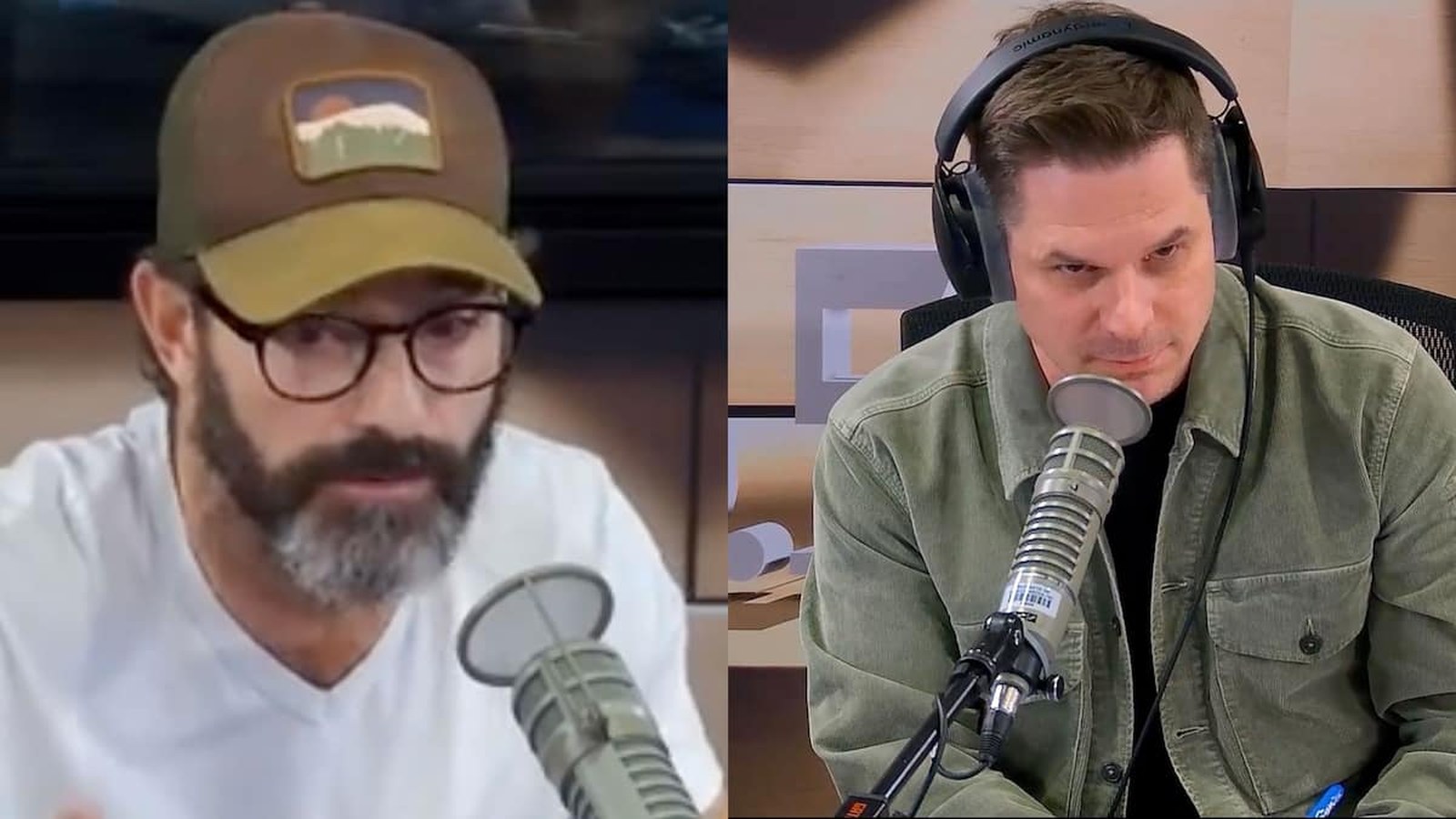
On the morning of December 18, 2025, listeners tuning into Patrick Lagacé’s show on 98.5 FM expected to hear Guillaume Lemay-Thivierge discuss his upcoming conference—a moment of professional renewal after a turbulent stretch. Instead, they witnessed a gripping, unscripted confrontation that laid bare the invisible scars left by pandemic-era journalism and the complex responsibilities of public figures.
The interview began innocuously enough, with Lagacé asking Lemay-Thivierge, known to fans as GLT, how he was doing. But almost immediately, the tone shifted. Lemay-Thivierge rose from his seat to shake Lagacé’s hand, declaring, “I just want to tell you that I forgive you.” It was an unexpected gesture, and Lagacé’s irritation was palpable. “Okay, get back to the mic and tell me why you forgive me,” he retorted.
What followed was not a conversation about new projects, but a reckoning with the past. Lemay-Thivierge referenced a 2021 article in La Presse—co-authored by Lagacé and Hugo Dumas—that revealed he was unvaccinated and had attempted to dine at a pizzeria without a vaccine passport. The fallout was swift and severe: “I lost a lot, almost all my contracts. I almost lost my wife. I almost lost my own life.”
For Lemay-Thivierge, the article marked the beginning of his public and private unraveling. He accused Lagacé’s reporting of triggering “the most difficult period” of his career. Yet Lagacé was unyielding, countering, “I see it differently. I didn’t walk into a restaurant asking for special treatment.” He insisted that GLT’s own actions, not the article, were the root cause of his troubles. “Guillaume, you were the architect of your own misfortune.”
The exchange exposed a raw tension between two sides of public life: the journalist’s duty to inform versus the human cost of exposure. Lemay-Thivierge, still contesting the facts, accused the press of relentless pursuit. “When you write that article, you probably know it’s going to stir up a lot in my life.”
Lagacé, calm but firm, pushed back. “There are consequences that come with our actions,” he said. He clarified that the article wasn’t about Lemay-Thivierge’s vaccination status alone. “There were plenty of other artists who weren’t vaccinated, and we didn’t mention them. Why? Because there was no problem.”
The interview stretched on, with GLT repeating his need to address Lagacé directly. “I needed to tell you to your face how much it hurt me, and I need to understand—what did I do to you?” Lagacé replied, “Guillaume, you did nothing to me. I have nothing against you.” The question hung in the air: “Why did you attack me like that? Was it really necessary?”
“A microphone is a weapon,” Lemay-Thivierge warned, suggesting that journalists too often overlook the consequences of their work. Lagacé responded without missing a beat: “And being a public figure is a responsibility.”
For a moment, the conversation veered into reflection. Lemay-Thivierge acknowledged his own role, admitting, “My share of responsibility is having been too spontaneous and not thinking enough about the consequences that could come from acting impulsively.” Yet, the sense of injury persisted. He even filmed part of the exchange on his phone, perhaps seeking to document a moment of catharsis—or confrontation.
After nearly fourteen minutes of emotional back-and-forth, they finally broached the topic of Lemay-Thivierge’s conference and his new digital platform. But the shadow of their earlier discussion loomed large, and the interview soon ended, leaving listeners with more questions than answers.
This wasn’t just a clash of personalities—it was a collision between competing ideas of responsibility, accountability, and the human cost of public scrutiny. The interview highlighted the enduring legacy of pandemic reporting, where the boundaries between public interest and private pain remain blurred.
Both men refused to budge: Lemay-Thivierge insisted on forgiveness; Lagacé, on journalistic integrity. Their exchange was not just about one article, but about the power of words, the weight of exposure, and the reality that, in Quebec’s media landscape, neither journalists nor celebrities operate in a vacuum.
The story’s resonance goes beyond the particulars of vaccination status or restaurant access. It reflects the broader question facing all public figures and those who cover them: how much responsibility do we bear for the consequences of our actions, and where does personal accountability end and public accountability begin?
As Quebec continues to grapple with the aftermath of the pandemic, stories like this one remind us that the effects of those years are far from settled. For Lemay-Thivierge, the scars are personal and deep. For Lagacé, the duty to inform remains paramount. Their dialogue—at times painful, at times illuminating—serves as a case study in the challenges of truth-telling in an age of instant information and lasting reputational impact.
This interview lays bare the complex web of accountability shared between journalists and public figures, particularly in the emotionally charged context of pandemic-era controversies. The facts show that both Lemay-Thivierge and Lagacé acted with conviction, but their exchange reveals that public scrutiny carries consequences that neither can fully control—and that real healing may require more than public apologies or journalistic explanations.