
Quick Read
- House Minority Leader Hakeem Jeffries claimed unawareness of a mass arrest in NYC.
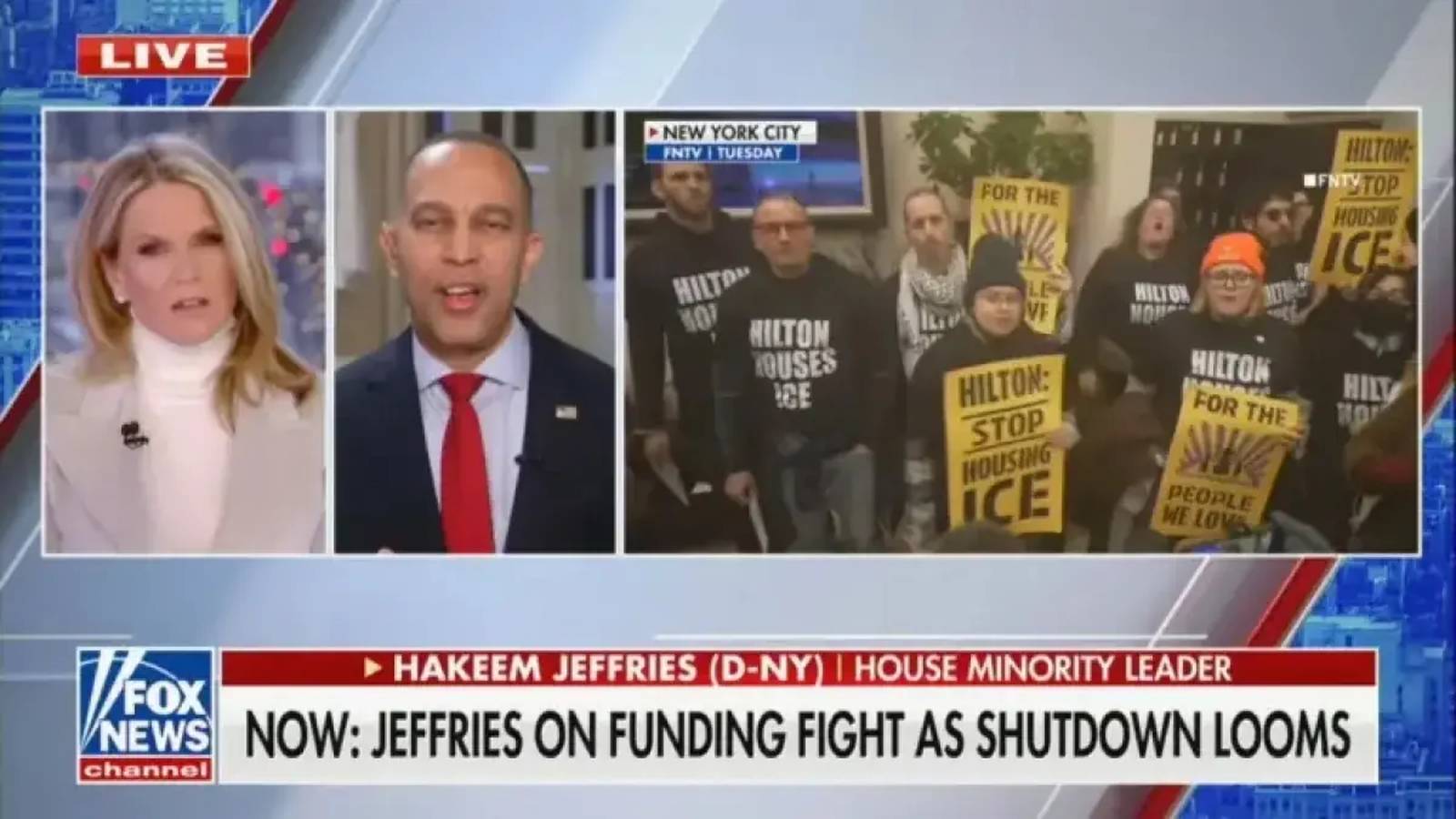
- The incident involved 65 anti-ICE protesters arrested by NYPD in a Manhattan hotel.
- Fox News host Martha MacCallum expressed surprise at Jeffries’ lack of knowledge.
- The discussion also touched upon a potential partial government shutdown affecting Homeland Security.
- Jeffries referenced a past “cold-blooded killing of Alex Pretti” which he criticized as mischaracterized by the Trump administration.
NEW YORK (Azat TV) – House Minority Leader Hakeem Jeffries surprised Fox News host Martha MacCallum on Friday, January 30, 2026, when he claimed ignorance regarding a mass arrest of 65 anti-ICE protesters in a Manhattan hotel, sparking a notable on-air exchange about local incidents and national political responsibilities. The incident occurred during an episode of MacCallum’s program, The Story with Martha MacCallum, highlighting a palpable tension between a New York representative’s local awareness and his federal duties.
During the broadcast, MacCallum directly questioned Leader Jeffries about the protest and subsequent arrests by the New York Police Department. She noted that 65 individuals had been detained during a demonstration at a Manhattan hotel. MacCallum underscored the significance of the event, particularly as Jeffries represents the eighth district in New York, suggesting a local elected official should be aware of such substantial police actions within his broader constituency. Her surprise at his apparent lack of knowledge was evident as she pressed him for his stance on the police response.
MacCallum Challenges Jeffries on NYC Protests
The exchange intensified as MacCallum highlighted that New York City Mayor Zohran Mamdani had not expressed any opposition to the arrests, further emphasizing the perceived local consensus or lack of official dissent regarding the police action. Despite MacCallum’s detailed questioning, Leader Jeffries maintained his claim of unawareness, stating his commitment to his duties in Washington. This response prompted MacCallum to interject, signaling her disbelief and challenging him to address the situation more directly.
The discussion also broadened to include the potential implications of a partial government shutdown, specifically concerning funding for the Department of Homeland Security, which oversees Immigration and Customs Enforcement (ICE). This context added another layer of complexity to the debate, linking the local protest and arrests to broader federal policy and budgetary concerns.
Debate Extends to Homeland Security Funding
As the interview progressed, Jeffries attempted to shift the conversation towards broader law enforcement issues and the actions of ICE, referencing past controversial incidents. He cited what he described as “a cold-blooded killing of Alex Pretti,” an event he criticized as being mischaracterized by the Trump administration. MacCallum quickly countered, pointing out that the administration had, in fact, taken steps to address such issues, indicating a factual disagreement on the historical context and governmental response.
The segment ultimately underscored the challenging dynamics faced by national political figures who are expected to navigate both federal responsibilities and local constituent concerns. MacCallum’s persistent questioning brought to light the perceived disconnect between a prominent New York representative and a significant local law enforcement event, raising questions about the scope of awareness expected from leaders.
Political Implications of Local Incidents
The incident, as reported by Filmogaz.com, serves as a vivid example of how local events, especially those involving sensitive issues like immigration and law enforcement, can quickly become national talking points and expose political vulnerabilities. The public exchange between MacCallum and Jeffries highlighted the ongoing scrutiny of ICE operations and the complex political landscape surrounding immigration enforcement and accountability.
The on-air dynamic between MacCallum’s pointed questions and Jeffries’ defensive posture illustrates the growing pressure on national leaders to demonstrate comprehensive awareness of events impacting their home districts, even amidst demanding federal schedules.