
Quick Read
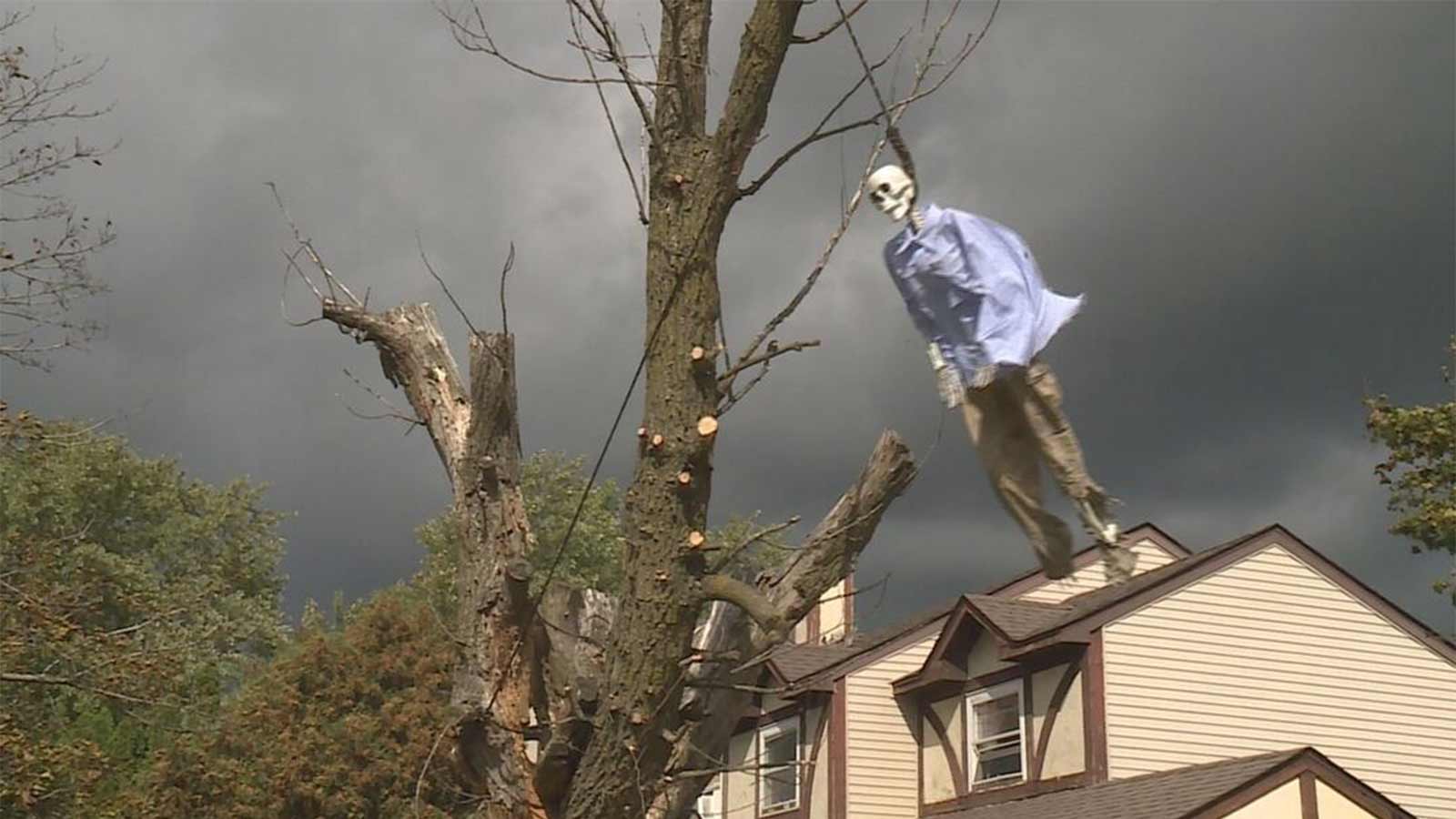
- A Newburgh homeowner’s Halloween display features a realistic hanging man.
- Neighbors say it resembles a lynching or suicide, raising trauma concerns.
- The decoration is close to Sharon Elementary School, worrying parents.
- Some residents have contacted local news and requested removal.
Neighborhood Divided Over Controversial Halloween Display
In the heart of Newburgh, Indiana, a seasonal tradition has taken a contentious turn. What was meant to be a frightful but festive Halloween display now sits at the center of a heated debate, after a homeowner’s decoration—a realistic figure of a man hanging from a tree—sparked alarm among neighbors. The controversy has rippled through the community, forcing residents to confront uncomfortable questions about where the line between spooky fun and disturbing imagery should be drawn.
Residents Voice Concerns Over Trauma and Appropriateness
For many in the neighborhood, the decoration is more than just a Halloween prop. Some, like Betsy and Danny Matthews, say the display evokes painful memories and could be distressing for children. Danny recalls his initial shock: “I drove by it the first day I saw it and a couple times and asked myself … ‘Is that real?’ Then I stopped and looked at it and I said, ‘Oh, that could be real … but it’s not.’” The uncanny realism of the figure, dangling from a tree branch, has led some to interpret it as a depiction of lynching or suicide, rather than harmless Halloween mischief.
Betsy Matthews, still haunted by a childhood tragedy, shared her reaction: “When I was a kid, there was a guy who hung himself in a tree. I was probably like 8 or 9 and now seeing that hanging there … I’m like, ‘Oh my God, I get flashbacks.’” Her words underline the emotional toll such imagery can take, especially on those with traumatic experiences in their past.
Impact on Children and the Wider Community
The concerns extend beyond individual discomfort. The Matthews and other residents point out that the house in question is located just a few blocks from Sharon Elementary School. With many children living in the area, the sight of a hanging figure—whether real or fake—could be deeply unsettling. “I think it could be very damaging, seeing that. They have to be a little scared of it,” Betsy said, echoing the fears of parents who now avoid the area with their kids.
Some families have even altered their daily routines, choosing different routes to school or steering clear of the street altogether. The potential for long-term psychological effects—especially in young, impressionable minds—has become a key point in the debate, as neighbors weigh the right to seasonal expression against the responsibility to protect the most vulnerable members of their community.
Community Response and Calls for Removal
The controversy has prompted several residents to contact local news outlets, hoping to draw attention to what they see as a pressing issue. “It’s not the way to capture the Halloween spirit,” Danny Matthews remarked, summarizing a sentiment that has gained traction among those who feel the display crosses a line.
While Halloween is traditionally associated with ghosts, ghouls, and eerie scenes, some argue that certain themes—especially those echoing real-life tragedies—should be approached with caution. The debate in Newburgh echoes broader national conversations about the boundaries of public displays and the importance of sensitivity in communal spaces.
Balancing Tradition and Sensitivity: Where Should the Line Be?
As Halloween approaches, the Newburgh neighborhood finds itself grappling with a dilemma faced by many communities: How do we honor traditions without causing harm? For some, the answer is clear—decorations that evoke violence or trauma, even in jest, have no place in family-friendly areas. Others believe in the freedom to celebrate as they choose, trusting that most will recognize the difference between fiction and reality.
The situation raises broader questions: Should homeowners be required to consider the potential impact of their decorations? Where does artistic expression end and public responsibility begin? As the Matthews and others await a resolution, their story serves as a reminder of the powerful ways in which images—especially those rooted in real pain—can affect individuals and communities alike.
For now, the hanging man remains, a stark symbol of the tension between festive fun and the need for empathy. Whether it will be taken down is yet to be decided, but one thing is certain: The conversation it has sparked is unlikely to fade with the autumn leaves.
This incident in Newburgh highlights how even well-intended traditions can inadvertently reopen old wounds and provoke community-wide reflection. The line between creative expression and social responsibility is not always clear, but the voices of those affected—especially children and survivors—must be taken seriously in shaping public spaces.