
Quick Read
- House of Guinness dramatizes the Guinness brewing dynasty in 19th-century Dublin.
- The series centers on sibling rivalry and succession after the patriarch’s death.
- Political unrest and social inequality form key backdrops to the family’s story.
- Romance and scandal drive much of the personal drama, with historical liberties taken.
- Created by Steven Knight, it emphasizes spectacle over strict historical accuracy.
19th-Century Dublin: Brewing Conflict and Legacy
Netflix’s House of Guinness arrives with the swagger of a dynasty drama, pouring viewers straight into the heart of 19th-century Dublin. It’s a world on the edge of transformation, where the famous Guinness family—namesake of the legendary stout—faces the ultimate test: can legacy withstand the storm of ambition, rivalry, and political upheaval?
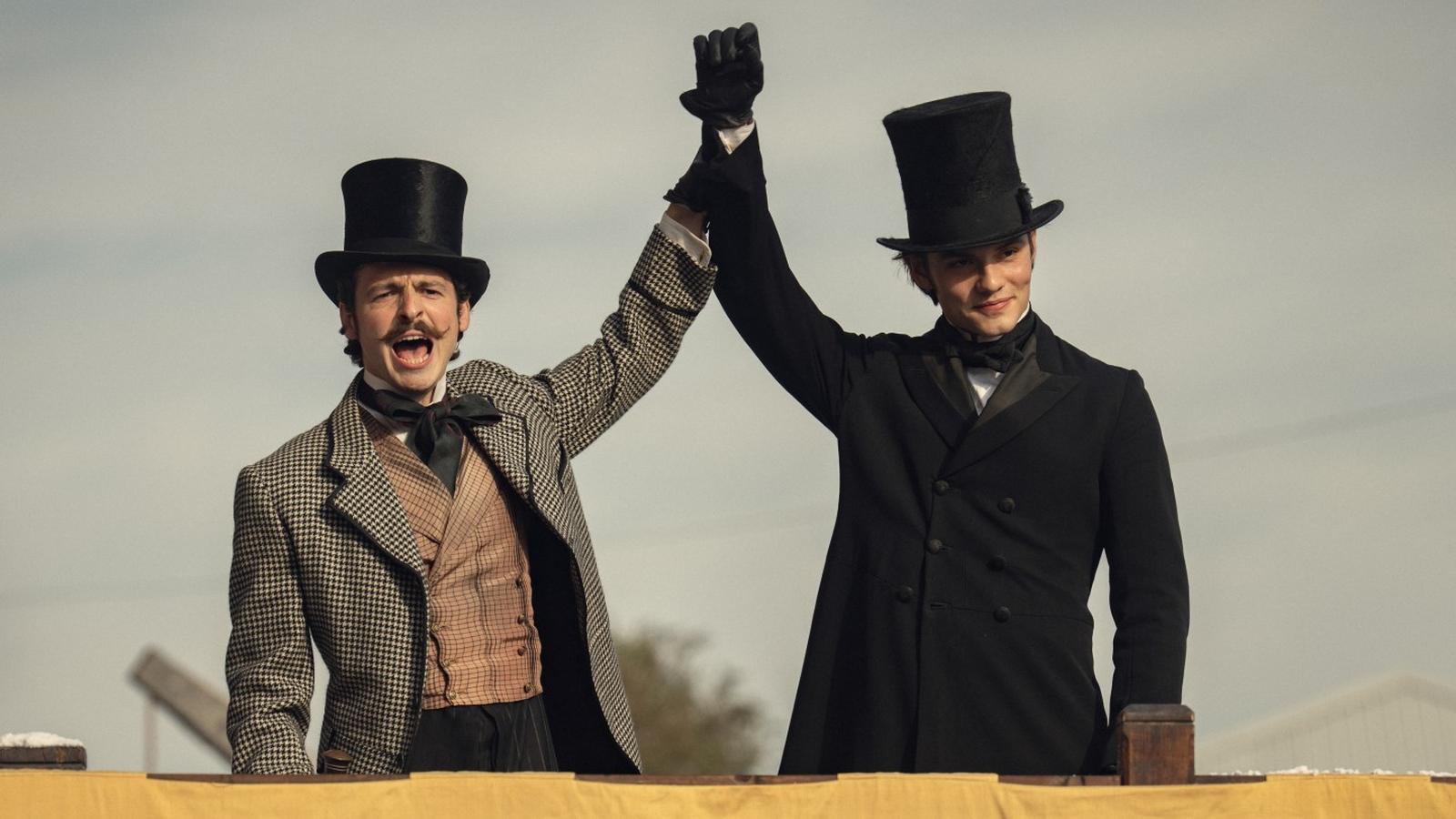
Created by Steven Knight, the mind behind Peaky Blinders, the series opens with the death of Benjamin Guinness, Ireland’s wealthiest man and patriarch of a brewing empire. Four children gather—Arthur, Edward, Anne, and Benjamin Jr.—each carrying burdens as heavy as the casks that built their fortune. The funeral procession, set to a pounding Irish rock soundtrack, is less a moment of mourning and more a declaration: the battle for the soul of Guinness begins now.
Sibling Rivalry and Succession: More Than Just Business
At its core, House of Guinness isn’t just about beer; it’s about the family that made it a global name. Arthur, the eldest, would seem the natural heir—but he’s desperate to escape the weight of tradition, his rebellious London years making him a stranger at home. Edward, pragmatic and ambitious, has run the brewery in practice, but primogeniture stands in his way. Benjamin, battling demons of drink and gambling, is written out of the will for his own good, while Anne, brilliant but constrained by illness and gender, is left to channel her frustrations into philanthropy.
Their father’s will, far from solving old wounds, deepens them. Anne’s exclusion, Benjamin’s meager allowance, Arthur’s forced return—all set the stage for a succession crisis that’s less about business acumen and more about identity and belonging. Knight’s script doesn’t shy away from the emotional fallout. As Esquire notes, the sibling dynamics—relatable to anyone with family—are the beating heart of the show. Anne’s dry quip before the funeral, “Edward, change your shirt; Benjamin, change into something you haven’t slept in; Arthur, just change,” lands with the sting of truth.
Politics, Power, and the Price of Privilege
Yet family isn’t the only force at play. Dublin in the 1860s is a city of unrest, where the Guinnesses’ unionist politics clash with the radical Fenians, who dream of an independent Ireland. Ellen Cochrane, a fiery Catholic activist, and her brother Patrick embody the outside threats—throwing rocks at the Guinnesses’ hearse, stirring up rebellion. The family’s conservative stances make them targets, but also push them toward social reform. Philanthropy becomes both shield and sword, as they try to balance reputation with genuine change. The show, as Los Angeles Times observes, keeps the history loose—“inspired by true facts”—but doesn’t let that get in the way of drama.
There’s also the matter of religion. Temperance activists and judgmental relatives condemn the brewery’s “immorality,” while the Guinnesses themselves wrestle with their own complicity in Dublin’s inequality. The series is candid about privilege: ice shipped from Greenland for the family, while villagers nearby suffer from cholera. But as Hollywood Reporter notes, House of Guinness pulls its punches—it wants us to sympathize with these elites, not judge them too harshly. Their guilt is that of obliviousness, not malice.
Love, Scandal, and the Limits of Tradition
Against this backdrop, the personal becomes political. Arthur’s sexuality—a secret in Victorian Ireland—makes him a target for blackmail and forces him into a marriage of convenience with the sharp-tongued Olivia Hedges. Edward, meanwhile, is torn between business interests and his feelings for Ellen, a cross-class romance fraught with danger. Anne, sickly and married to a cleric, sublimates her own heartache into charity and urban renewal. Benjamin’s self-destruction draws Lady Christine O’Madden into the futile hope of reforming him.
Romance here is rarely about passion; it’s about survival. Arranged marriages are strategic, love affairs risk reputations, and every union is shadowed by the demands of legacy. The characters are often drawn together not by genuine connection, but by the inexorable pull of plot. Still, as Esquire suggests, the actors commit fully—making even the bad company good company. James Norton’s Sean Rafferty, the family fixer, brings gravitas to the chaos, while Danielle Galligan’s Olivia curses with the gusto of a modern heroine.
Style Over Substance? Drama in the Details
Visually and sonically, House of Guinness is a feast—and sometimes a bit of a hangover. Knight’s trademark style is everywhere: slow-motion walks, explosive action, needle drops of aggressive Irish rock, and text overlays that hammer home the “Big Themes”—family, money, rebellion, power. Direction by Tom Shankland and Mounia Akl is both stately and punchy, but the show’s darkness—literal and figurative—can feel exhausting. As Independent argues, the script is sometimes paint-by-numbers, the dialogue so on-the-nose it verges on parody. The brown, sludgy palette, intended for gritty realism, risks turning drama into slog.
Historical accuracy is flexible. The series opens with a disclaimer: “inspired by true stories.” Real-life details—like Guinness’s pioneering worker benefits and philanthropic projects—get moments of recognition, but the focus is squarely on melodrama. Byron Hedges, a “Hobbit-like” cousin played by Jack Gleeson, is pure invention, as is the crime lord Bonnie Champion. The plot’s U.S. expansion storyline aims for international appeal but feels tacked on.
Despite its flaws, House of Guinness knows how to deliver a big moment. Heartbreak, betrayal, and bold choices—like Olivia’s late-season gamble—land with style. You might not learn much about brewing, but you’ll get a crash course in family dysfunction and the high cost of legacy.
The Verdict: Pouring Drama, Not History
Is House of Guinness the next The Crown or Succession? Not quite. It’s less interested in subtlety or psychological depth and more in spectacle—a “stout opera,” as Los Angeles Times calls it, that revels in beating hearts and heaving chests. The show’s energy is propulsive, but it sometimes sacrifices nuance for pace. Knight’s drama wants to entertain, not enlighten. It’s a series that asks what it means to inherit a name, a business, a country—and whether any of it is worth the trouble.
Ultimately, viewers are left with a story that’s easy to get swept up in, even if the characters remain at arm’s length. The Guinnesses are both more and less than the sum of their history—flawed, privileged, and, above all, human.
House of Guinness pours out its drama with the confidence of a brand that knows its audience, but its blend of spectacle and sentiment sometimes leaves the deeper flavors untapped. The series entertains, but the true legacy of the Guinness dynasty remains just out of reach—a tantalizing shadow behind the curtain of family lore.