
Quick Read
- HUD’s website featured a partisan message blaming the ‘Radical Left’ for a possible government shutdown.
- Legal experts argue the message likely violates the Hatch Act, which restricts political activity by federal employees.
- The Office of Special Counsel declined to comment on potential investigation.
- Democrats and Republicans offered sharply divided responses to the HUD messaging.
- The shutdown threat follows stalled funding negotiations and demands over healthcare subsidies.
HUD Website Message Ignites Partisan Firestorm Ahead of Shutdown
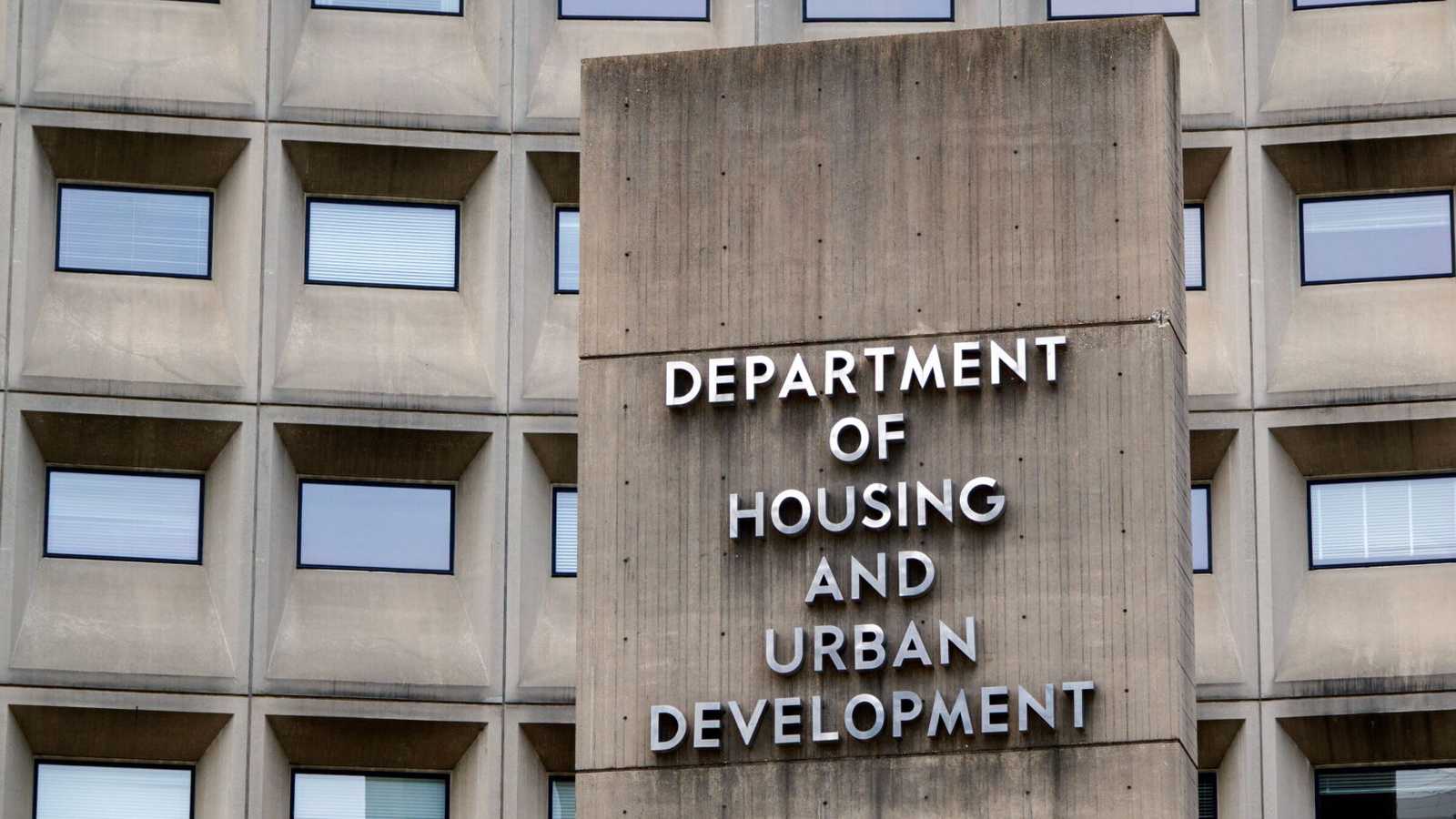
On Tuesday morning, visitors to the official website of the Department of Housing and Urban Development (HUD) were greeted by a striking pop-up and a red banner—both carrying a loaded accusation. The message, addressed to the American public, declared: “The Radical Left are going to shut down the government and inflict massive pain on the American people unless they get their $1.5 trillion wish list of demands. The Trump administration wants to keep the government open for the American people.”
The timing was no accident. With the fiscal year’s end less than 24 hours away and funding negotiations deadlocked, the specter of a partial government shutdown loomed over Washington. The HUD website’s statement, however, did more than warn of bureaucratic disruption; it plunged a federal agency into the heart of a political brawl.
Hatch Act Concerns Surface as Political Lines Blurred
Immediately, legal experts and political observers zeroed in on the messaging’s legality. The Hatch Act, an 86-year-old statute, strictly limits the political activities of federal employees to protect the nonpartisan administration of government services. Kevin Owen, a partner at Gilbert Employment Law, weighed in: “The fact that it has been posted on an agency website on behalf of an agency does not make it immune from Hatch Act prosecution. In fact, it makes it more likely that the individuals who have posted this were acting in their official capacity and not in their personal political speech, which is going to make it more likely to be a Hatch Act violation.”
Owen pointed out the explicit language: the term “Radical Left” isn’t merely descriptive—it’s coded, unmistakably partisan. “If the messaging were slightly different by saying, ‘The President wants to keep the government open, but Congress is not doing its job on funding,’ then that would likely not be a Hatch Act violation, because it is not veering into partisan political speech,” he explained. Instead, HUD’s banner walked a fine line—or crossed it—by singling out a political ideology in the midst of a funding crisis.
The Office of Special Counsel (OSC), which investigates Hatch Act complaints, declined to comment on the situation. But the question lingered: Who authorized the message? Owen noted, “Obviously someone—whether or not it’s the secretary of Housing and Urban Development, whether it’s the [chief information officer] of HUD, whether it’s an IT specialist or someone from the comms office—was personally involved in making this political messaging known on duty, using government resources, and that’s why it appears very likely to be a Hatch Act violation.” (Federal News Network)
Political Blame Game Intensifies on Capitol Hill
As the HUD message ricocheted across social media and news outlets, politicians responded along party lines. Senate Banking, Housing and Urban Affairs Chairman Tim Scott, Republican of South Carolina, dismissed concerns about partisanship. “Chairman Scott has reviewed HUD’s website,” his spokesperson said. “It is an accurate, non-political statement about the impact of the shutdown.”
Yet, for others, the statement was anything but neutral. Senator Raphael Warnock, Democrat of Georgia, lambasted the administration for politicizing government communications: “This administration has no respect for the rule of law and basic protocol. They politicize everything and to have that on the HUD website is beyond the pale,” Warnock said. “But sadly it’s not surprising.” Warnock, like other Democrats, insisted that responsibility for the funding impasse lay squarely with Republicans, who controlled both chambers and the White House.
Senator John Kennedy, Republican of Louisiana and chair of the Economic Policy Subcommittee, took a more nuanced stance. “I don’t know. I’m not an expert on the Hatch Act,” Kennedy admitted. But he echoed the sentiment that Democrats bore blame for the shutdown, suggesting their actions were driven more by political calculus than policy.
Shutdown Looms as Funding Talks Stall
The backdrop to this digital drama was a standoff in Congress. The House had passed a continuing resolution on September 19 to keep government operations running through November 21, but Senate Democrats blocked it, demanding the extension of healthcare subsidies set to expire at year’s end. Negotiations between Congressional leaders and President Donald Trump yielded no breakthrough. As the clock ticked down, federal departments and agencies scrambled to prepare contingency plans for a partial shutdown, though HUD itself had not yet released specifics.
Unlike other agencies, HUD’s first visible response to the crisis was its homepage banner—a move that put its communications strategy under the microscope. Matthew Maley, HUD’s spokesperson, defended the decision, emphasizing the department’s commitment to maintaining critical services: “The Far Left is barreling our country toward a shut down, which will hurt all Americans. At HUD, we are working to keep critical services online and support our most vulnerable. Why is the media more focused on a banner than reporting on the impact of a shutdown on the American people?”
Government Ethics and the Future of Agency Communications
The Hatch Act’s relevance in the digital age is sharper than ever. According to OSC guidelines, even “less-restricted” government employees are barred from engaging in partisan political activity while on duty or using official resources. That includes agency websites and social media—precisely the platforms where HUD’s message appeared. (Roll Call)
A HUD official, speaking on background, argued that the message was “carefully worded so as not to name a specific party or politician, but rather an ideology.” Yet, legal consensus suggests that the nuance may not be enough to shield the agency from investigation.
As the shutdown deadline approached, the controversy over HUD’s messaging raised broader questions: How should federal agencies communicate during political crises? Where is the line between informing the public and influencing public opinion?
Assessment: The HUD website incident is more than a legal dispute—it’s a window into the tensions between government transparency and political neutrality. As agencies leverage digital platforms to reach citizens, the need for clear boundaries between public information and partisan messaging has never been more urgent. This episode underscores the risk of eroding public trust when official communications become battlegrounds for political blame.