
Quick Read
- Over 100,000 people rallied in Budapest for a concert demanding a vote to oust Prime Minister Viktor Orbán.
- The “Russians go home!” chant echoed the 1956 revolution, reflecting concerns over Hungary’s ties with Moscow.
- The election is seen as pivotal for Hungary’s future and its role within the EU, with a strong opposition challenger gaining traction.
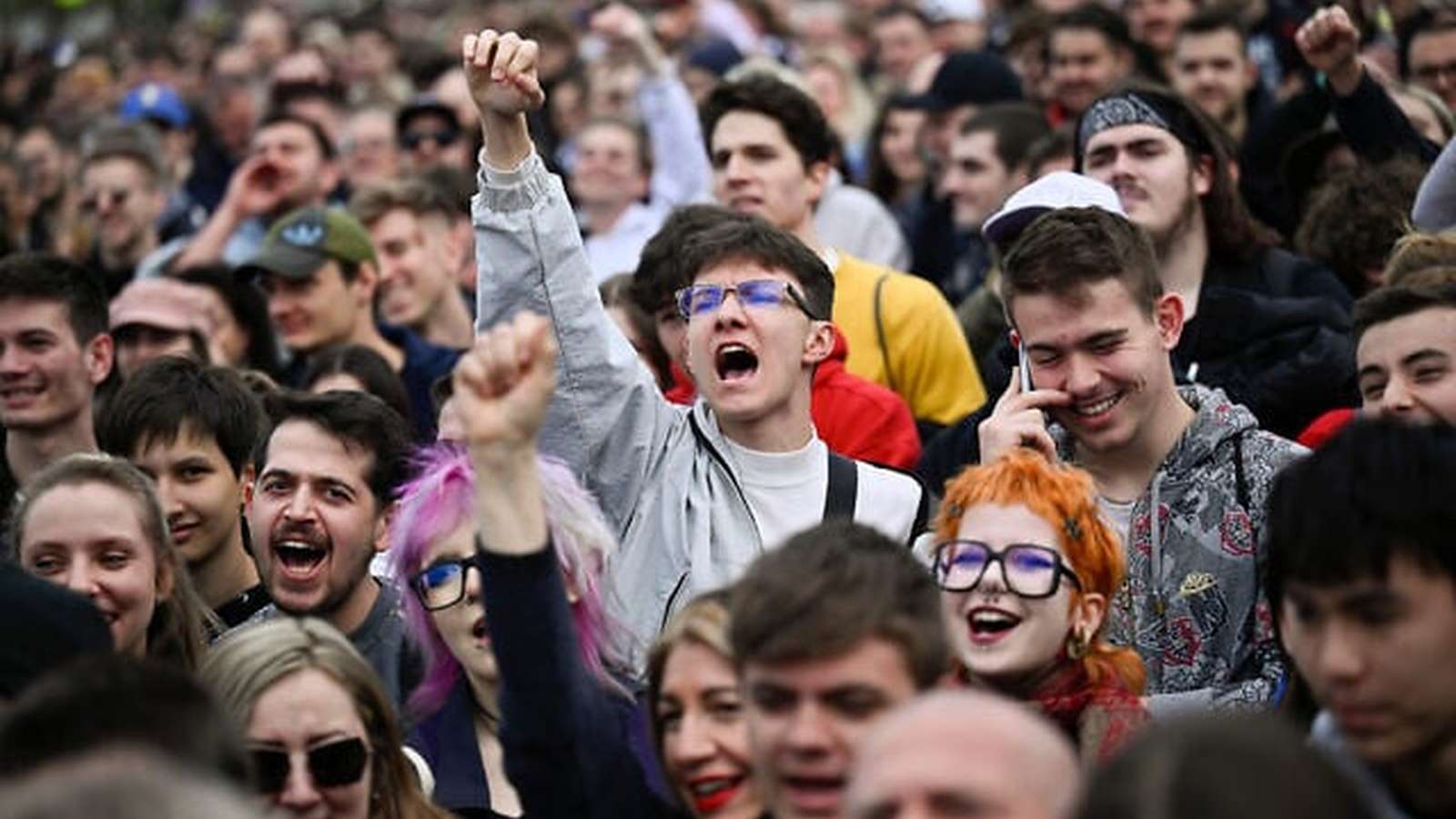
BUDAPEST, Hungary (Azat TV) – Over 100,000 people filled Heroes’ Square and surrounding avenues in Budapest on Friday for a massive concert aimed at mobilizing citizens to vote out Prime Minister Viktor Orbán’s government in the upcoming elections. The seven-hour event, featuring dozens of popular Hungarian performers known for their dissent, served as a powerful call to action two days before Hungarians head to the polls.
Massive Turnout and Anti-Government Sentiment
The sheer scale of the gathering, with an estimated 100,000 attendees and an additional 100,000 watching a livestream, underscored a significant level of dissatisfaction with Orbán’s 16-year tenure. The crowd, notably comprising a large proportion of young people, chanted anti-government slogans, including the historically resonant “Ruszkik haza!” or “Russians go home!” This cry, echoing the 1956 anti-Soviet revolution, has gained new prominence amid Orbán’s increasingly close ties with Moscow, a stance that has drawn criticism both domestically and internationally. The concert organizers, the Civic Resistance Movement, stated that each performance was “critical of the corrupt regime” and intended to awaken voters to the end of an era of impunity.
A Rising Opposition Challenger
The event highlighted the growing generational divide in Hungary, with younger citizens largely pushing for an end to Orbán’s rule while older generations often remain loyal. This shift is occurring against a backdrop of economic stagnation and political scandals. The most significant threat to Orbán’s power in nearly two decades comes from the center-right Tisza party and its leader, Péter Magyar. Polls indicate that Magyar’s Tisza party is leading over Orbán’s Fidesz party, with surveys showing substantial support among voters under 30. Many young attendees expressed a desire for change, with some who had emigrated considering a return to Hungary if the political landscape shifts.
International Scrutiny and Geopolitical Ties
The Hungarian elections have attracted considerable international attention. Orbán, the European Union’s longest-serving leader, has been a frequent critic of EU policies and has maintained close relationships with figures like former U.S. President Donald Trump and Russian President Vladimir Putin. Leaked communications have suggested coordination between Hungarian officials and Moscow to undermine EU sanctions. The outcome of the election is seen as significant not only for Hungary but also for the broader debate on democracy in Europe and Hungary’s role within the EU and its relationship with Russia.
The surge in public mobilization, exemplified by the massive concert and the resurgence of the “Russians go home!” slogan, points to a deeply felt desire for change, particularly among Hungary’s youth, and signals a potentially pivotal moment in the country’s political trajectory.