
Quick Read
- Iain Douglas-Hamilton pioneered elephant conservation in Africa, focusing on individual animals and their behaviors.
- His aerial surveys revealed the catastrophic impact of ivory poaching, leading to international policy change.
- He invented the bee fence, helping farmers coexist peacefully with elephants while generating income.
- Save the Elephants, founded in 1993, continues to monitor and protect elephant populations across Africa.
- Forest elephants, now recognized as a separate species, face even more severe threats than savannah elephants.
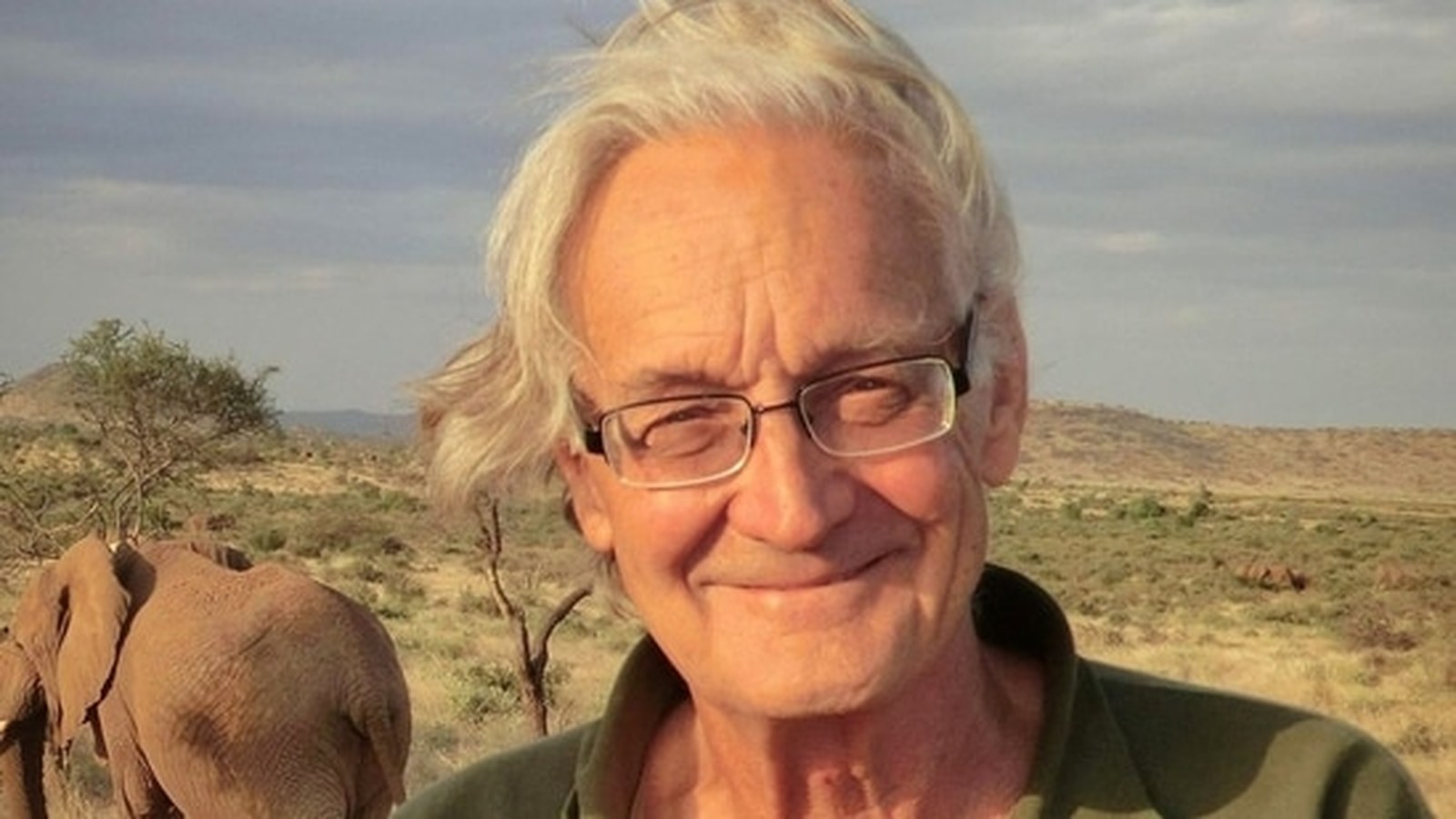
In the world of wildlife conservation, few names echo with the same resonance as Iain Douglas-Hamilton. Known for his unwavering dedication to the African elephant, Douglas-Hamilton’s story is one of grit, innovation, and an unyielding passion for the natural world. His journey began not with a rifle, as some of his forebears might have wielded, but with field glasses and a notebook—tools of observation rather than domination.
Born into a lineage woven with Scottish nobility and wartime heroism, Douglas-Hamilton’s path diverged from tradition. By the mid-1960s, he found himself in Tanzania, a country freshly independent from colonial rule. While others in the field were staking their claims on lions, gorillas, and chimpanzees, elephants remained largely unstudied. Douglas-Hamilton made them his focus, approaching these giants not as faceless members of a species but as individuals with quirks and personalities: Anwar, a young male fascinated by cars; Alpine, a nurturing female who often cared for orphans; and Monsoon, a mountaineer mother who took her young along on her adventures.
This approach—seeing elephants as individuals—was radical for its time. Under the tutelage of Niko Tinbergen at Oxford, Douglas-Hamilton embraced ethology’s core principle: to study animals in their natural environments. This was in stark contrast to the behaviorist school, which preferred sterile laboratory settings. Douglas-Hamilton’s fieldwork in the Samburu region of Kenya led him to innovative solutions to age-old problems, like human-elephant conflict.
One of his most famous interventions was deceptively simple: bee fences. Farmers in Samburu, whose livelihoods often clashed with wandering elephants, found peace thanks to rows of beehives strung along the borders of their land. Elephants, it turns out, are terrified of bees, and the threat of a sting keeps them at bay. These fences not only protected crops but also generated income through honey—a rare win-win in conservation.
But fate carries its own irony. In February 2023, Douglas-Hamilton was attacked by a swarm of bees while trying to shield his wife, Oria, from harm. He survived the ordeal, but the incident cast a long shadow over his health. His passing marked the loss of one of the world’s most passionate defenders of elephants.
Turning Data into Action: The Aerial Revolution
Douglas-Hamilton’s work wasn’t limited to ground-level observation. Realizing that the scale of elephant populations—and the threat posed by poachers—could only be understood from above, he pioneered aerial surveys. Flying a Cessna across the vast African landscapes, he developed techniques that revealed the devastating impact of the ivory trade. Numbers told a grim tale: between 1979 and 1989, Africa’s elephant population plummeted from 1.3 million to 600,000.
Armed with these facts, Douglas-Hamilton took his advocacy beyond the savannah, testifying before the U.S. Congress. His efforts contributed to the passage of the African Elephant Conservation Act in 1988, a landmark moment in international wildlife policy.
Save the Elephants: A Global Mission
In 1993, together with Oria, Douglas-Hamilton founded Save the Elephants, an organization devoted to protecting these animals through research, education, and direct action. The impact was tangible. Elephant populations in countries like Botswana, Namibia, and South Africa began to recover. Later, Kenya, Uganda, and Tanzania saw similar improvements. Even regions long plagued by poaching—Angola and Zimbabwe—showed signs of hope.
Yet, the battle was far from over. As savannah elephants started to rebound, poachers turned their sights to forest elephants. Recognized as a separate species in 2021, forest elephants suffered an even more catastrophic decline—an 86% drop in numbers over the previous three decades. While savannah elephants declined by 60% in half a century, the forest species were in even more dire straits.
Today, about 400,000 African elephants remain. The research wing of Save the Elephants, headquartered in Samburu National Reserve, keeps close watch over 1,000 individuals. Modern technology—satellite radio collars—now supplements the trusty field glasses and notebooks of old, ensuring each elephant’s movements and safety are carefully monitored.
The Bee Fence Legacy and Conservation Innovation
The bee fence idea has spread far beyond Samburu. As of last year, more than 14,000 hives have been installed by farmers across Africa and Asia, providing a simple yet effective means to coexist with elephants. The concept reflects Douglas-Hamilton’s broader philosophy: conservation must work for people as well as wildlife.
His approach was never about imposing solutions from afar. It was about listening, adapting, and collaborating. The success of bee fences is a testament to what can happen when scientific insight meets local wisdom.
Enduring Impact: Science, Advocacy, and Empathy
Douglas-Hamilton’s legacy extends beyond statistics and policy papers. He changed the way the world sees elephants—not as distant icons of wilderness, but as individuals worthy of empathy and protection. His work laid the foundation for modern conservation, blending rigorous science with heartfelt advocacy.
His death is a loss felt acutely by those who knew him, and perhaps unknowingly by the elephants he devoted his life to saving. The fight to preserve these animals continues, led by researchers, activists, and communities inspired by his example.
Douglas-Hamilton’s story is a reminder that conservation is never just about numbers—it’s about relationships, innovation, and the courage to defend what matters, even against overwhelming odds. His life proves that one person’s vision can shift the fate of an entire species, leaving a legacy that endures in every elephant’s footstep across the African plains.