
Quick Read
- An internal ICE memo from May 2025 authorizes officers to forcibly enter homes with only an administrative warrant to arrest individuals with final deportation orders.
- This directive reverses previous guidance and is seen by legal experts as a potential violation of Fourth Amendment protections against unreasonable searches.
- A whistleblower complaint alleges the memo is being used to train new ICE officers, despite conflicting with written Homeland Security training materials.
- Recent ICE operations in Minneapolis included the forced entry into a home with an administrative warrant and the fatal shooting of Renee Good by an ICE officer.
- A new crackdown in Maine, dubbed “Operation Catch of the Day,” has resulted in 50 arrests and is seen by some local officials as politically motivated.
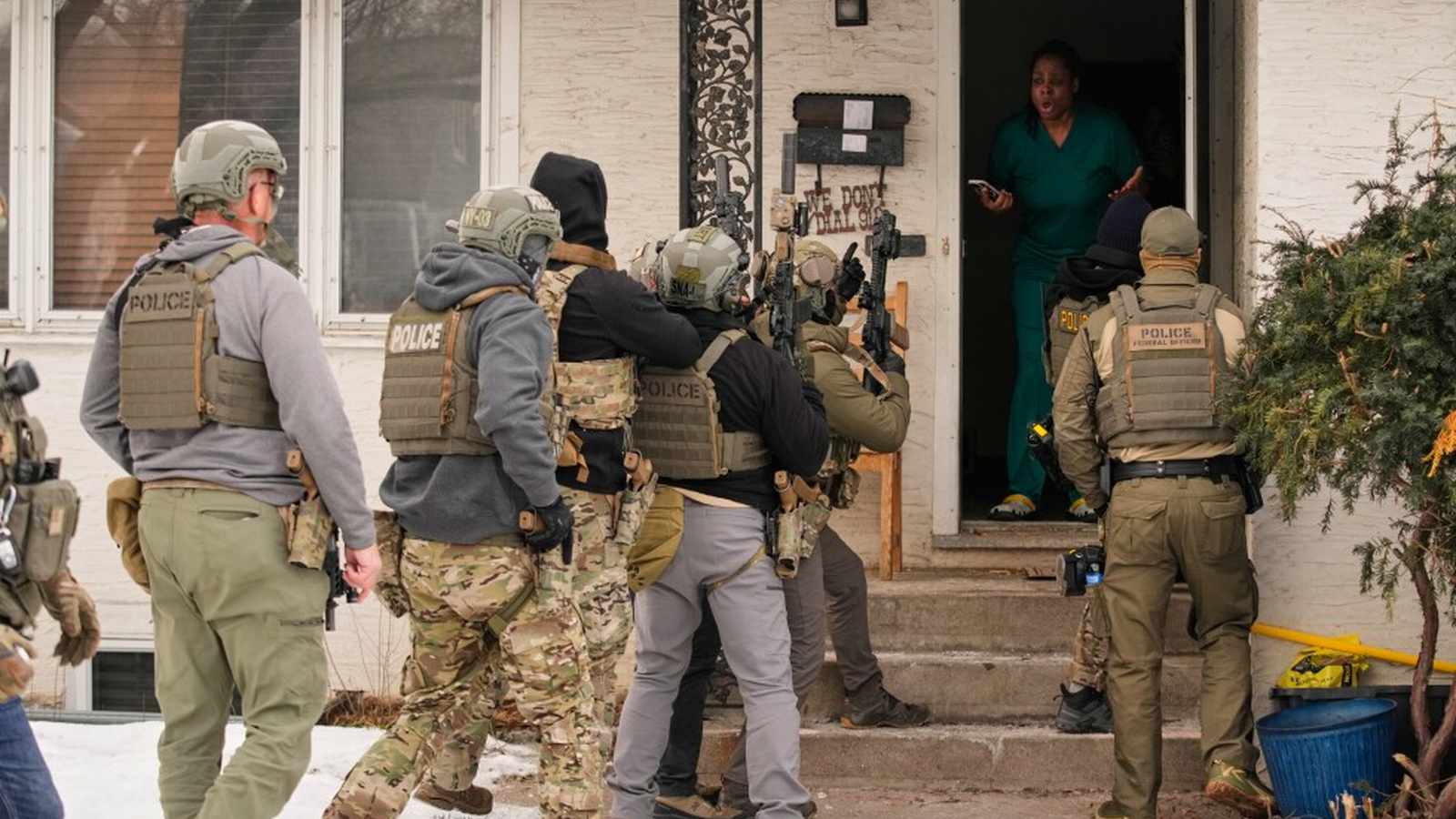
Federal immigration officers are now asserting sweeping power to forcibly enter people’s homes without a judge’s warrant, a dramatic reversal of long-standing guidance and a move that has ignited widespread alarm among legal experts and immigrant advocates. An internal Immigration and Customs Enforcement (ICE) memo, obtained by The Associated Press and dated May 12, 2025, authorizes officers to use force to enter a residence based solely on a more narrow administrative warrant to arrest individuals with a final order of removal. This shift directly undercuts years of advice given to immigrant communities and appears to collide with Fourth Amendment protections, coming amidst a significant expansion of immigration arrests under the current administration across the nation, with notable operations recently unfolding in cities like Minneapolis and Maine.
Controversial Memo Redefines Enforcement Authority
The newly revealed ICE directive, signed by acting director Todd Lyons, declares that while the U.S. Department of Homeland Security (DHS) has not historically relied on administrative warrants alone for in-residence arrests, the DHS Office of the General Counsel has recently determined that such reliance is permissible under the U.S. Constitution, the Immigration and Nationality Act, and immigration regulations. However, the memo does not elaborate on how this determination was reached or its potential legal ramifications, raising immediate questions about its constitutional basis.
For years, immigrant advocates, legal aid groups, and local governments have advised individuals not to open their doors to immigration agents unless presented with a warrant signed by a judge. This guidance is rooted in Supreme Court rulings that generally prohibit law enforcement from entering a home without judicial approval. The ICE memo, however, explicitly states that officers, after knocking, identifying themselves, and stating their intent, may use a “necessary and reasonable amount of force to enter the alien’s residence” if admittance is refused. These forced entries are limited to between 6 a.m. and 10 p.m., allowing residents a “reasonable chance to act lawfully.”
The memo’s circulation within the agency has been clandestine, according to a whistleblower complaint obtained by The Associated Press from an official in Congress. Whistleblower Aid, a non-profit legal organization, stated it represents two anonymous U.S. government officials exposing this “secretive and seemingly unconstitutional policy directive.” These whistleblowers allege that new ICE officers are being trained to follow this memo’s guidance, even when it contradicts existing written Homeland Security training materials that uphold Fourth Amendment protections. One whistleblower was reportedly only allowed to view the memo in a supervisor’s presence, prohibited from taking notes, highlighting the sensitive nature of the directive.
Legal Challenges and Constitutional Concerns
The change is almost certain to provoke significant legal challenges and strong criticism from advocacy groups and immigrant-friendly state and local governments. Lindsay Nash, a law professor at Yeshiva University’s Cardozo School of Law, emphasized that the memo “flies in the face” of Fourth Amendment protections against unreasonable searches and seizures and contradicts ICE’s historical stance on its authorities. She warned of “enormous potential for overreach, for mistakes and we’ve seen that those can happen with very, very serious consequences.”
DHS spokeswoman Tricia McLaughlin, in a statement to the AP, affirmed that individuals served with administrative warrants have already undergone “full due process and a final order of removal,” and that officers issuing these warrants have found probable cause for arrest. She asserted that the Supreme Court and Congress have “recognized the propriety of administrative warrants in cases of immigration enforcement,” though she did not provide further details or address questions about specific instances of forced entries based solely on administrative warrants since the memo’s issuance.
Crackdowns in Minneapolis and Maine Highlight New Tactics
The implications of this new directive are already being observed in intensified enforcement operations. In Minneapolis, The Associated Press witnessed ICE officers forcibly entering the home of Garrison Gibson, a Liberian man with a deportation order from 2023, on January 11. Officers in tactical gear and with rifles drawn rammed through his front door, possessing only an administrative warrant, not one signed by a judge, according to documents reviewed by the AP.
Minneapolis has also been the site of violent clashes related to immigration enforcement. On January 7, Renee Nicole Good, a 37-year-old mother, was fatally shot by an ICE officer. DHS officials claimed Good was attempting to run over officers, a claim disputed by local officials and a legal team representing her family, which reported three gunshot wounds, including one to the head. This incident spurred protests, leading to the arrests of civil rights attorney Nekima Levy Armstrong and activist Chauntyll Louisa Allen for allegedly targeting a local church. The Department of Justice has launched an investigation into the shooting, and the Pentagon has even placed hundreds of Army military police soldiers on alert for potential deployment to Minnesota, signaling the high tensions surrounding these operations.
Concurrently, the Trump administration launched a new ICE immigration crackdown in Maine, dubbed “Operation Catch of the Day,” on January 22, 2026. This operation, which ICE Deputy Assistant Director Patricia Hyde stated had resulted in 50 arrests and identified nearly 1,400 individuals for detention, appears to be politically motivated. A Trump administration spokesperson, Tricia McLaughlin, explicitly linked the operation to a feud with Maine’s Democratic Governor Janet Mills, criticizing her as a “sanctuary politician.” Rumors also suggest Maine was singled out due to its significant Somali American population, a community the President has repeatedly disparaged.
Maine officials have reacted strongly to the federal actions. Portland Mayor Mark Dion acknowledged the legality of federal immigration law but expressed concern that immigrant communities felt “anxious and fearful.” City Councillor Wesley Pelletier condemned the raids as part of “an agenda of white nationalism and might makes right,” describing the situation as “a war of terror that’s being waged on our city by the federal government.” Governor Mills herself criticized the tactics, particularly federal agents using masks to conceal identities, stating, “They don’t wear a mask to shield their identities, and they don’t arrest people in order to fill a quota.”
The new ICE directive fundamentally alters the landscape of immigration enforcement, shifting away from long-standing constitutional interpretations and setting a precedent for more aggressive, less judicially overseen actions within private residences. This move not only directly challenges Fourth Amendment protections but also risks escalating tensions between federal agents and communities, potentially leading to further confrontations and legal battles as advocacy groups prepare to contest these expanded powers.