
Quick Read
- Bad Bunny, Olivia Dean, Billie Eilish, and other artists criticized ICE at the Grammy Awards on February 2, 2026, with many wearing “ICE OUT” pins.
- The U.S. Justice Department opened a civil rights investigation into the death of Alex Pretti, who was killed by federal immigration officials in Minneapolis, following an earlier fatal incident involving Renee Good.
- Reports of ICE arrests in Hoboken and Jersey City, New Jersey, on February 1, 2026, led to community meetings and mayoral condemnation.
- 50 people were arrested at an anti-ICE protest in downtown Los Angeles on January 31, 2026, with additional arrests on January 30, 2026, following clashes with police.
- President Trump’s administration stated plans to “de-escalate” in Minnesota while maintaining its broader immigration enforcement mission.
U.S. Immigration and Customs Enforcement (ICE) operations are drawing intense public and celebrity scrutiny following a series of high-profile incidents across the country. Recent federal enforcement actions, including fatalities in Minneapolis, arrests in New Jersey, and widespread protests in cities like Los Angeles, have culminated in powerful calls for accountability and reform from the stage of the Grammy Awards.
The agency, a division of the Department of Homeland Security, has become a focal point of national debate over immigration policy, with its enforcement tactics being sharply criticized by artists, lawmakers, and community leaders.
Grammy Artists Criticize ICE Operations
At the Grammy Awards ceremony on Monday, February 2, 2026, several prominent musicians used their platform to condemn the Trump administration’s immigration enforcement operations. Puerto Rican superstar Bad Bunny delivered one of the most explicit political statements of the night, declaring ‘ICE out’ during his acceptance speech for Best Música Urbana Album. ‘We’re not savages, we’re not animals, we’re not aliens – we’re humans,’ he stated, emphasizing a message of love over hate.
British singer Olivia Dean, recipient of the Best New Artist award, spoke in support of immigrants, highlighting her heritage as the granddaughter of an immigrant. Billie Eilish, accepting Song of the Year for ‘Wildflower,’ urged continued fighting, speaking up, and protesting, asserting the power of collective voices. SZA, a joint winner for Record of the Year, echoed this sentiment, encouraging trust and resilience in what she described as a ‘scary time.’
The sentiment extended to the red carpet, where many artists, including Kehlani, sported white pins emblazoned with ‘ICE OUT.’ Gloria Estefan, who won for Best Tropical Latin Album, expressed deep concern backstage about the state of the U.S. and the nature of the ongoing raids, stating that ‘what is happening is not at all criminals being arrested.’ Country artist Shaboozey dedicated his Grammy win to immigrants, thanking his Nigerian immigrant mother for her sacrifices.
Minneapolis Deaths Spark Federal Investigation into ICE
The Grammy artists’ statements capped off weeks of heightened tension, particularly following two fatal incidents involving federal immigration officials in Minneapolis, Minnesota. On January 7, Renee Good was killed by an ICE agent. More recently, Alex Pretti, a 37-year-old nurse, became the second Minneapolis resident to die after being shot by federal immigration officials. These deaths ignited public outcry and prompted protests across the U.S.
In response to the growing controversy, the U.S. Justice Department opened a civil rights investigation into Pretti’s death on Friday, January 30 or February 1, 2026. President Donald Trump indicated that his administration would ‘de-escalate a little bit’ in Minnesota, while border tsar Tom Homan stated plans to ‘draw down’ federal forces if local officials cooperated. Homan, however, affirmed that the administration was ‘not surrendering our mission at all,’ but rather ‘doing it smarter,’ without detailing what de-escalation would entail. The administration maintains that its agents target ‘hardened criminal migrants,’ though operations have also led to arrests of individuals without criminal histories.
New Jersey Residents on Edge Amid Reported ICE Activity
Further contributing to the national unease are recent reports of ICE activity in Hudson County, New Jersey. Earlier on Sunday, February 1, 2026, U.S. Immigration and Customs Enforcement agents reportedly arrested several individuals in Hoboken and Jersey City. These incidents led nearly 200 people to pack an emergency meeting in Hoboken to learn about their rights.
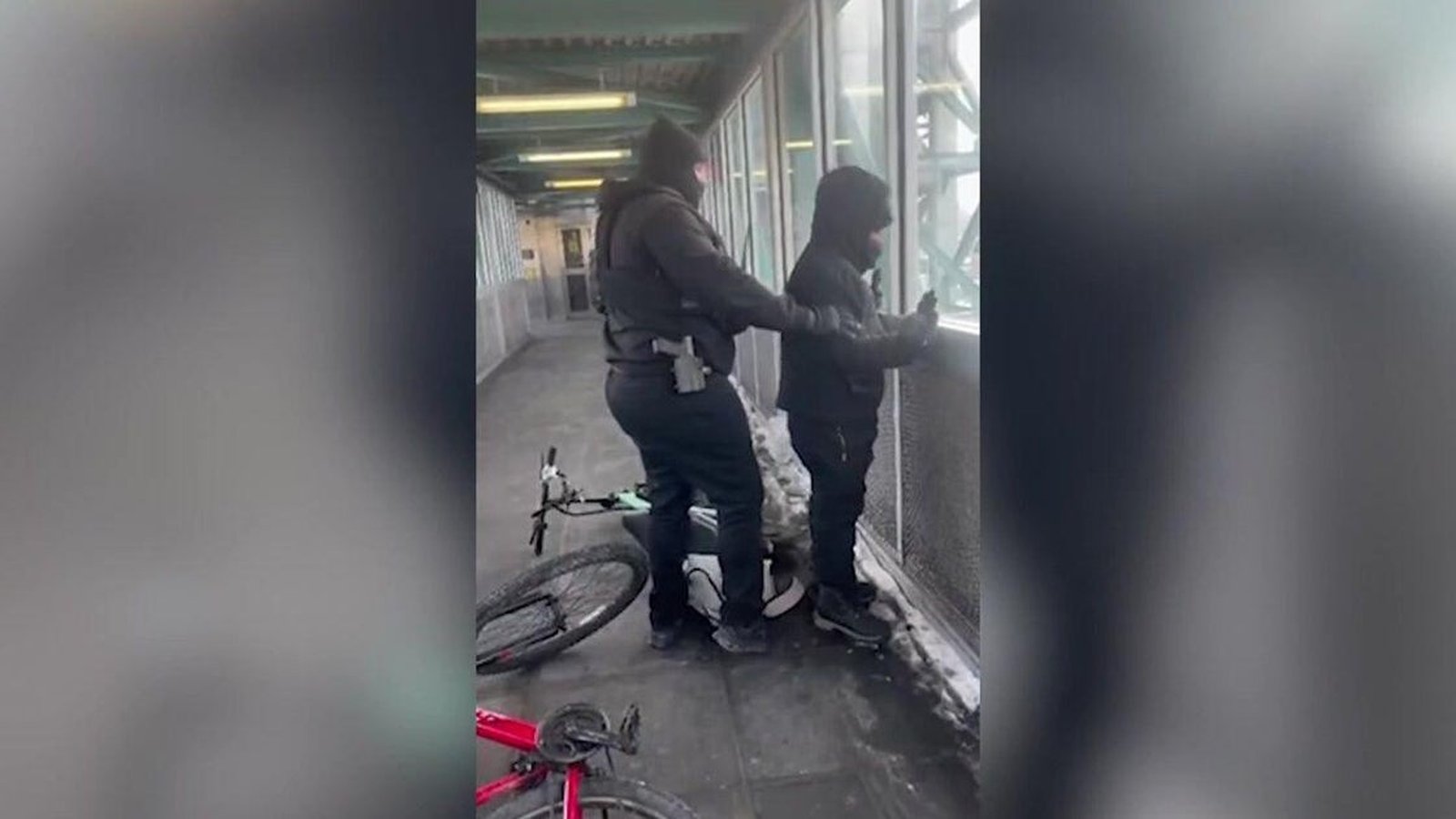
Hoboken Mayor Emily Jabbour described the accounts as ‘deeply troubling,’ citing cellphone video showing an ICE agent in an unmarked car making an arrest at a light rail station. Jabbour issued an alert confirming three arrests, including two local business employees. Jersey City Mayor James Solomon, who signed an executive order protecting city immigrants last week, echoed concerns, stating that videos of people being detained on their way to work ‘make us less safe.’ Residents at the emergency meeting called for local police to intervene when unmarked vehicles are used by federal agents, expressing fear that ‘people don’t want their neighbor kidnapped.’
Protests and Arrests in Los Angeles
Across the country, anti-ICE protests have also escalated, notably in downtown Los Angeles. Following a protest on Saturday, January 31, 2026, police reported 50 arrests, primarily for failing to disperse, with additional charges for assault with a deadly weapon and vandalism. Tensions rose as ‘agitators’ allegedly threw fireworks, rocks, and bottles at officers. Video footage captured fireworks in the area and a police pursuit linked to the protest ending in a crash.
This followed an earlier protest on Friday, January 30, 2026, where eight individuals were arrested, including one for assault with a deadly weapon on an officer and six for failure to disperse. The Los Angeles Police Department’s Central Division confirmed these arrests, stating that all charges would be presented to the District Attorney and City Attorney.
The widespread and high-profile nature of these events — from celebrity condemnation at a major awards ceremony to fatal encounters and community-level enforcement — indicates a significant intensification of public pressure and political scrutiny on U.S. Immigration and Customs Enforcement operations, signaling a potentially pivotal moment in the ongoing national debate over immigration policy and federal agency accountability.