
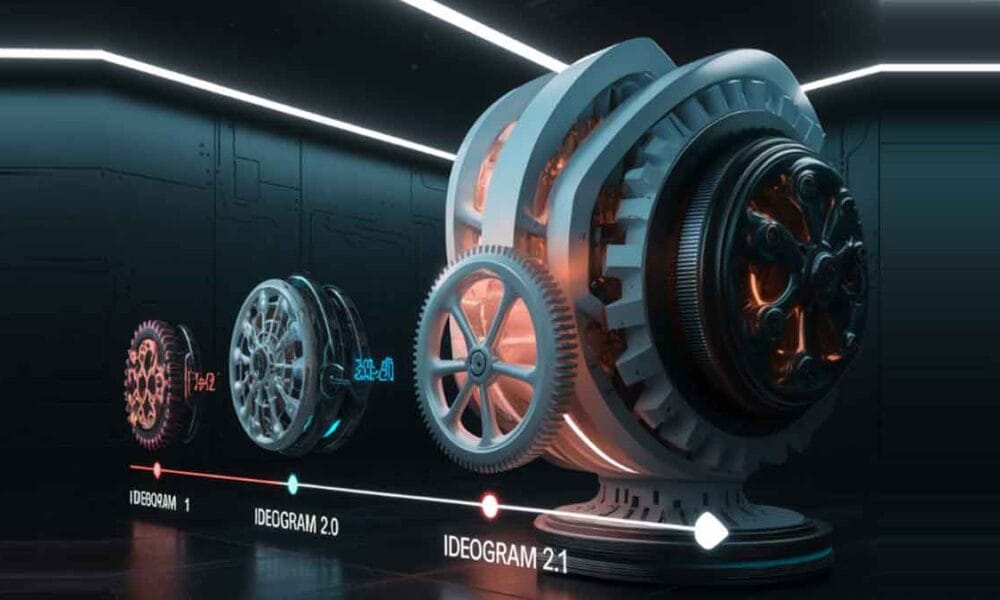
The latest iteration of Ideogram 2.1, marks a significant milestone in the field of generative AI, redefining the standards of precision and functionality in text-to-image technology. Historically, generative AI tools have focused on visual aesthetics, often neglecting the technical challenges of embedding coherent textual elements into images. Ideogram 2.1 addresses this limitation by offering users unprecedented control over text consistency, a breakthrough that has long eluded developers in this domain.
Text generation within images has consistently posed a challenge for AI, often resulting in fragmented or incoherent renderings that compromise the usability of such tools for professional purposes. By refining its algorithms, Ideogram 2.1 effectively mitigates these issues, enabling seamless integration of text and visuals. Early user tests have demonstrated marked improvements in the platform’s ability to produce text that aligns with specified prompts, creating outputs that meet both aesthetic and functional criteria.
This advancement reflects a broader trend within the industry, as generative AI platforms increasingly prioritize precision and user intent over purely visual outputs. The demand for “prompt adherence,” where generated content accurately mirrors user inputs, is growing, particularly in industries like marketing, design, and education. Ideogram 2.1 exemplifies this shift, showcasing how precision in text rendering can expand the practical applications of generative AI.
The competitive landscape of generative AI has intensified, with platforms like Recraft V3 emerging as formidable contenders. This competition fosters rapid innovation, pushing developers to address existing limitations and explore new functionalities. Within this context, Ideogram’s focus on text consistency not only sets it apart but also highlights its commitment to advancing the capabilities of generative tools. These enhancements are crucial as industries increasingly rely on AI for streamlined content creation and precise visual communication.
Ideogram 2.1’s improvements are not limited to aesthetics; they represent a deeper alignment with user needs, bridging the gap between creative freedom and functional precision. By enabling creators to embed text seamlessly into images, the platform expands the possibilities for storytelling and communication. This capability holds particular significance in fields requiring high accuracy, such as branding and digital publishing, where textual elements often define the narrative and visual identity of the final product.
The implications of Ideogram 2.1 extend beyond the realm of visual design. Its advancements signal a paradigm shift in the development of generative AI, moving towards tools that not only automate tasks but also enhance user control and customization. This trend underscores the evolving relationship between humans and AI, where technology serves as both a collaborator and a facilitator of creative expression.
However, the growing sophistication of generative AI tools like Ideogram 2.1 also raises critical questions about their broader societal impact. As these technologies become more accessible, concerns about data usage, ethical boundaries, and the potential for misuse become increasingly pressing. Developers must navigate these challenges carefully, ensuring that the tools they create enhance creativity while safeguarding against unintended consequences.
Ideogram 2.1 represents a significant step forward in the evolution of generative AI, offering solutions to longstanding challenges in text-to-image technology. Its emphasis on precision and user intent redefines the potential of AI in creative industries, setting the stage for more integrated and versatile applications. As this field continues to evolve, the success of platforms like Ideogram will depend on their ability to balance innovation with responsibility, fostering tools that not only empower creators but also reflect the ethical considerations of an increasingly AI-driven world. The question remains: how will the next wave of advancements address these challenges while continuing to push the boundaries of what is possible?