
Quick Read
- Incoming Nominated MP (NMP) Dr. Haresh Singaraju was appointed on January 2, 2026.
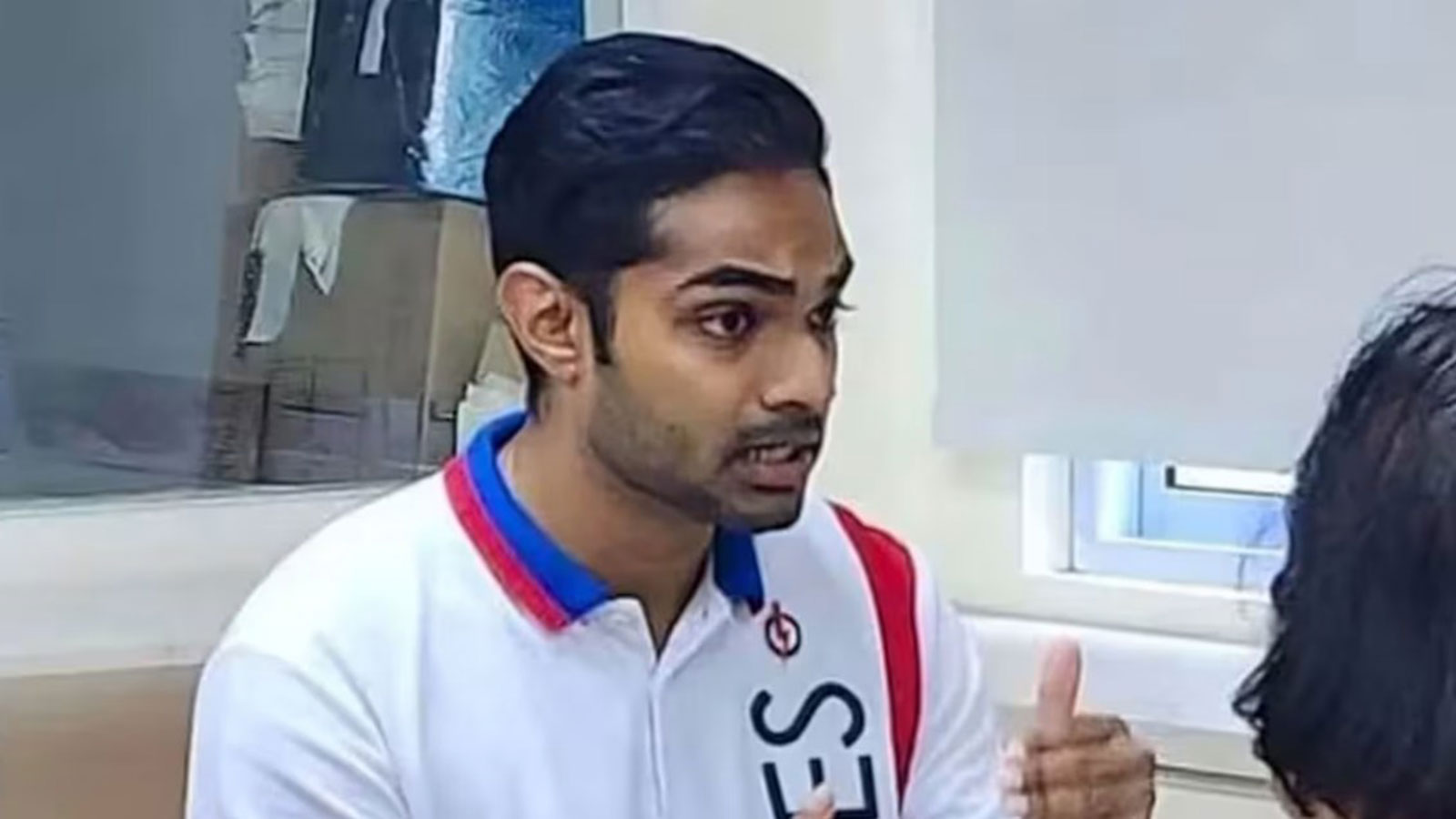
- An old photo surfaced online showing Dr. Singaraju in a People’s Action Party (PAP) T-shirt from a September 2023 volunteer activity.
- On January 6, Dr. Singaraju clarified via social media that he is currently not affiliated with any political party.
- He initially told the South China Morning Post he was formerly a PAP member and the photo was from a People’s Association event, but later corrected this to a ‘party activity’ after a CNA query.
- The incident has reignited public debate about the non-partisan nature and independence of Singapore’s NMP scheme.
Singapore’s political landscape is often characterized by its meticulous order and carefully defined roles. Yet, even within such a structured environment, the nuances of public perception and personal history can ignite significant debate. This has been precisely the case with Dr. Haresh Singaraju, an incoming Nominated Member of Parliament (NMP), who recently found himself at the center of a public discussion regarding his political affiliations.
His appointment as an NMP, announced on January 2nd, was swiftly followed by the resurfacing of an old photograph depicting him in a People’s Action Party (PAP) T-shirt. This image, which had initially appeared on his Instagram account before being archived, quickly spread across online forums like Reddit, prompting a wave of questions about his neutrality and the very essence of the NMP scheme.
The NMP Scheme: A Pillar of Non-Partisanship Under Scrutiny
The Nominated Member of Parliament scheme, established in Singapore in 1990, was designed with a clear and crucial objective: to inject non-partisan, independent voices into parliamentary discourse. In a system where elected representatives largely adhere to party lines, NMPs are meant to offer alternative perspectives, represent diverse segments of society, and contribute to policy-making without the constraints of political party allegiance. Their role is to enrich debate, challenge assumptions, and ensure that a broader spectrum of viewpoints is considered in the nation’s governance.
However, the scheme has, at various times, faced scrutiny regarding the perceived independence of its appointees. The fundamental expectation is that NMPs, once appointed, shed any overt partisan ties to uphold the spirit of their office. When images or past affiliations surface that suggest a link to a political party, particularly the ruling People’s Action Party, it naturally raises questions among the public and media alike. It’s not merely about formal membership but about the perception of impartiality, which is paramount for the NMP’s credibility.
The current discussion around Dr. Singaraju is a vivid illustration of this ongoing tension. It highlights the fine line NMPs must walk, balancing their personal histories and civic engagement with the demanding requirement of perceived political neutrality once they assume their parliamentary roles. The public’s keen interest underscores the importance placed on this non-partisan element within Singapore’s unique political framework.
A Photo’s Journey: From Volunteer Activity to Online Firestorm
The photograph at the heart of the recent controversy was taken in September 2023, depicting Dr. Haresh Singaraju participating in a volunteer activity while wearing a PAP T-shirt emblazoned with the word ‘Tampines.’ This seemingly innocuous image, a snapshot of community involvement, took on new significance once his NMP appointment was announced. Its reappearance on platforms like Reddit, in the form of screenshots, quickly made it a focal point of online discussion.
Responding to the burgeoning debate, Dr. Singaraju took to social media on January 6th to offer a detailed clarification. He explained that the image was indeed authentic, stemming from a volunteer activity he had participated in prior to his NMP nomination. Crucially, he clarified that he is ‘now not a member of any party,’ addressing the present state of his political affiliation. He also noted that he had archived the photo from his public Instagram account as part of an effort to tidy up his profile and, significantly, to protect the identities of other individuals featured in his posts.
The clarification, however, also revealed a slight evolution in his narrative. Initially, as reported by the South China Morning Post on January 5th, Dr. Singaraju had stated that he was formerly a PAP member and that the 2023 photograph was taken at a People’s Association event. Following a query from CNA, he issued a correction on Instagram, stating that the image was captured at a ‘party activity’ where he had previously volunteered, and explicitly clarified that this activity ‘did not involve the PA.’ This distinction between a People’s Association event (a statutory board) and a ‘party activity’ (implying a more direct link to the PAP) was a critical detail that further informed the public discourse.
Moreover, a check by The Straits Times on his LinkedIn profile on January 6th revealed that he has been a grassroots leader since January 2023. This detail, while not necessarily indicating formal party membership, further contributed to the public’s understanding of his prior civic engagements and their proximity to the political establishment.
Navigating the Waters of Affiliation: Dr. Singaraju’s Stance
Dr. Haresh Singaraju’s statements have sought to draw a clear line between his past engagements and his current, impending role as an NMP. His assertion that he is ‘now not a member of any party’ is a direct response to the core expectation of NMP non-partisanship. It acknowledges that while he may have had prior associations, those ties are no longer active in a formal sense as he prepares to take on a role that demands independence.
The public’s interest in this matter isn’t merely academic; it stems from a deep-seated desire to ensure that the NMP scheme functions as intended, providing truly alternative perspectives. When an incoming NMP is found to have a history of involvement, even volunteer-based, with the dominant political party, it inevitably prompts a closer examination of their capacity for independent thought and action within Parliament. The scrutiny, therefore, is less about Dr. Singaraju’s personal integrity and more about the institutional integrity of the NMP role itself.
This situation underscores the growing demand for transparency from public figures, especially in the digital age where past actions and images can quickly resurface and become subjects of intense public debate. For Dr. Singaraju, a family physician at National University Polyclinics, this has meant navigating the transition from a largely private professional life to one under the intense spotlight of public service, where every past association is meticulously reviewed.
Historical Precedents and the Ongoing NMP Debate
The questions surrounding Dr. Singaraju’s past affiliations are not entirely new; they echo similar concerns that have periodically arisen regarding the independence of the NMP scheme. The very design of the NMP role, intended to bring in ‘non-partisan’ voices, has always invited a degree of public and media scrutiny when appointees have prior links to political parties or the broader political establishment.
Indeed, the issue reignited last year when two NMPs, Mr. Raj Joshua Thomas and Dr. Syed Harun Alhabsyi, resigned in February, months before the General Election. Dr. Syed Harun subsequently stood as a PAP candidate in Nee Soon GRC and now serves as Senior Parliamentary Secretary for Education and National Development. While Mr. Thomas was not fielded as a candidate, these incidents fueled discussions about whether the NMP scheme inadvertently served as a pipeline for future political candidates, potentially undermining its non-partisan intent.
Historically, Dr. Singaraju would not be the only former PAP member to be appointed as an NMP. Precedents exist where individuals with PAP connections have served as NMPs. For instance, Mr. Calvin Cheng and Ms. Tan Su Shan both resigned from the party before their NMP appointments, signaling a conscious effort to align with the non-partisan requirement. Conversely, Mr. Gerard Ee was still a PAP member when he assumed the position, highlighting the varied interpretations and applications of the scheme’s guidelines over time.
These past examples demonstrate that the debate is not just about individual cases but about the broader implications for the NMP scheme’s credibility. Each instance where an NMP’s past political ties come to light contributes to an ongoing public conversation about what ‘non-partisan’ truly means in practice, and how to best safeguard the integrity and perceived independence of these crucial parliamentary roles.
Dr. Singaraju’s case, coming just as he is about to embark on his NMP journey, adds another chapter to this evolving discussion. It highlights the continuous need for clarity, transparency, and a robust public understanding of the expectations placed upon those who serve as Nominated Members of Parliament, ensuring their voices genuinely resonate as independent contributions to the nation’s governance.
The swift resurfacing of Dr. Singaraju’s past affiliation underscores the heightened scrutiny public figures face in the digital age and the perpetual challenge for the NMP scheme to maintain its perceived non-partisan integrity, requiring not just formal disassociation but also clear public communication to build and sustain trust.