
Quick Read
- Eight ASU football players are enrolled in Barrett, The Honors College, balancing top-tier athletics and academics.
- Dedicated advisors meet bi-weekly with athletes to guide their academic progress and NCAA eligibility.
- Coach Kenny Dillingham is increasing recruitment of academically strong athletes for the football program.
- Players say Barrett prepares them for life after football and honors their families’ academic values.
- The initiative is reshaping ASU’s image of the student-athlete, blending brains and brawn.
- Eight ASU football players are currently enrolled in Barrett, The Honors College, the university’s most selective academic program.
- These athletes regularly meet with specialized advisors to ensure academic success alongside their demanding football schedules.
- ASU’s coaching staff is actively recruiting academically strong players to integrate athletics and academics.
- Players describe the experience as a way to prepare for life after football and honor their families’ values.
- Coach Kenny Dillingham aims to increase the number of Barrett students on the roster in coming years.
Academics and Athletics: A Dual Commitment at ASU
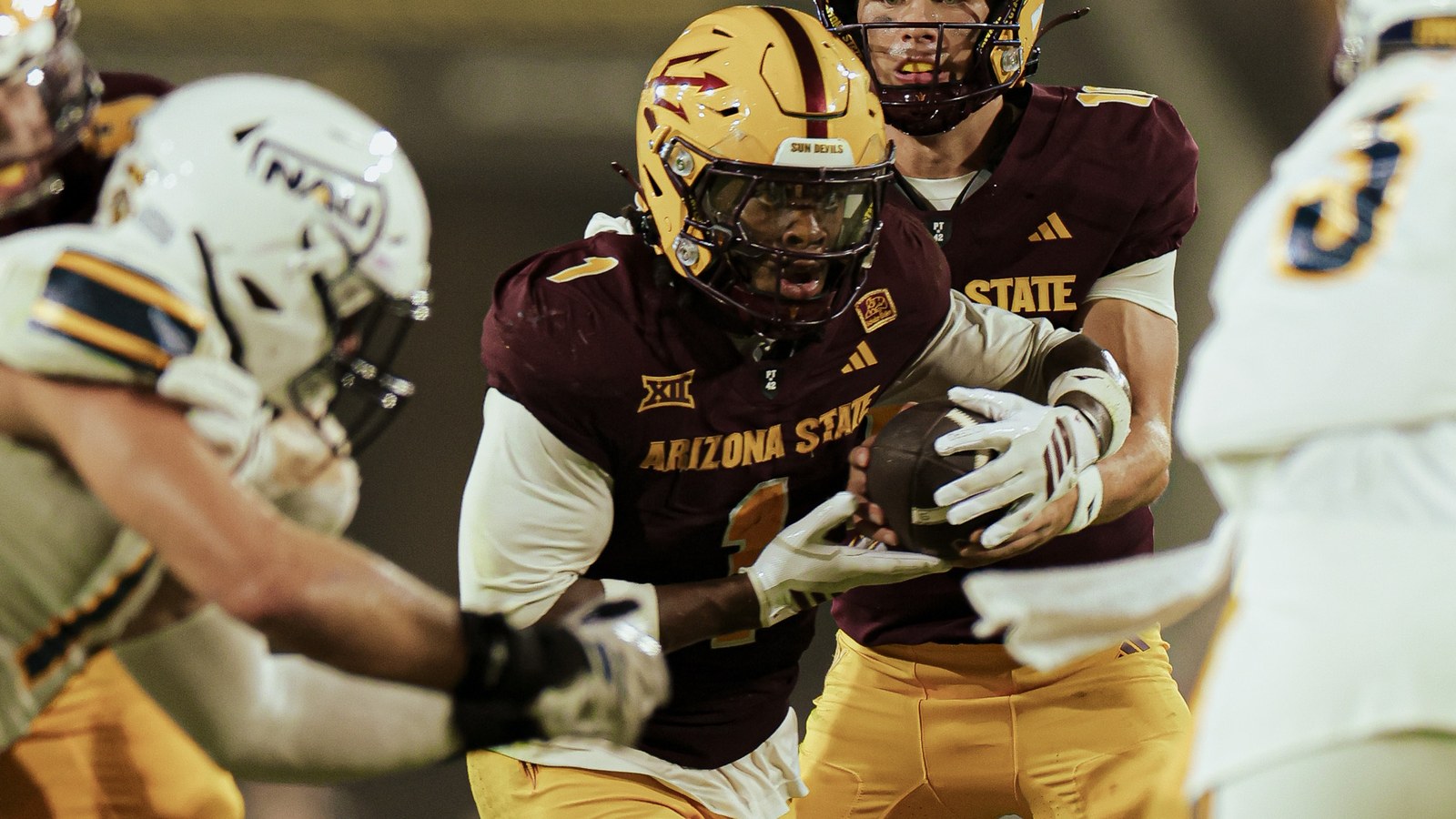
At Arizona State University, the image of a student-athlete is undergoing a quiet transformation. Eight football players—Keith Abney II, Kyson Brown, Martell Hughes, Cory Butler, Cameron Dyer, Kanyon Floyd, Isaiah Iosefa, and Uriah Neloms—are not only competing at the highest collegiate level but also pursuing demanding studies at Barrett, The Honors College. This unique combination places them at the intersection of elite sports and elite academics, a balancing act that few attempt, and even fewer master.
For Abney and Brown, the bond goes beyond the gridiron. They share not just a locker room, but living quarters—rooming together in the Barrett dorms since their freshman year. Their daily routines are a careful choreography: football practices, film sessions, recovery, and, crucially, dedicated study time. “We’re still roommates, so if I need help with something, we’re always helping each other stay on top of our work,” Abney shared in a recent interview with Cronkite News.
Honors Advising: A Safety Net for Student-Athletes
What keeps these athletes afloat amid the relentless tides of competition and coursework? The Barrett Honors College assigns each student a dedicated advisor who meets bi-weekly with the football team’s academic group. These sessions cover everything from course selection to NCAA eligibility requirements. Courtney Skipper, affectionately known as “Skip,” has spent 19 years ensuring ASU athletes don’t just play, but also graduate. Her role is more than administrative—it’s deeply personal. “That’s what my role is: to remind all these young men you’re more than a football player,” she said. “There’s a true passion and dedication that they show off the field. To be a great athlete in your sport doesn’t mean you need to do less academics. You can attack both equally and be successful in both.”
For Abney, careful planning is essential. “I know we’re so busy in football, so just having that set time I can have for myself to be able to do my schoolwork so I can stay on top of that and keep my grades,” he explained, capturing the essence of the daily grind faced by student-athletes everywhere.
Recruiting for Brains and Brawn
ASU’s commitment to the dual path of athletic and academic excellence is no accident. Coach Kenny Dillingham has made it a cornerstone of his recruiting philosophy. In press conferences, he’s quick to spotlight players like Abney who embody the “proof of concept” that intelligence is a winning trait. “Smart guys are successful,” Dillingham asserts. His ambition is clear: increase the number of Barrett students on the football roster from eight to fifteen, and ultimately twenty in the next few recruiting cycles.
This vision trickles down through the coaching staff. Assistant coaches actively encourage recruits with strong academic backgrounds to apply to Barrett during campus visits, turning the honors program into a powerful recruiting tool. For sophomore linebacker Martell Hughes, this was a revelation. “I honestly didn’t know that they had this program until I came on my visit,” he said. “And then when they did tell me that, that really stood out from the other schools that I took my visits to.” Hughes, raised in a family that prioritized academics, sees Barrett as a means to fulfill both his athletic ambitions and his future career goals. “It’s always been school first, sports second,” he said. “So I feel like doing that, coming here and being part of the Barrett program, I really am doing that for them and for myself to better my future.”
Changing the Narrative: More Than Just Football Players
It’s tempting to think of college football players as athletes first, students second. But the experience at ASU’s Barrett Honors College challenges that stereotype. These young men are not simply fulfilling eligibility requirements—they’re investing in themselves, their families, and their futures. Skipper, who likens her pride to that of a parent, sees firsthand the impact of this commitment. She applauds athletes who “take charge of their academic endeavors,” emphasizing that success in sports and academics is not mutually exclusive.
The presence of these players in Barrett is changing the narrative not just for ASU, but potentially for college athletics nationwide. It suggests a model where excellence in the classroom and on the field are not competing priorities, but complementary ones. The ripple effects could be profound: more student-athletes considering rigorous academic paths, and more coaches looking for well-rounded recruits.
As Dillingham’s initiative gains traction, the hope is that future signing classes will bring more Barrett students into the football program, solidifying ASU’s reputation as a place where athletic and academic ambitions are equally valued.
ASU’s experiment with blending top-tier athletics and rigorous academics reveals a powerful truth: the most successful student-athletes are those who invest in both mind and body. If the trend continues, the university may become a national model for redefining what it means to be a scholar-athlete.