
Quick Read
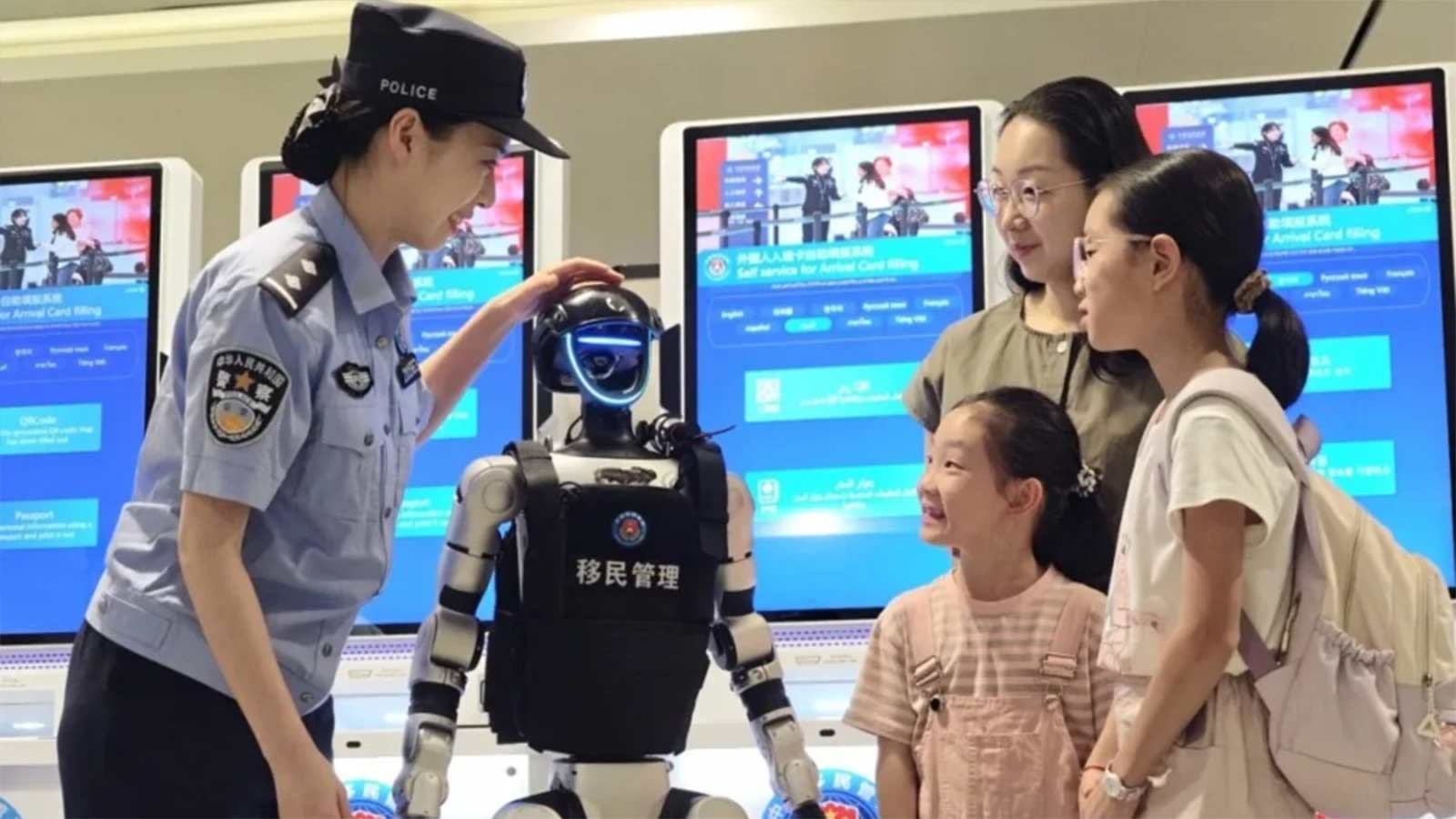
- China deployed Walker S2 humanoid robots for border patrol and traveler guidance at Vietnam’s border.
- Walker S2 features autonomous battery swapping, enabling continuous operation with minimal human intervention.
- Robots are also used for inspections in manufacturing sectors such as steel and aluminum production.
- UBTech aims to produce up to 10,000 industrial humanoid robots annually by 2027.
- Cumulative orders for the Walker series reached $115 million by November 2025.
China’s Walker S2 Robot: From Factory Floor to Border Patrol
In late 2025, China took a bold step in the world of autonomous security by deploying its Walker S2 humanoid robots along Vietnam’s border, in collaboration with a robotics center in Fangchenggang, Guangxi. This real-world rollout, cited by Indian Defence Review, is part of China’s larger ambition to bring humanoid robots into the heart of government operations. The initiative is not just about patrols—it’s about reimagining how borders are managed, travelers are guided, and logistical flows are controlled, all with artificial intelligence at the helm.
What makes the Walker S2 remarkable isn’t just its presence at border crossings. The robot, developed by UBTech, stands out for its autonomy, advanced perception, and physical dexterity. It’s engineered to swap its own batteries—completing the task in about three minutes—allowing for virtually uninterrupted patrols. It’s a solution custom-built for environments where downtime is not an option. With 52 degrees of freedom and dexterous hands capable of lifting up to 15 kilograms per arm, the Walker S2 is no longer just a concept—it’s an operational reality.
How Autonomous Border Robots Work in Practice
The deployment in Guangxi is a blueprint for how autonomous border robots could transform security and efficiency. Walker S2 units are tasked with traveler guidance, personnel flow management, and regular patrols. These robots can navigate crowded crossings, interact with travelers, and respond to changing conditions thanks to their binocular stereo vision system and adaptable AI-driven controls. It’s a blend of surveillance, customer service, and logistical support—all wrapped in one humanoid form.
But the border is only the beginning. China’s vision for the Walker S2 extends to industrial sectors, where the robots are already being used for inspections in steel, copper, and aluminum production. The same technology that helps manage the controlled chaos of a border crossing is being repurposed for the precision and reliability needed on manufacturing floors. It’s a testament to the robot’s flexibility and the government’s confidence in automation as a driver of economic growth.
Why Battery-Swapping Is a Game-Changer
One of the most challenging aspects of deploying robots in high-demand environments is keeping them powered. The Walker S2’s ability to autonomously swap batteries sets it apart from earlier generations of service robots, which often required human intervention for maintenance. This feature not only reduces operational costs but also maximizes uptime—a crucial advantage for border security and industrial operations alike.
Imagine a robot that never sleeps, never needs a break, and can patrol for hours without interruption. The Walker S2’s self-sufficiency means that border crossings can be monitored continuously, with minimal risk of human error or fatigue. It’s a technological leap that could redefine the expectations for automated security worldwide.
The Big Picture: China’s Industrial Robotics Ambitions
China’s deployment of the Walker S2 is more than a technical showcase—it’s a strategic move in a national campaign to automate key sectors. The government’s backing has been strong, providing policy support and funding for robotic innovation. UBTech, the company behind the Walker S2, is ramping up production with plans to deliver 500 units by the end of 2025 and scale up to 10,000 annually by 2027. The company’s proprietary BrainNet platform enables autonomous task planning and scenario management, making large-scale deployments feasible and adaptable.
Financially, the market is responding with enthusiasm. By November 2025, cumulative orders for the Walker series reached 1.1 billion yuan (approximately $115 million), reflecting growing demand across manufacturing, logistics, and public service sectors. The robots are already operational in automotive plants, logistics hubs, and smart factories, helping China inch closer to its goal of global leadership in industrial humanoid robotics.
What’s Next for Border Security?
The story of autonomous border robots is still unfolding. For China, the Walker S2 is both a symbol of technological progress and a practical tool in its ongoing efforts to modernize border management. As production ramps up and more robots take to the front lines—whether at a crossing or inside a factory—the broader question emerges: how will the rise of humanoid robotics reshape the relationship between humans and machines in public and industrial spaces?
There are challenges ahead, from technical reliability and security concerns to questions about privacy and labor displacement. Yet the facts on the ground are clear: China is betting big on robots that can not only patrol, but also think, adapt, and sustain themselves over long stretches. The border may be the starting point, but the implications reach far beyond.
China’s Walker S2 deployment is a milestone in autonomous robotics, blending innovative engineering with strategic ambition. The border patrols in Guangxi illustrate the robot’s versatility, but also highlight China’s commitment to integrating advanced automation across society. As production scales and adoption widens, the Walker S2 stands as both a technological achievement and a signpost for the future of industrial and public service robotics.