
Quick Read
- La Tomatina is held annually in Buñol, Spain, on the last Wednesday of August.
- The festival began in 1945 during a playful brawl and has since become a global phenomenon.
- Over 40 metric tons of tomatoes are used for the one-hour food fight.
- The event has strict rules to ensure safety, including squishing tomatoes before throwing.
- Critics raise concerns about food waste, but organizers use inedible tomatoes to minimize impact.
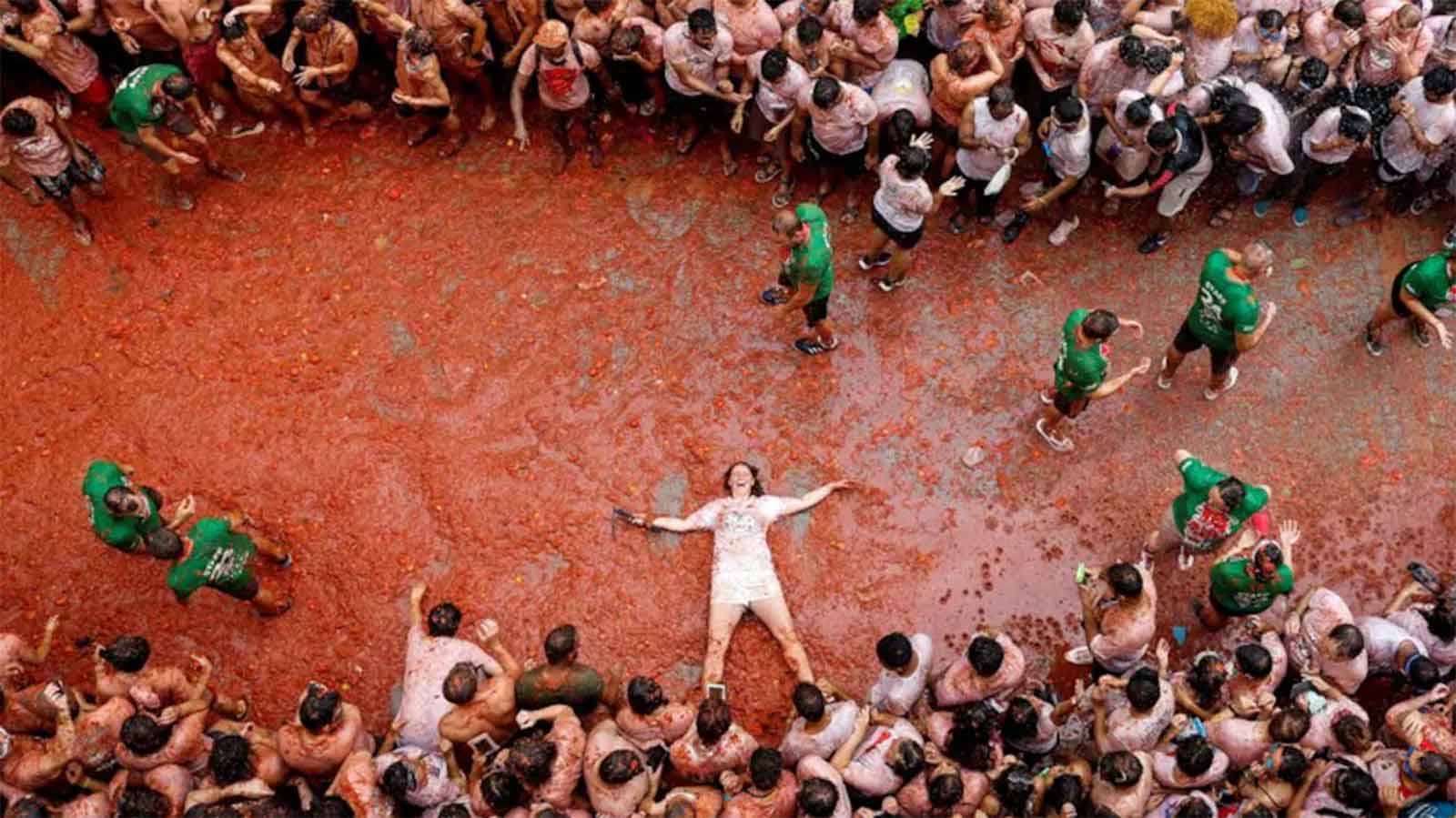
On August 27, 2025, the streets of Buñol, a small town near Valencia, Spain, turned red with tomato pulp as thousands of revelers gathered for the annual La Tomatina festival. Dubbed the ‘World’s Biggest Food Fight,’ this quirky tradition has become a hallmark of Spanish culture, attracting participants from around the globe for a day of messy, unbridled fun. With its vibrant atmosphere, historical roots, and unique set of rules, La Tomatina continues to capture the imagination of locals and tourists alike.
The Origins of La Tomatina: From a Playful Brawl to a Global Phenomenon
La Tomatina traces its origins back to 1945, during a parade in Buñol. According to the festival’s official website, a group of young people, trying to get closer to the parade, accidentally caused a commotion. In the ensuing chaos, they grabbed tomatoes from a nearby vendor and began hurling them at each other. The impromptu food fight was eventually broken up by police, but the seed for an annual tradition was planted.
The following year, locals recreated the event, and over time, it grew in popularity. However, the festival faced challenges during the 1950s under General Francisco Franco’s dictatorship, when it was briefly banned for being deemed too unruly. It wasn’t until 1959 that La Tomatina was reinstated with official rules to ensure safety and order. As reported by The Telegraph India, the festival has since evolved into a well-organized event, attracting thousands of participants each year.
A Day of Tomato Mayhem: How La Tomatina Unfolds
La Tomatina is held annually on the last Wednesday of August, transforming Buñol into a battlefield of tomato pulp. The day begins with the “palo jabón,” a greasy pole with a ham perched on top. Participants compete to climb the slippery pole, and once someone succeeds, the tomato fight officially begins. Over 150,000 tomatoes—around 40 metric tons—are trucked into the town, ready to be squished and thrown.
The rules of La Tomatina are simple but strict: participants must squish the tomatoes before throwing them to prevent injuries, and no hard objects are allowed. The event lasts for exactly one hour, after which fire trucks and hoses are used to wash down the streets—and the revelers. As reported by News18, the festival is as much about fun as it is about community, with locals and tourists coming together to revel in the unique experience.
The Cultural Impact and Global Appeal of La Tomatina
Over the years, La Tomatina has gained international fame, drawing visitors from across the world. Its global appeal has been amplified by its appearances in movies and media, most notably in the Bollywood film Zindagi Na Milegi Dobara, which showcased the festival’s vibrant energy and colorful chaos. The event has also inspired similar festivals in other countries, further cementing its status as a cultural phenomenon.
Despite its popularity, La Tomatina remains deeply rooted in its local community. The festival is a significant source of pride for the residents of Buñol, who see it as a way to share their traditions with the world. As highlighted by Reuters, the event also provides an economic boost to the town, with thousands of visitors spending on accommodation, food, and souvenirs.
Challenges and Sustainability: The Future of La Tomatina
While La Tomatina is celebrated for its fun and frivolity, it has faced criticism over the years, particularly regarding the wastage of food. With millions of people around the world suffering from hunger, the use of 40 metric tons of tomatoes for a single event has raised ethical questions. Organizers have responded by sourcing low-quality, overripe tomatoes that are unsuitable for consumption, thereby minimizing waste.
Additionally, the festival’s growing popularity has led to concerns about overcrowding and its impact on the small town of Buñol. To address these issues, the local government has implemented ticketing systems to limit the number of participants and ensure a safe and enjoyable experience for everyone involved.
La Tomatina is more than just a food fight; it’s a celebration of joy, community, and culture. As it continues to evolve, this iconic festival remains a testament to the power of tradition and the universal appeal of coming together for a shared experience.