
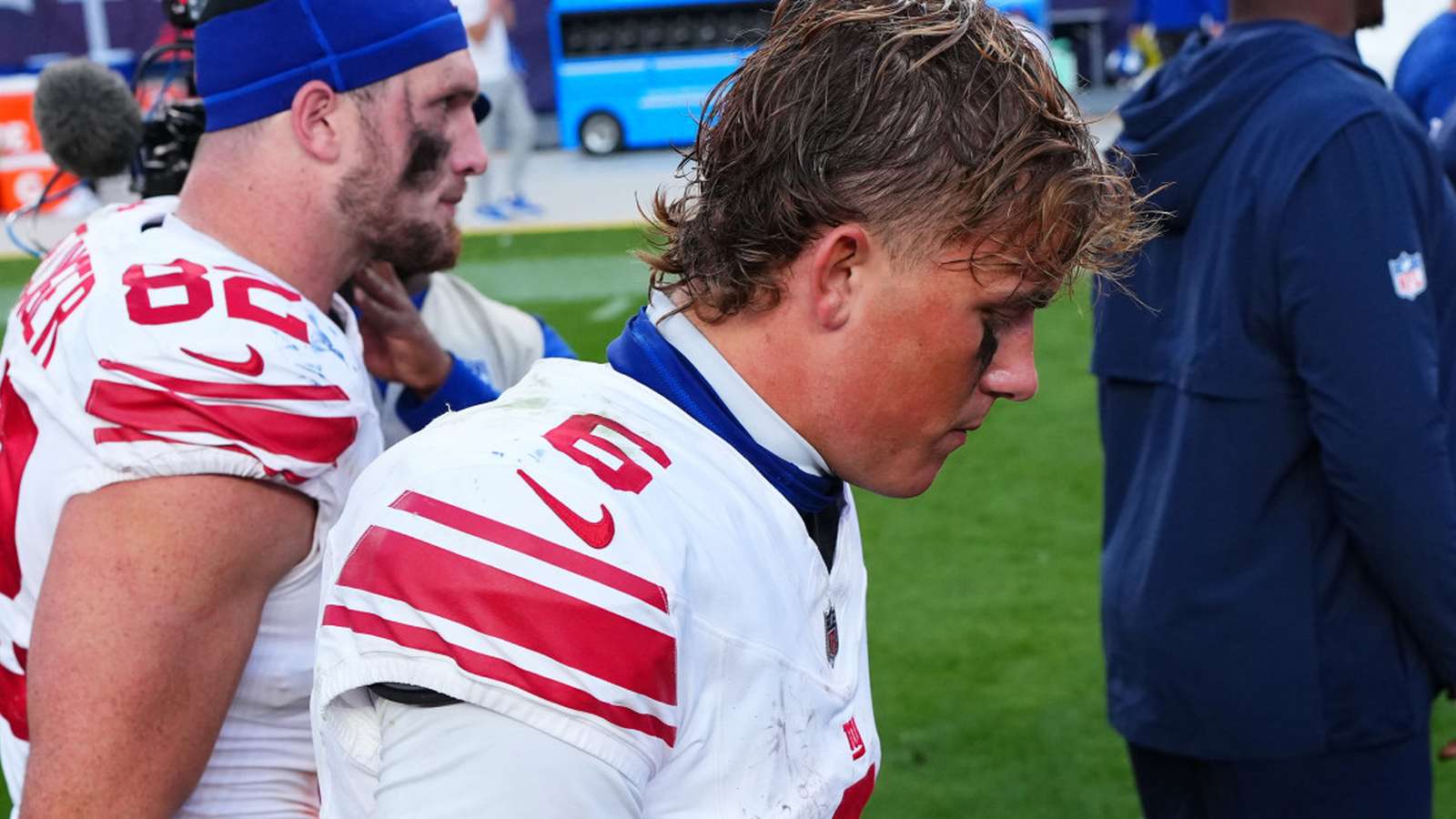
Quick Read
- The Giants lost 33-32 to the Broncos after leading by 18 points in the final six minutes, breaking a 1,602-game NFL streak.
- Defensive stars publicly questioned coordinator Shane Bowen’s decisions, especially late-game personnel changes.
- Coach Brian Daboll was seen yelling at Bowen, signaling internal discord after the collapse.
- Denver scored a record 33 fourth-quarter points, overturning a previously shut-out performance.
- The loss dropped the Giants near the bottom of the NFC and sparked doubts about team leadership.
NY Giants Blow Unbeatable Lead: What Really Happened on That Unforgettable Sunday?
In the annals of NFL history, some losses linger longer than others. For the New York Giants, the sting of their Week 7 defeat against the Denver Broncos will likely echo through MetLife Stadium for seasons to come. Entering the final six minutes with an 18-point cushion—a margin considered practically insurmountable in professional football—the Giants seemed poised to flip the script on a rocky season. Instead, they became the story: the team that broke a 1,602-game streak in which no NFL team had lost after holding such a late lead (NBC News).
Fourth Quarter Chaos: How a Sure Win Became a Crushing Loss
The game’s narrative was initially one of redemption. Rookie quarterback Jaxson Dart, under immense pressure to prove himself, orchestrated a methodical offense, leading the Giants to a 19-0 advantage deep into the fourth quarter. The Broncos, renowned for their defensive grit, looked outmatched and demoralized. But football, as ever, is a game of inches—and momentum is a fragile thing.
It started with a twist of fate: a tipped pass in the end zone landed in the hands of Denver’s Troy Franklin. Suddenly, the Broncos had a pulse. A successful two-point conversion cut the lead to 19-8. The Giants responded with their own moment of magic—a deflected pass caught and run in for a 41-yard touchdown by Theo Johnson. Win probability soared. Giants fans exhaled.
But on Denver’s next drive, a combination of determined offense and costly Giants penalties breathed life into the Broncos’ comeback. Quarterback Bo Nix led a scoring drive, capped by his own rushing touchdown and another two-point conversion. The lead was trimmed to 26-16. The tension was palpable.
On the next Giants possession, disaster struck: Dart threw a critical interception, which set up Denver for a quick score. The Giants’ offense stalled, chewing up little clock. Denver seized the moment, marching 68 yards in under a minute to take their first lead of the game. The once-dominant Giants defense looked vulnerable, and the Broncos smelled blood.
Coaching Decisions Under Fire: Players Voice Frustration, Sideline Erupts
As the Broncos’ comeback unfolded, cracks appeared—not just in the Giants’ defensive scheme, but in team unity. After the game, star linebacker Brian Burns openly questioned defensive coordinator Shane Bowen’s calls. Burns, limping from multiple injuries, lamented the decision to drop eight in coverage on a critical late-game play, leaving the pass rush undermanned and the secondary exposed. All-Pro nose tackle Dexter Lawrence and rookie edge rusher Abdul Carter were left off the field during a pivotal moment—choices that baffled both players and fans (Giants Wire).
Lawrence, typically diplomatic, let slip his own frustration: “Leave that to the coaches,” he told reporters. The postgame corridor buzzed with thinly-veiled criticism. Head coach Brian Daboll, visibly animated, was seen yelling at Bowen on the sideline. Players tried to cover for their comments in the aftermath, but the raw emotion spoke volumes: the locker room was anything but unified.
Burns summed up the feeling: “We were rushing three and dropped eight.” In those moments, the Giants abandoned the aggressive formula that had worked all game. Instead, they became passive, and the Broncos capitalized.
The Final Minute: Heartbreak, Missed Opportunities, and a Historic Collapse
With just over a minute left, the Giants found themselves in desperation mode. Facing a fourth-and-19, Dart scrambled, somehow finding Wan’Dale Robinson for a miraculous first down, aided by a roughing-the-passer penalty. The Giants advanced to the one-yard line after another defensive penalty, and Dart punched in a go-ahead score. But fate wasn’t finished with the Giants yet—kicker Jude McAtamney missed his second extra point of the game, leaving New York ahead by only two points with 37 seconds remaining.
The Broncos, out of timeouts, needed a miracle. They got it. Nix’s deep pass, seemingly overthrown, landed perfectly for Marvin Mims. A penalty advanced Denver another five yards. With ice-cold precision, Nix found Courtland Sutton for 22 yards, placing the Broncos in field-goal range. As time expired, Will Lutz’s 39-yard kick sailed through, sealing the Giants’ fate.
Denver scored 33 points in the fourth quarter—an NFL record for a team previously shut out through three frames. The Giants, once on the verge of a season-defining win, were left with only heartbreak and hard questions (NBC News).
Aftermath: Doubts About Leadership, Uncertain Futures Loom
In the aftermath, the Giants’ hopes of a playoff run were dashed. Instead of rising to 3-4 and chasing postseason dreams, they tumbled to the bottom of the NFC standings. The collapse triggered immediate scrutiny of the coaching staff, particularly defensive coordinator Shane Bowen and head coach Brian Daboll. The echoes of previous franchise disasters—like the infamous 1978 “Miracle at the Meadowlands”—grew louder (NY Post).
Veteran players questioned the team’s direction. Injuries and exhaustion were cited, but the deeper issue was trust—trust in leadership, in decision-making, and in the process. The locker room, once optimistic, now faced a crisis of confidence. Analysts wondered aloud: can Daboll survive this setback? Will the team rally, or will fractures widen?
For the Giants, the loss wasn’t just a number on the scoreboard. It was a turning point—a moment when past mistakes and present missteps converged, forcing everyone to confront uncomfortable truths.
The Giants’ collapse is more than a fleeting headline; it’s a microcosm of a team at a crossroads, where accountability, adaptability, and unity must replace regret and recrimination if they hope to move forward. The decisions made in the coming weeks—by coaches, players, and management—will define not just this season, but the franchise’s identity for years to come.